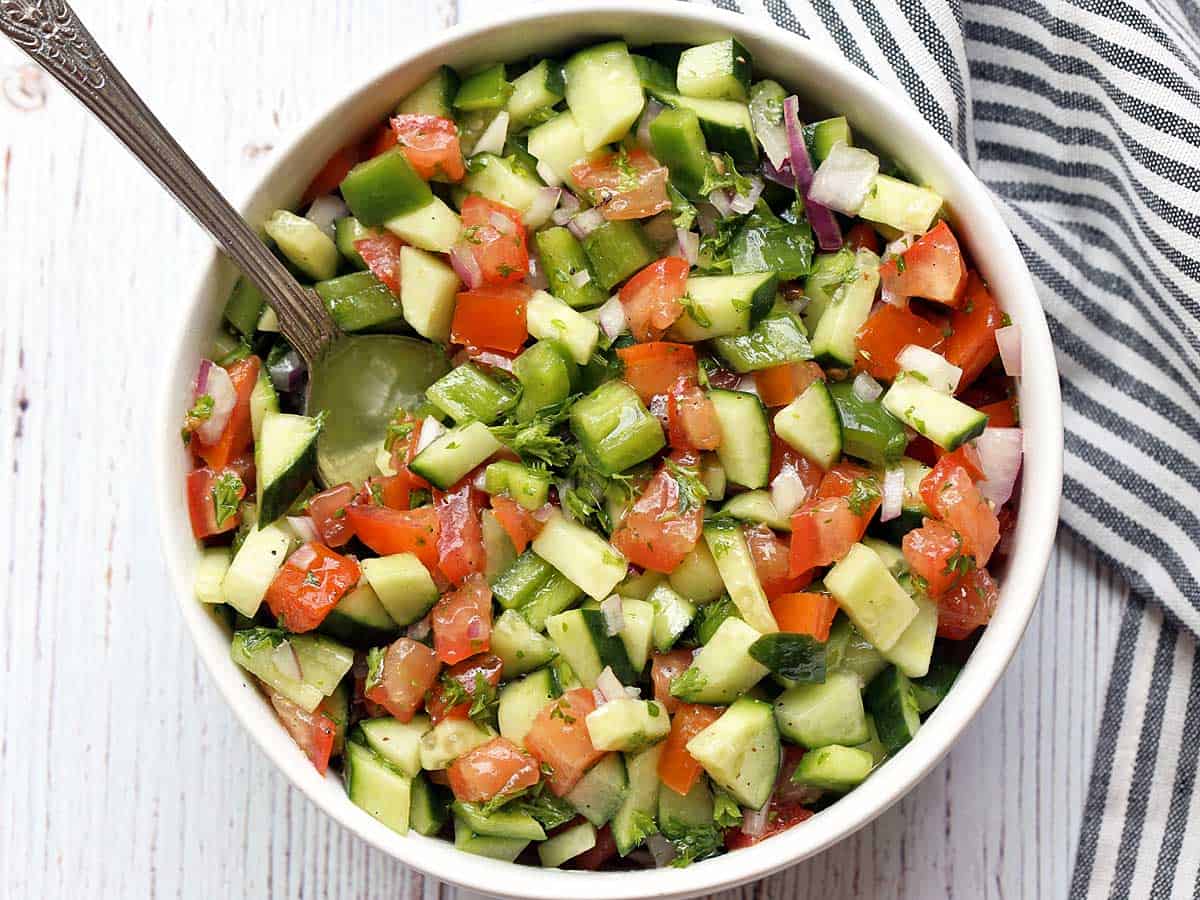
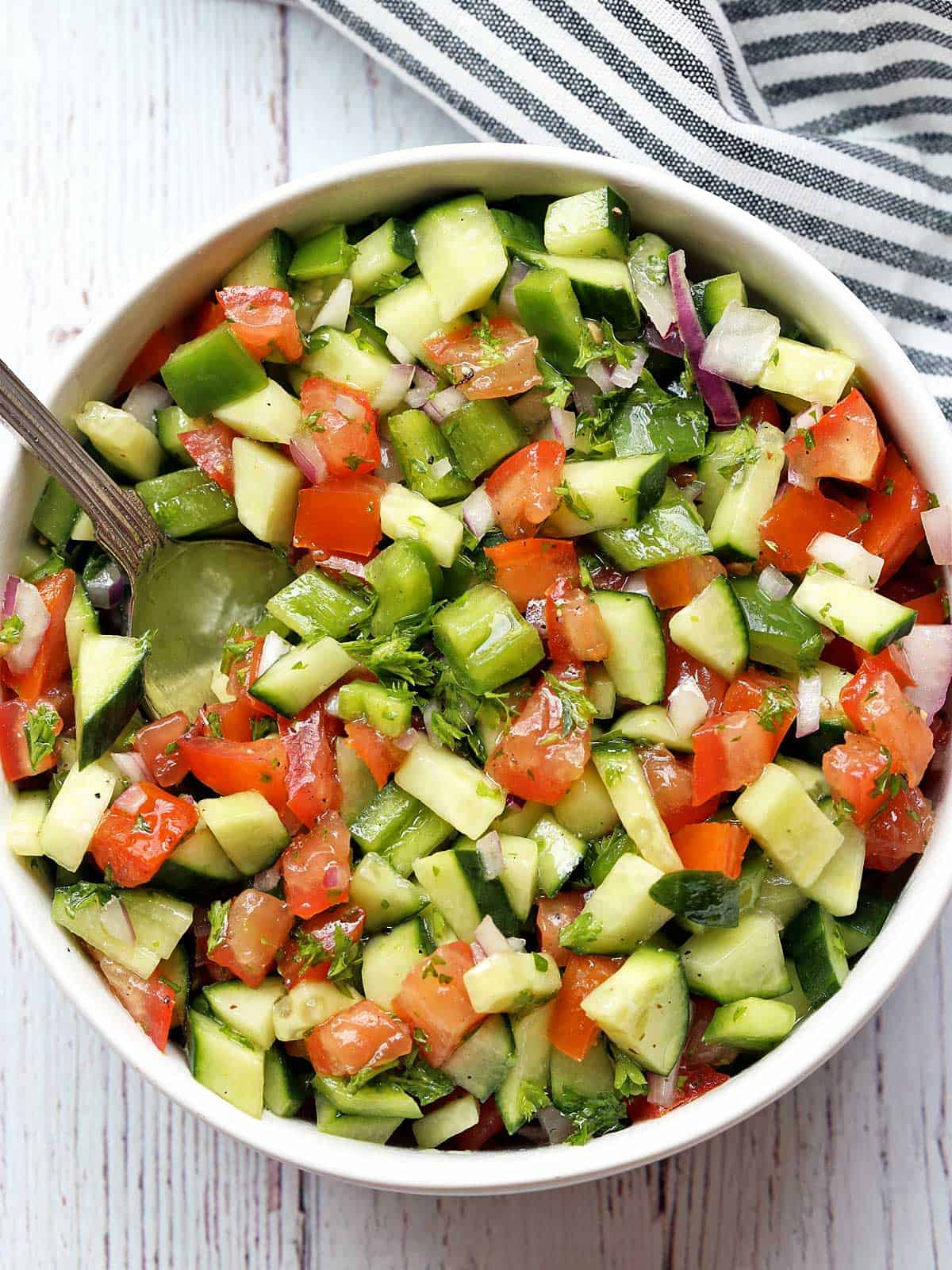
You can serve it for breakfast, lunch, or dinner - it truly goes with anything. Even the leftovers are good, provided you finish them up within a day or two. I grew up on this salad. Each night, Mom served dinner plates with a big pile of salad, a simple two-egg omelet, and a piece of rye bread topped with a fat slice of briny feta cheese. That was dinner almost every night. My childhood dinner was nothing special. It was, in fact, common. Israelis eat their main meal at lunchtime, so dinner is often a meatless meal of an Israeli salad and eggs. It’s a delicious and filling meal, and even now, after spending two decades in the United States, I love it.
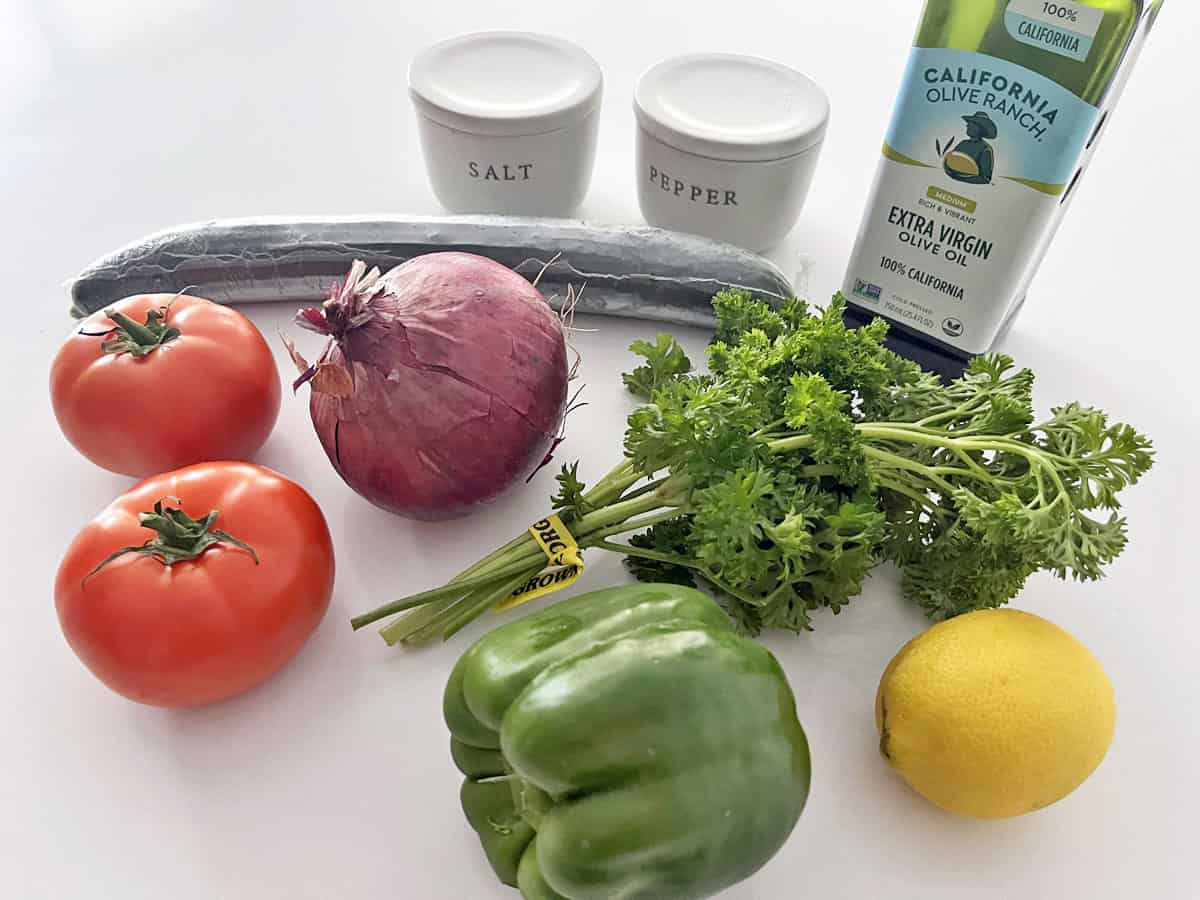
Ingredients
Storing Leftovers
Recipe Card
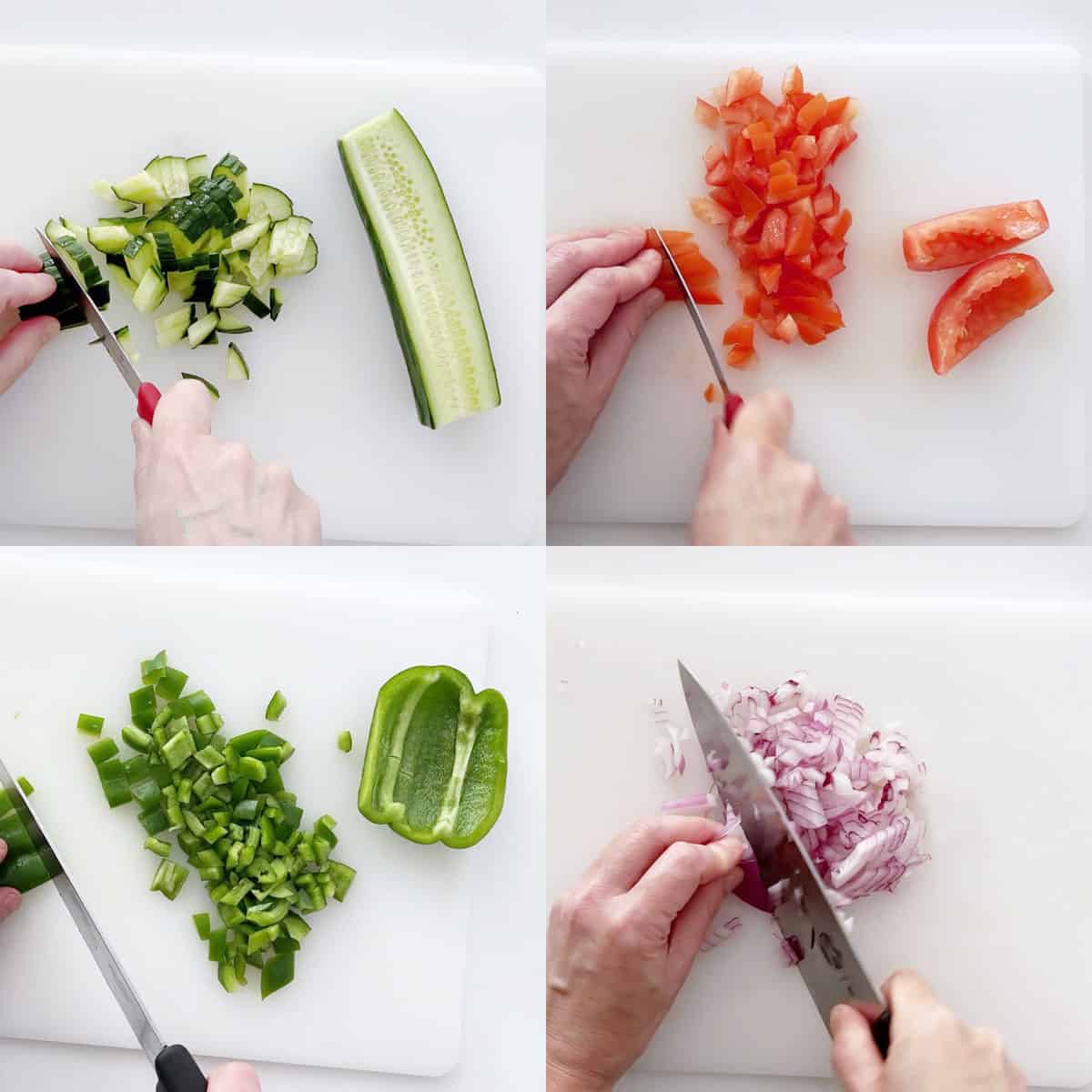
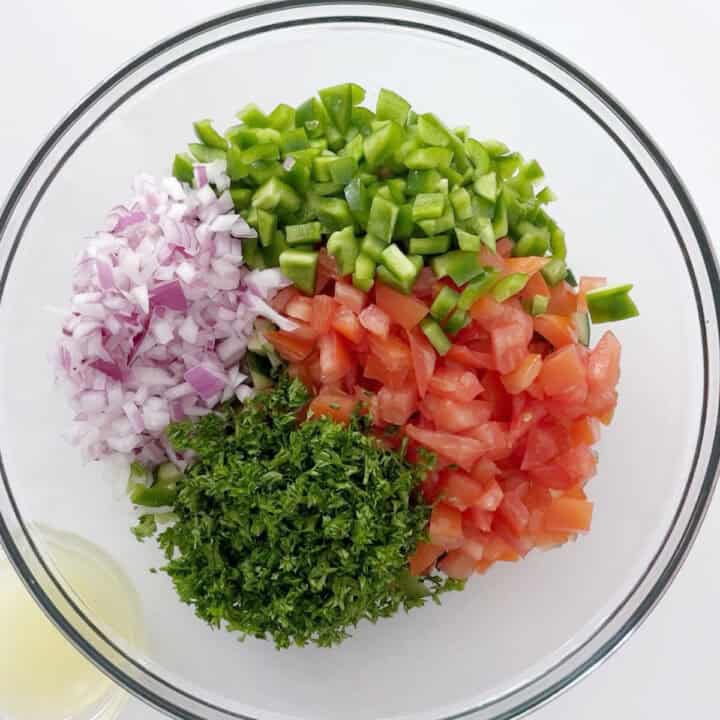
Cucumber: Ideally, you should use a seedless English cucumber. It’s firm, less watery than a standard American cucumber, and its skin is delicate. Tomatoes: Try to pick red tomatoes that are ripe but not too soft. Even if they’re quite firm, you’ll want to seed them, or they’ll release liquid into the salad. Bell pepper: I use green bell pepper. Like the other veggies, it should be diced or finely chopped. The classic recipe doesn’t include peppers, but my mom always added them, so I do, too. Red onions: Make sure they are finely minced. The classic recipe uses yellow onions, but red onions are milder, so I prefer them in a salad. Parsley: Italian parsley or curly parsley - both work equally well. Olive oil: Make sure to use high-quality oil. This is such a simple salad, and the dressing is so basic that it relies on a really good oil to taste good. Lemon juice: Definitely use freshly squeezed lemon juice here, for the same reason I urge you to use good olive oil. Salt and pepper: Start with 1 teaspoon of Diamond Crystel Kosher Salt or ½ teaspoon of any other salt. After mixing the salad, taste and decide if you’d like to add more salt. If you can, use freshly ground black pepper.
You can vary this recipe as much as you’d like, but then it won’t have that classic flavor that Israelis love so much. Having said that, here are a few ideas:
Use different bell pepper colors Use green onions Use white wine vinegar instead of lemon juice Replace the parsley with cilantro Top the salad with crumbled feta cheese Add a pinch of garlic powder, cumin, and/or dried oregano
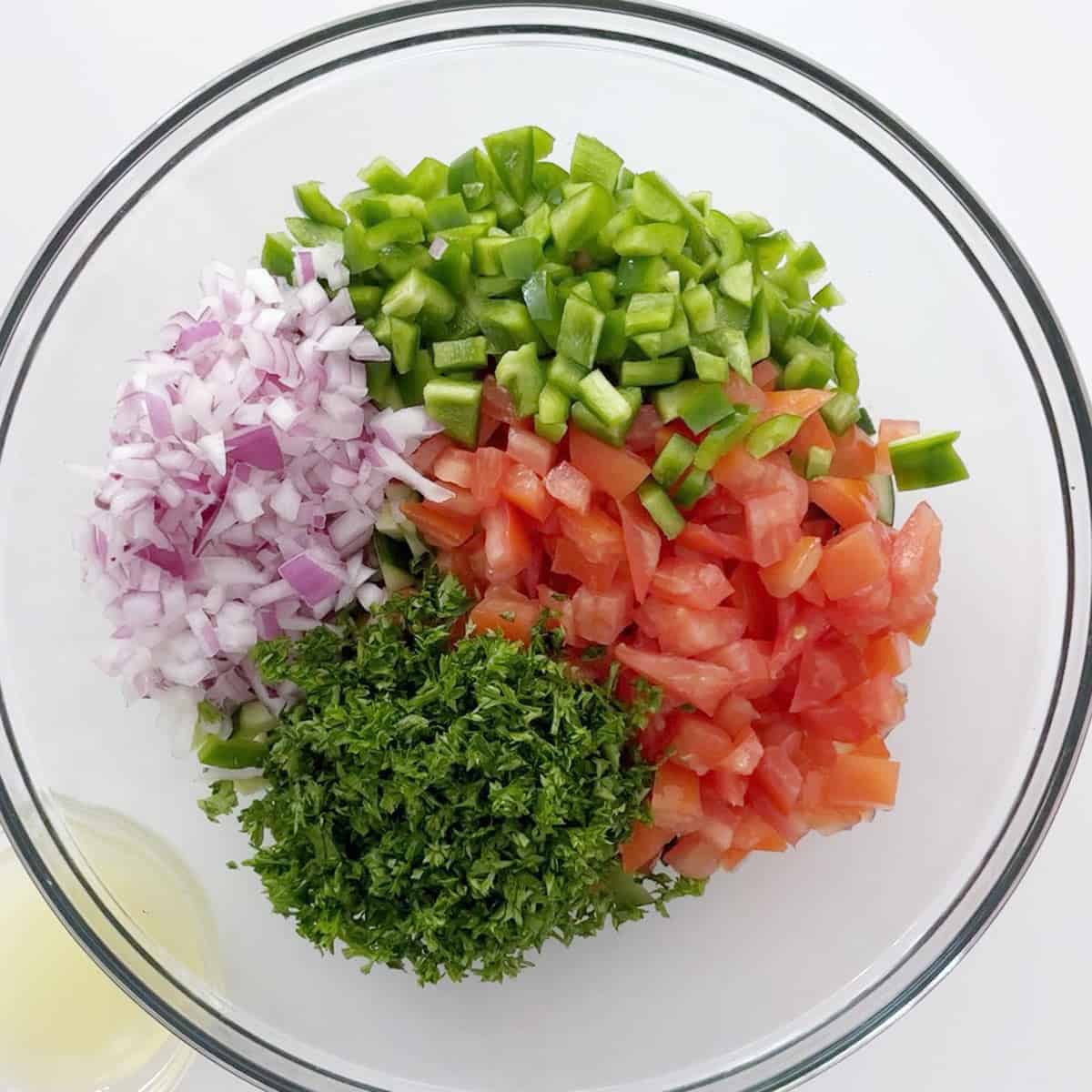
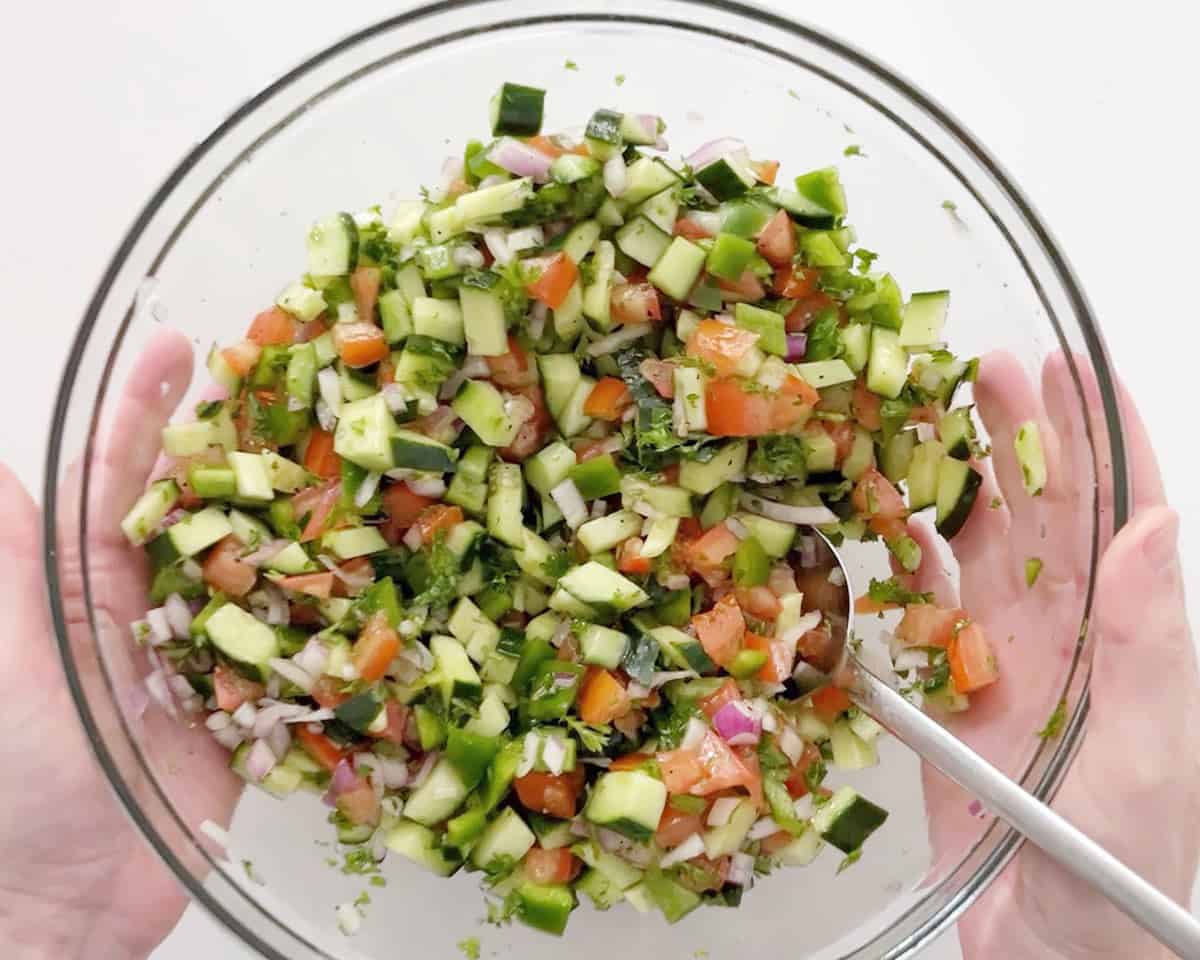
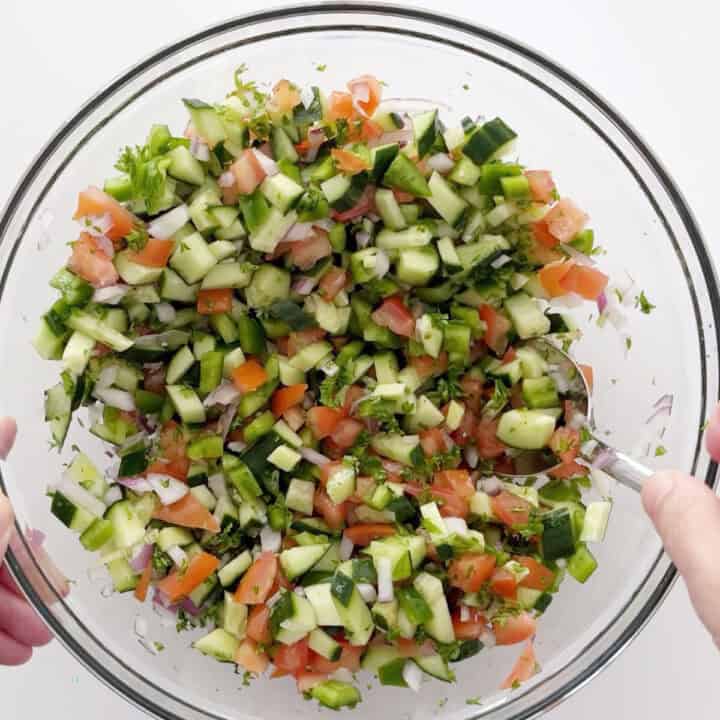
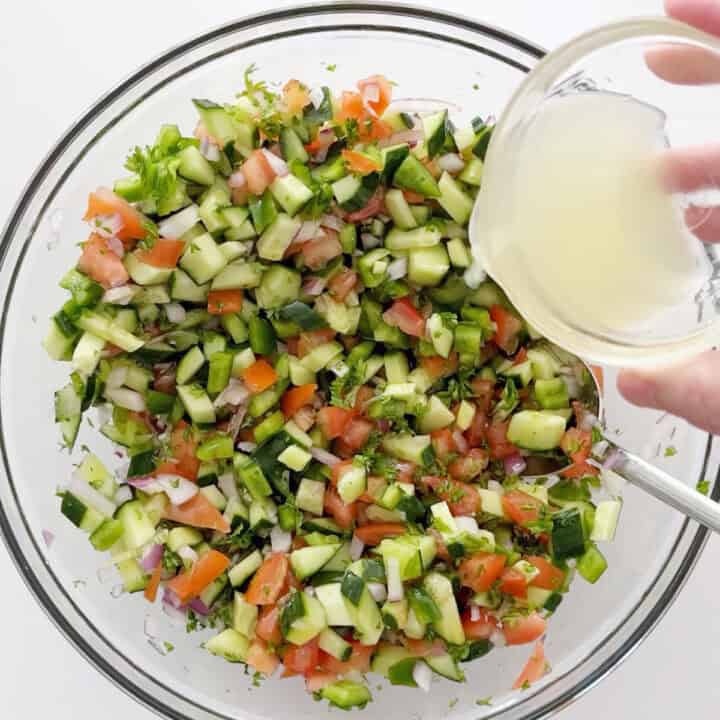
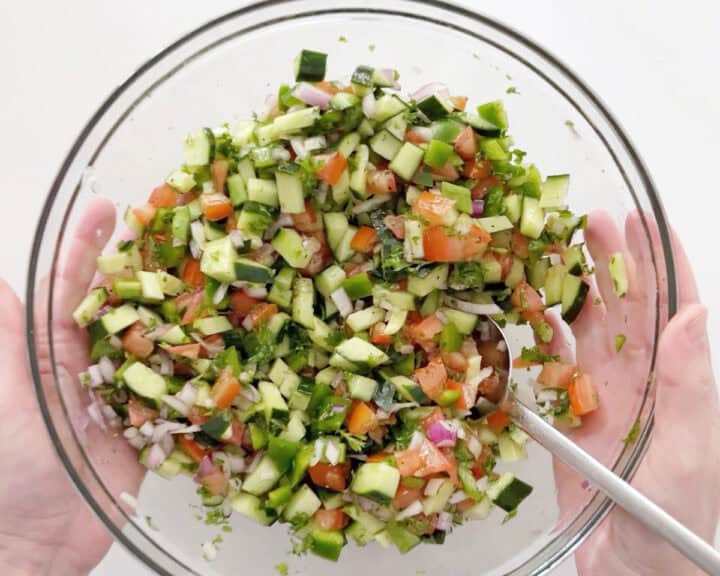
The detailed instructions for making this salad are included in the recipe card below. Here’s an overview of the steps: Finely chop the vegetables: Pour the olive oil and lemon juice on top of the veggies. Sprinkle them with kosher salt and freshly ground black pepper. Mix again, then serve. It’s also good for brunch – almost all Israeli restaurants and hotels serve it. You can add it to a steak and eggs breakfast, for example, or serve it with halloumi cheese. And you can obviously serve it as a side dish at lunchtime as well. This salad goes with almost any entree, but it goes particularly well with the following:
Chicken kabobs Beef kabobs Grilled chicken breast Grilled salmon Lamb chops Turkey burgers Lamb burgers Chicken hearts
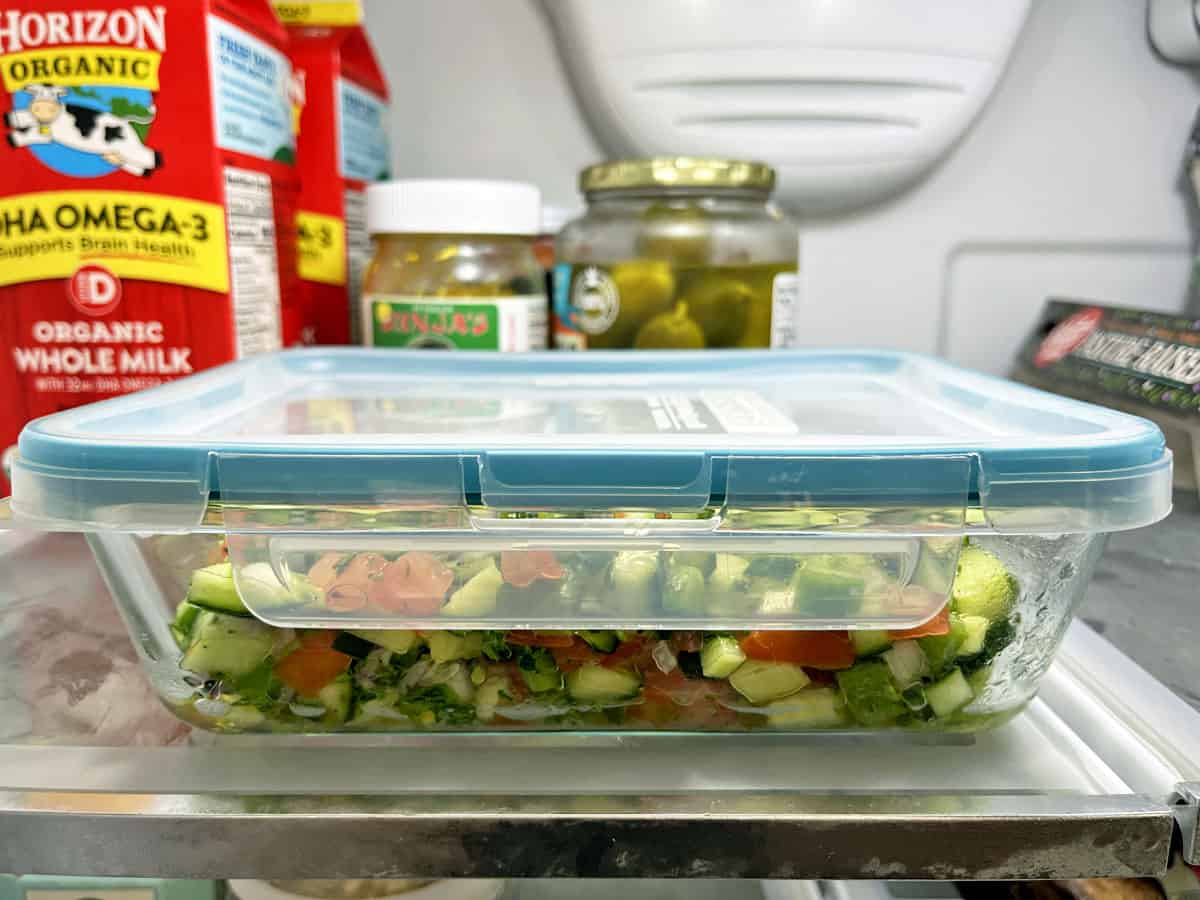
Unlike a lettuce-based salad such as this arugula salad, the veggies won’t wilt, but the salad’s flavor and texture will slowly deteriorate after about 24 hours in the fridge. Pour out some of the accumulated juices and stir the salad before serving it.