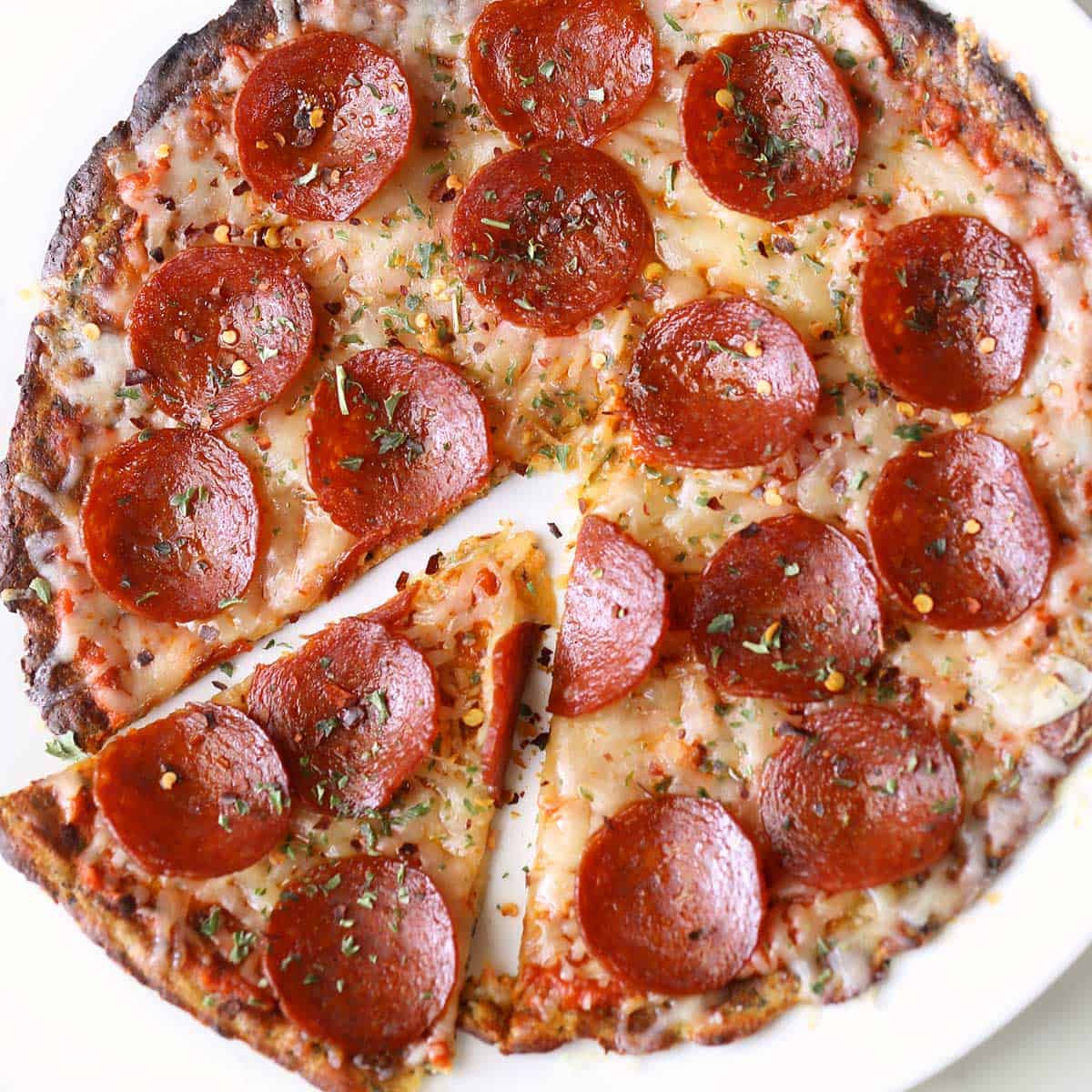
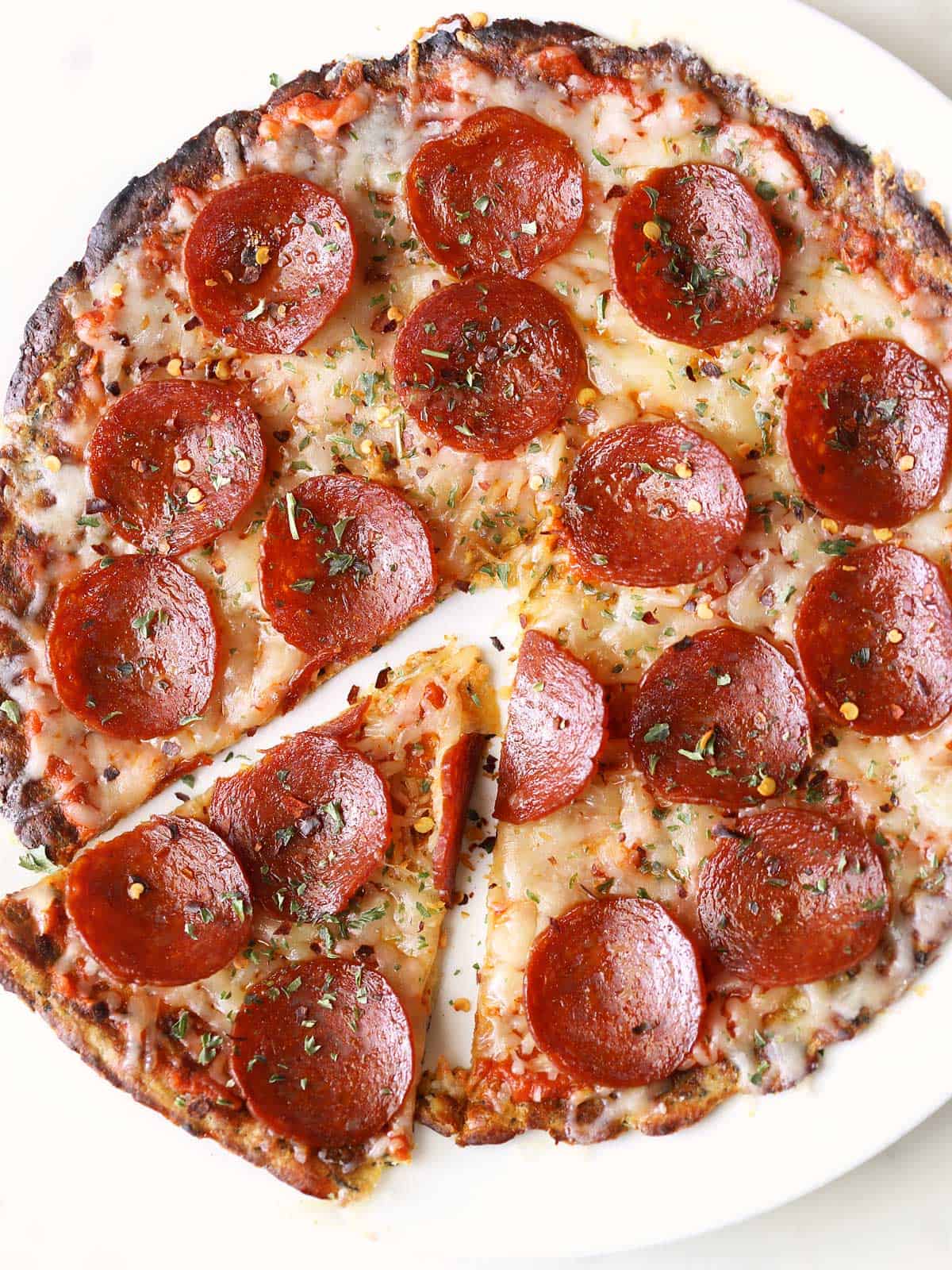
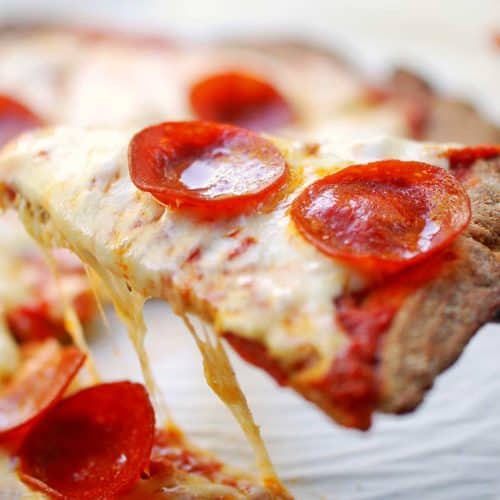
Once you have your beautiful crust, top it with your favorite toppings and return it to the oven just to melt the cheese. As soon as my husband and I transitioned to a low-carb diet, I started looking for acceptable substitutes for some of our favorites. Not surprisingly, pizza was high on my list! Using cauliflower to make a pizza crust sounds suspicious, I know. I was a big skeptic until I made it. But now it’s one of my favorite keto pizza crusts (this keto breakfast pizza is another one, and I also love this crustless pizza). In fact, I serve it to my family almost weekly for lunch on Saturdays. It’s a beloved - and delicious - tradition.
Ingredients
Recipe Card
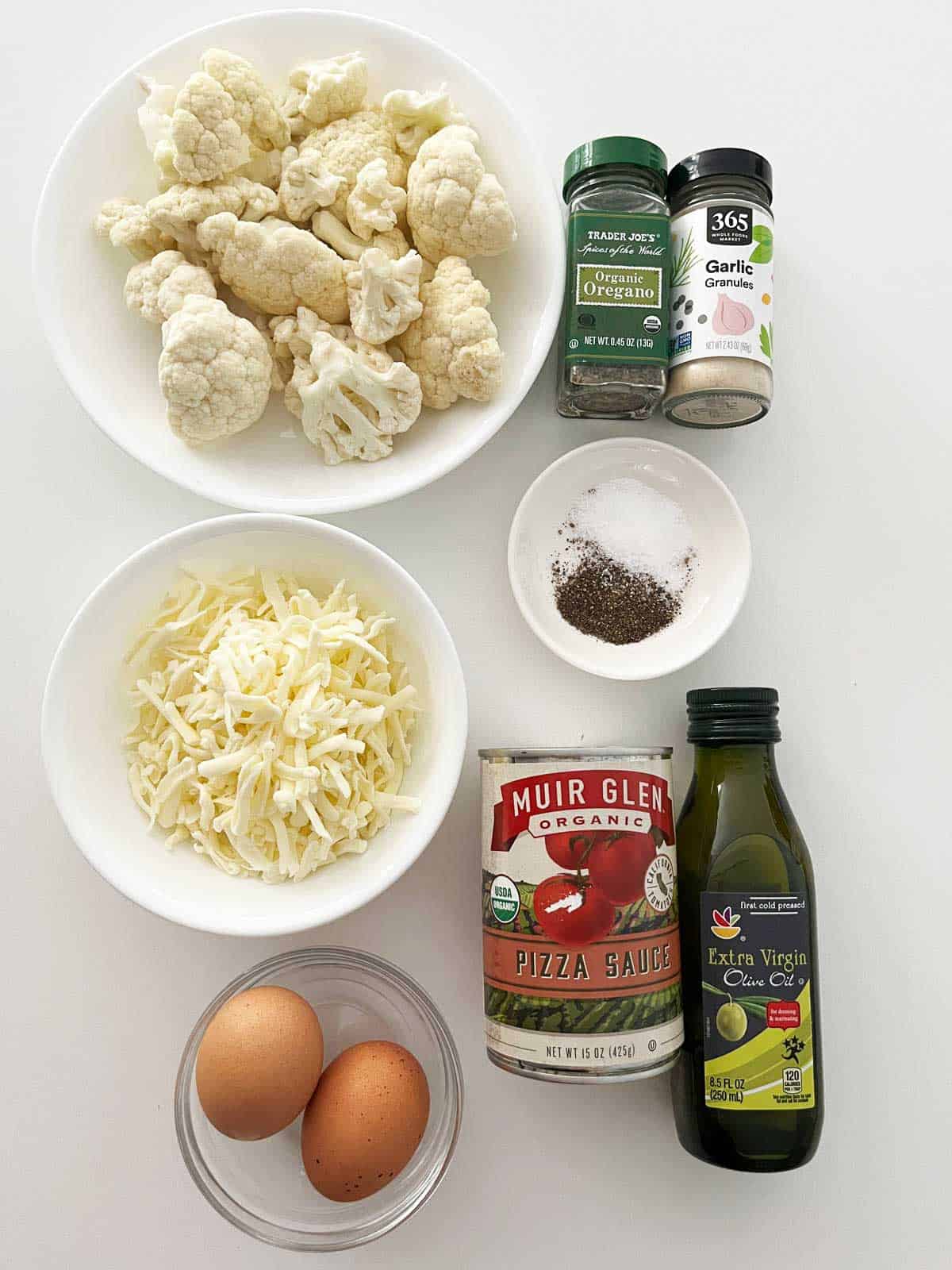
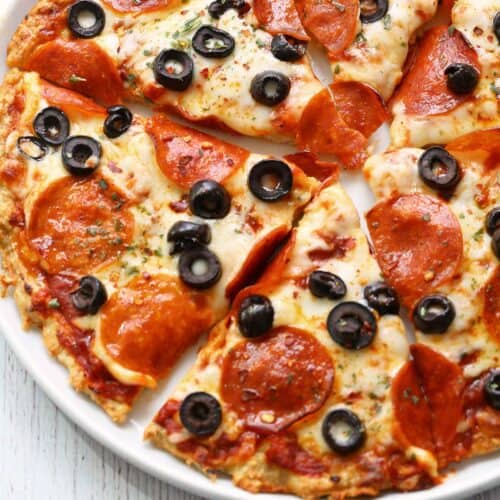
Olive oil: You’ll use it to grease the pan. Avocado oil is another good option. Cauliflower: I recommend using fresh cauliflower in this recipe. Frozen won’t give you the right texture. Eggs: Used as a binding agent. Kosher salt and black pepper: I only use ½ teaspoon of kosher salt in the crust since the toppings are quite salty. Spices: I like to use dried oregano and garlic powder. They nicely flavor the crust and help to mask the flavor of the cauliflower. For the pizza topping: Pizza sauce, shredded mozzarella, and any other favorite toppings (such as pepperoni, olives, peppers, or mushrooms).
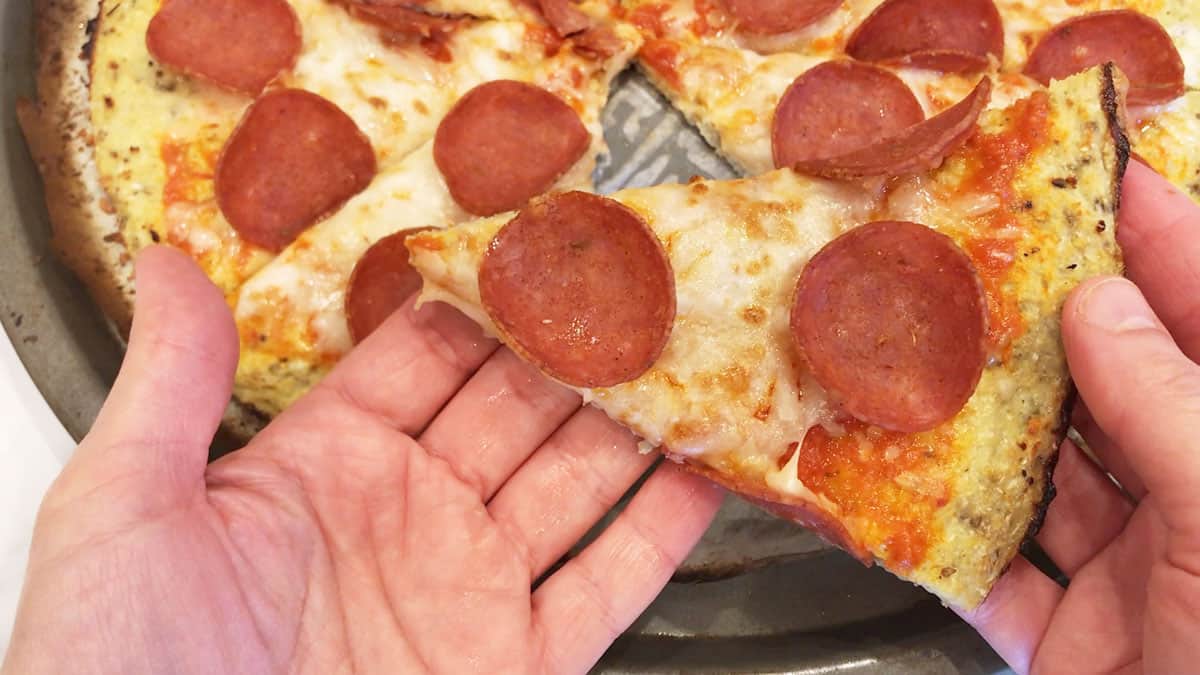
Just remember to add toppings sparingly. This crust is not sturdy enough to carry a lot of toppings.
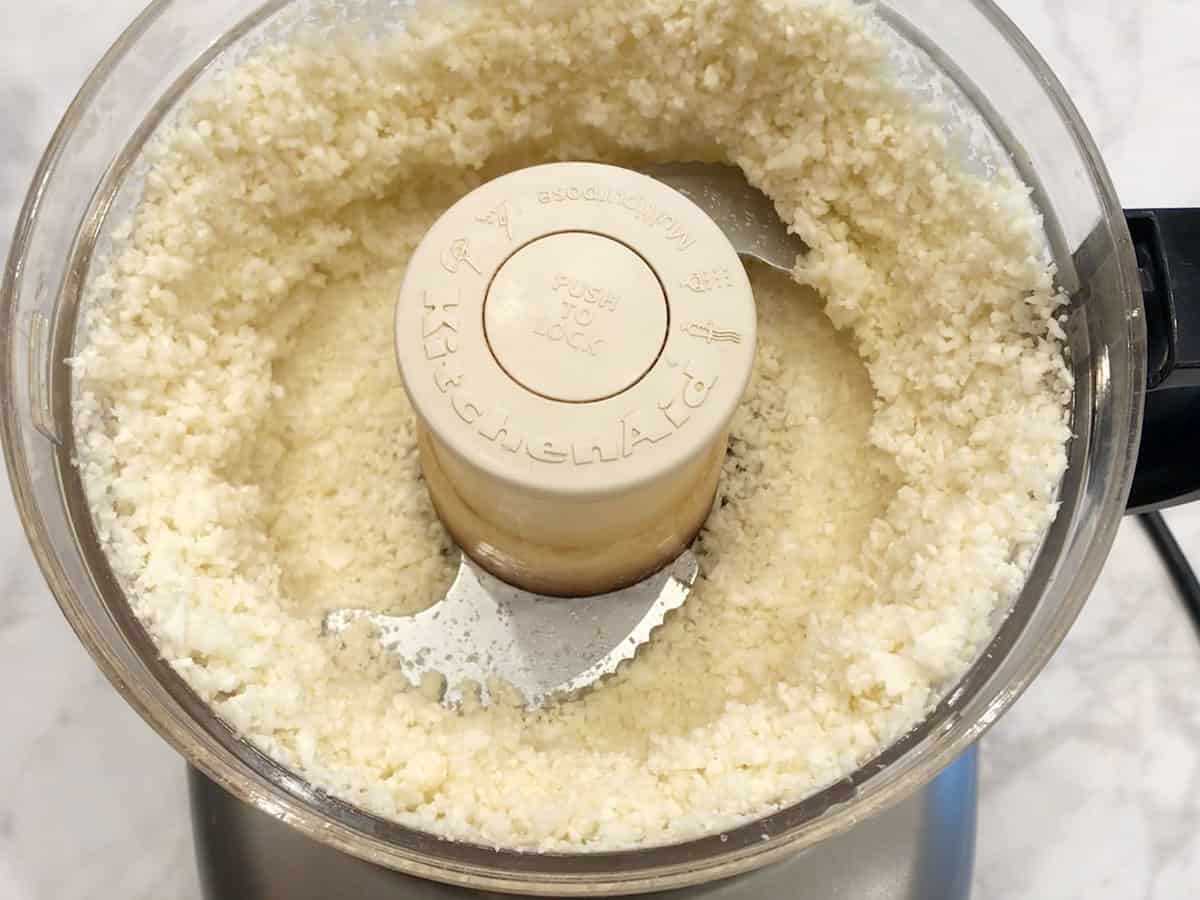
You start by processing cauliflower into “rice” in your food processor.
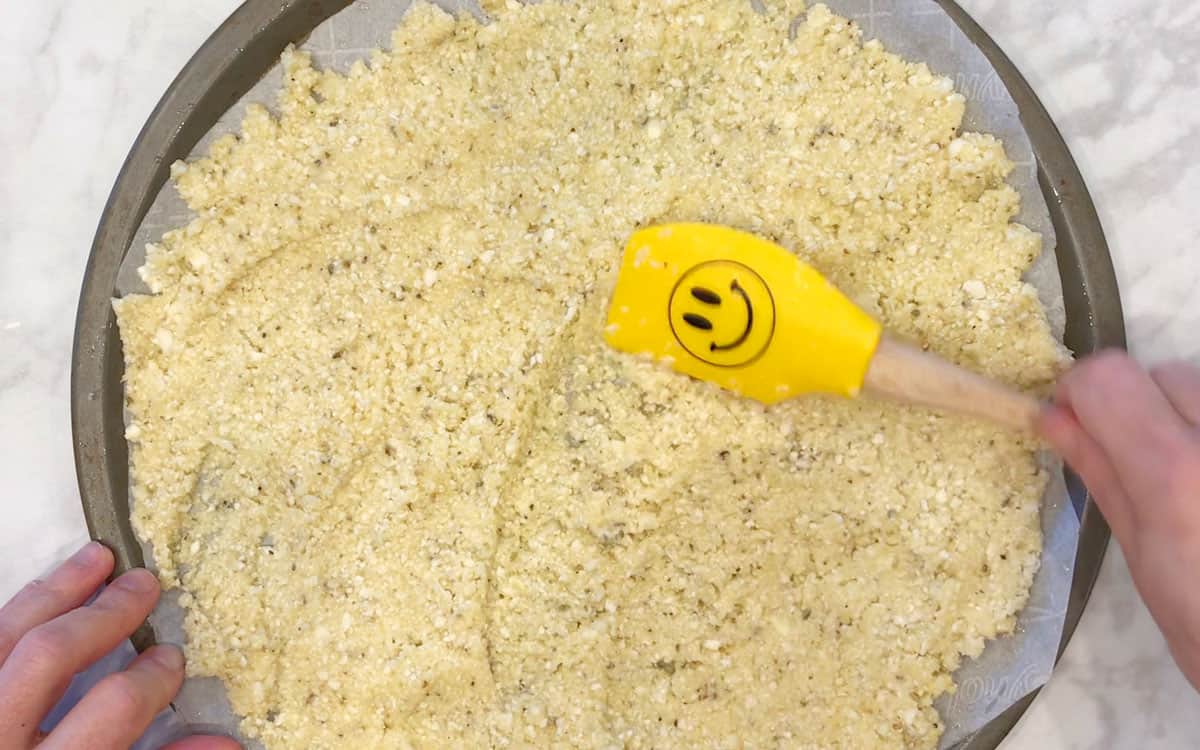
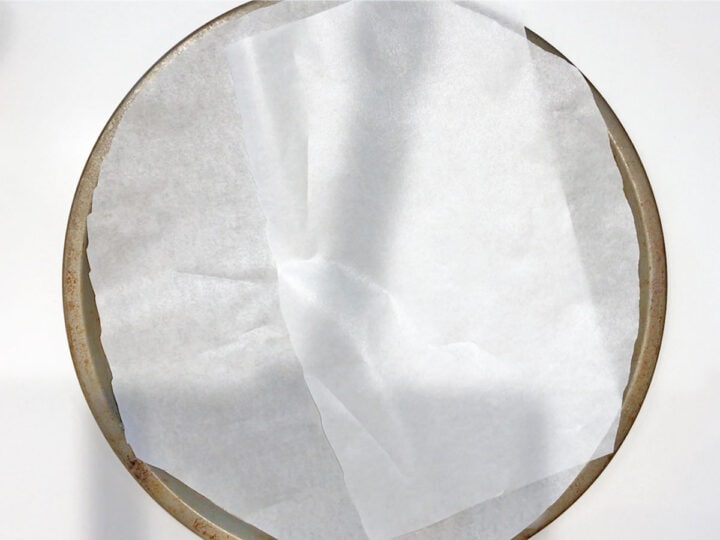
Next, mix the riced cauliflower with egg and spices. Flatten the mixture on a parchment-lined pan.
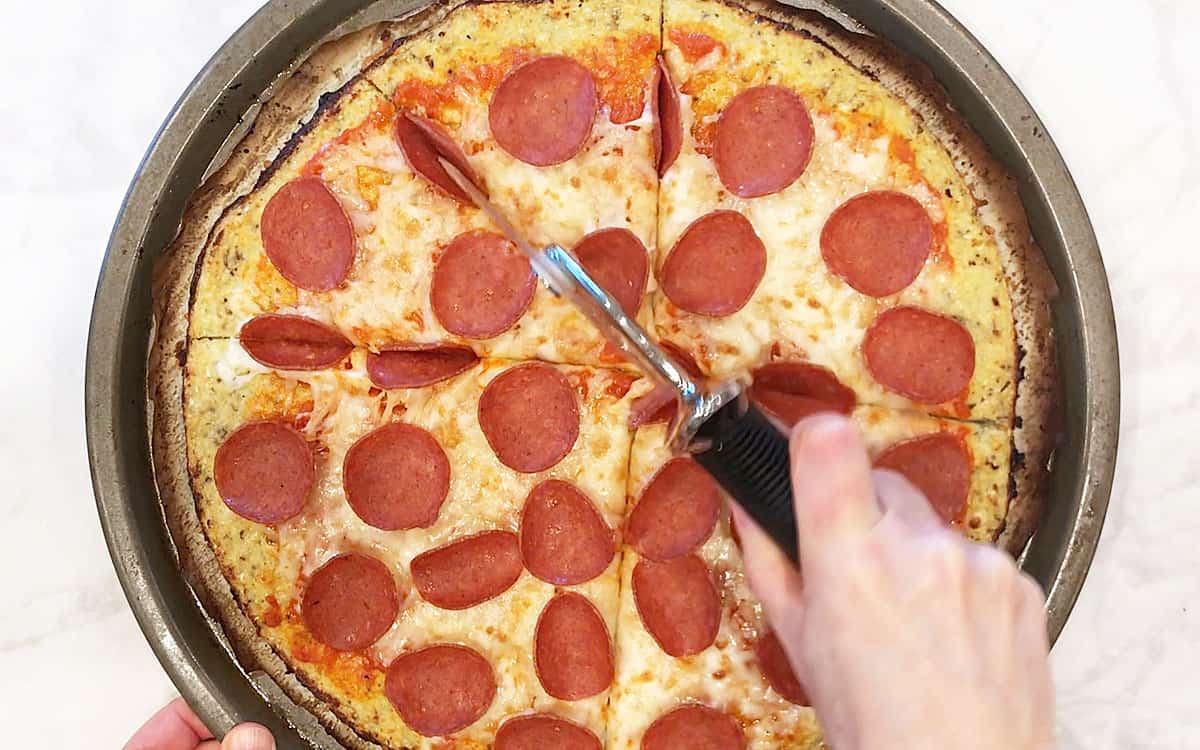
Once you have your crust, you can top it with your favorite toppings. Return the pizza to the oven and bake it until the cheese has melted and the edges are crispy and browned. Cut the pizza into triangles and serve.
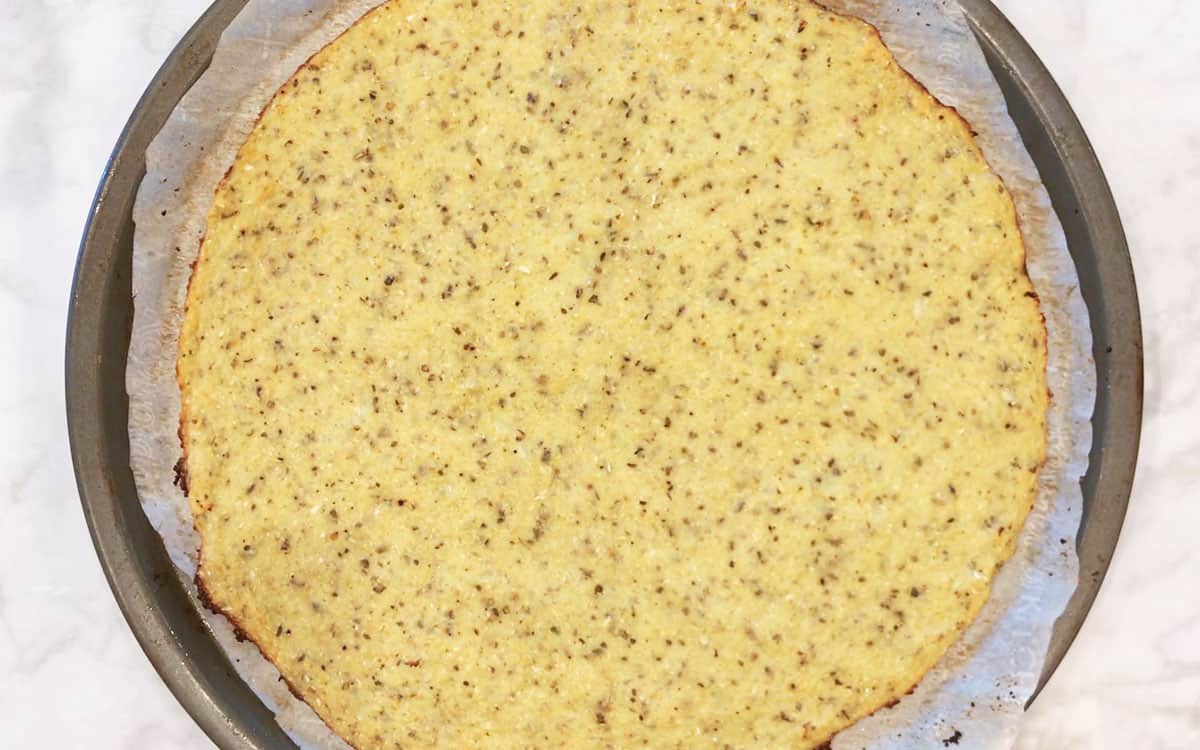
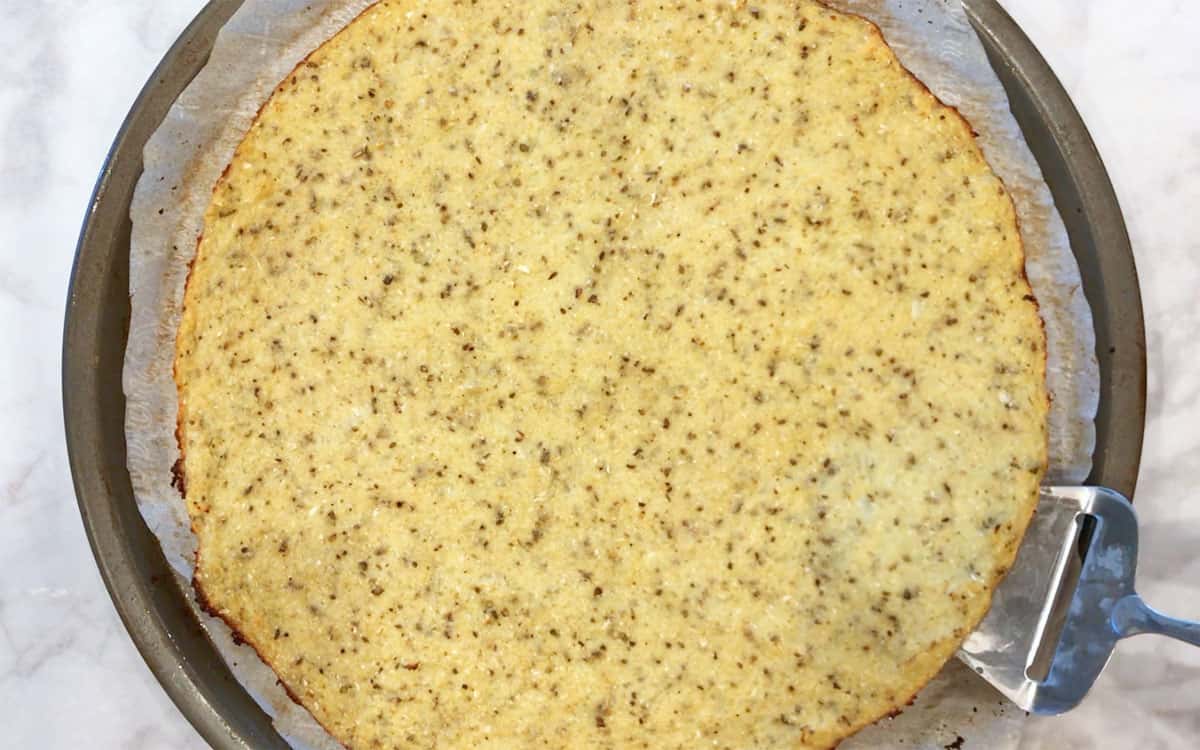
My most important tip is to pat the crust very thin and bake it until it’s deep golden brown with dark edges. That’s how you’ll get the best flavor and texture. See the photo below - after the first stage of baking the crust, before adding the toppings, you should be able to easily lift the edges of the crust away from the pan. Lining the pan with parchment paper is a must. I tried to make this recipe without parchment and the crust turned out soggy instead of crispy. Don’t add too many toppings. This crust is not as sturdy as a regular one (or even as a chicken-crust pizza, which is definitely sturdier). Adding too many toppings could cause it to become soggy and floppy. So, add your toppings sparingly. Don’t be afraid to bake the crust until the edges seem almost burned, especially in the last step of heating the toppings. That’s exactly how you ensure a tasty, crispy crust.
You can also freeze the crust. Cool it completely on the pan, and don’t add any toppings. Carefully place it on a piece of cling wrap, top it with another piece of cling wrap, and gently seal. Place it flat on a freezer shelf. Once it’s frozen, you can keep it in the freezer for up to 3 months, and you can reheat it in the oven from its frozen state. Simply bake it in a 375°F oven for 10 minutes, then add your toppings and return the pizza to the oven to melt the cheese.