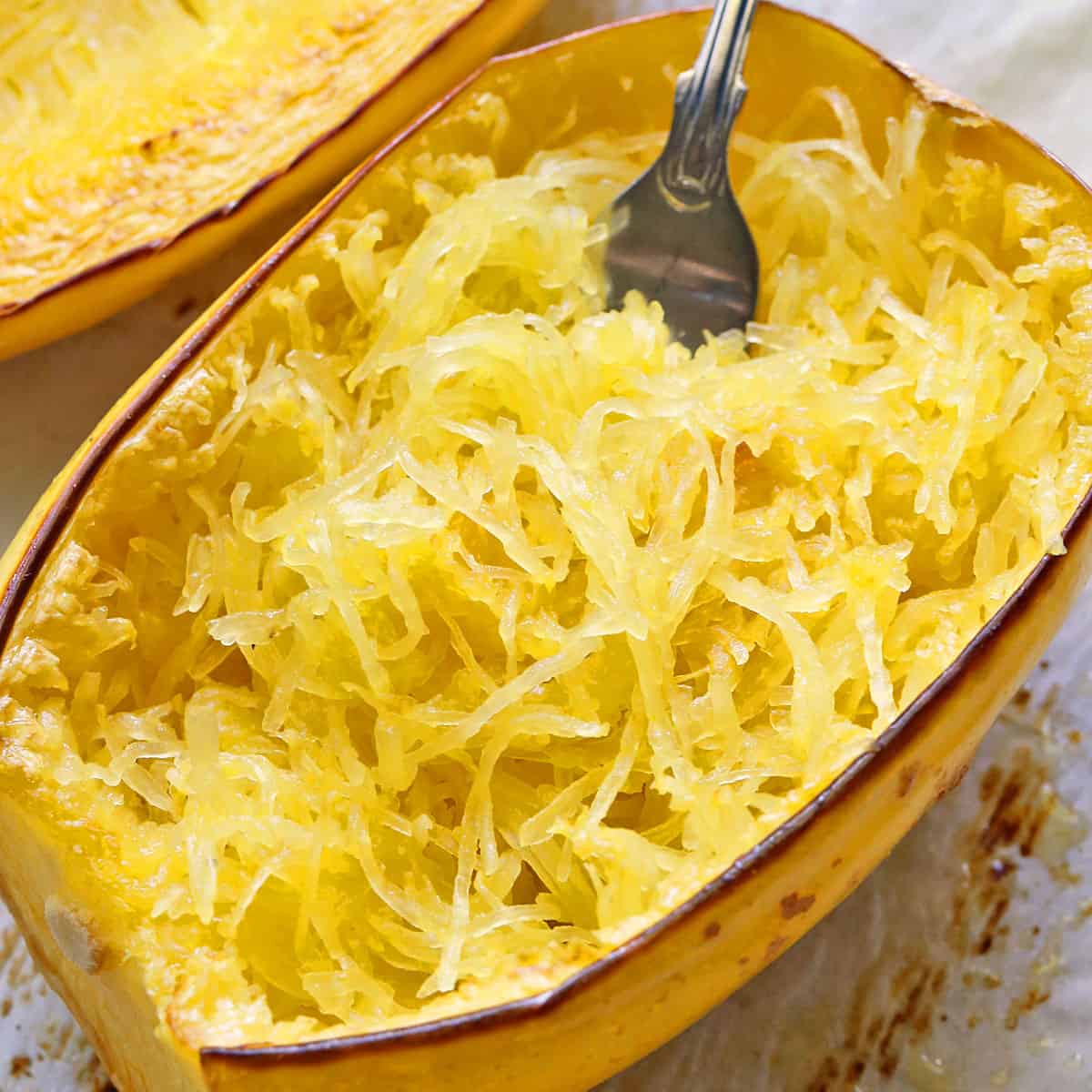
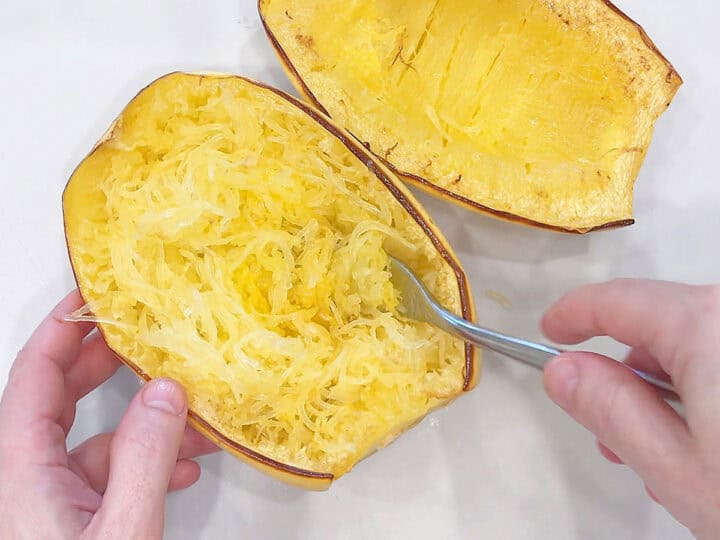
While there are other methods for cooking this squash, oven-baking yields the best results in terms of texture and flavor. Winter squashes are the perfect cold-weather side dish - they are hearty, flavorful, and filling. I love all squashes, but there’s something extra special about spaghetti squash. The way you can run a fork through its cooked flesh and create long, golden noodle-like strands - it’s magic! It’s one of the most fun squashes to eat, so I make it often.
Recipe Card
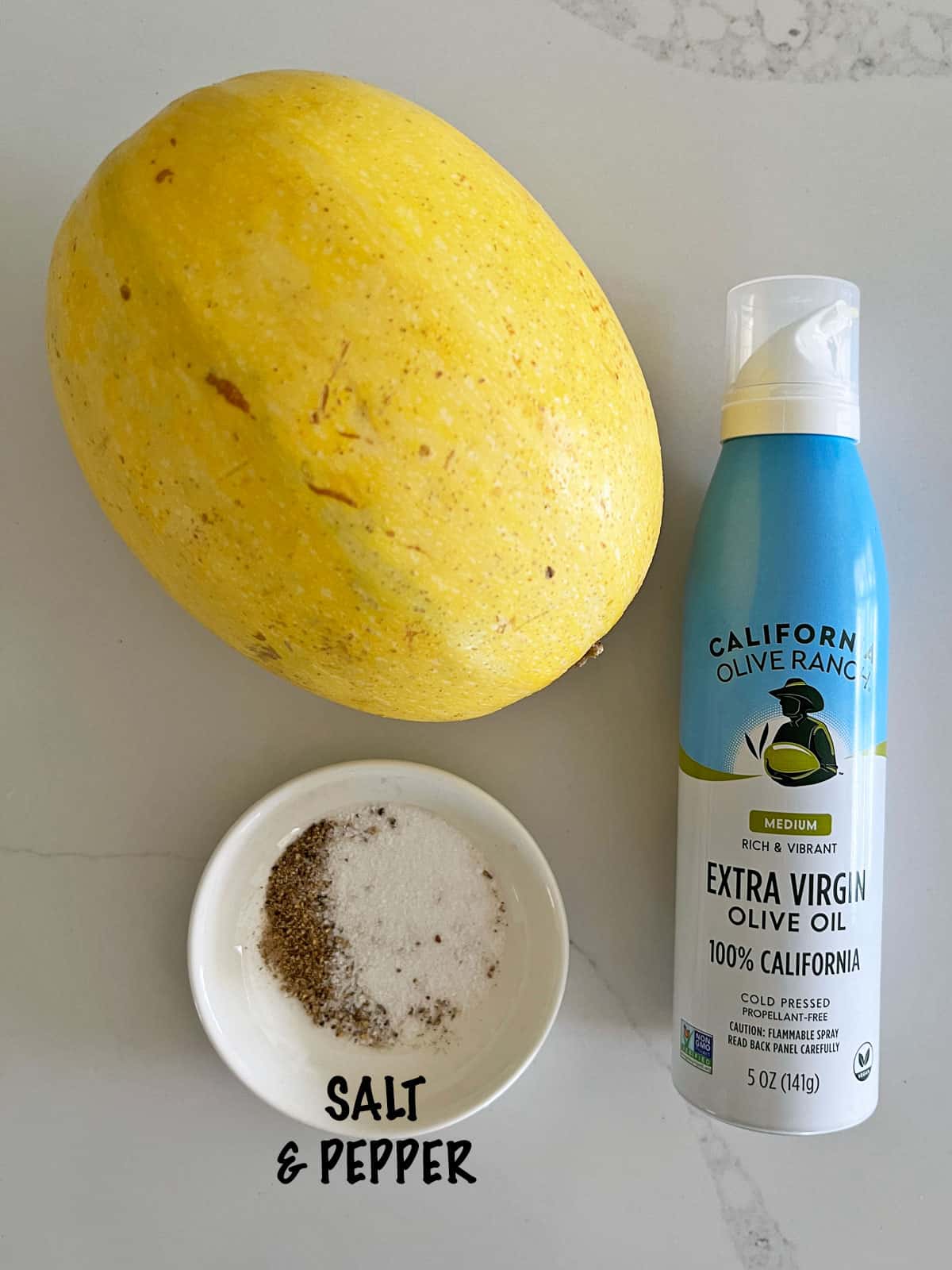
Spaghetti squash: I use a small 2-pound one. If you use a larger one, you’ll need to adjust the cooking time. Olive oil: For convenience, I use an olive oil spray. To season: Salt and black pepper. You can also brush the cut side with melted butter before baking instead of using olive oil.
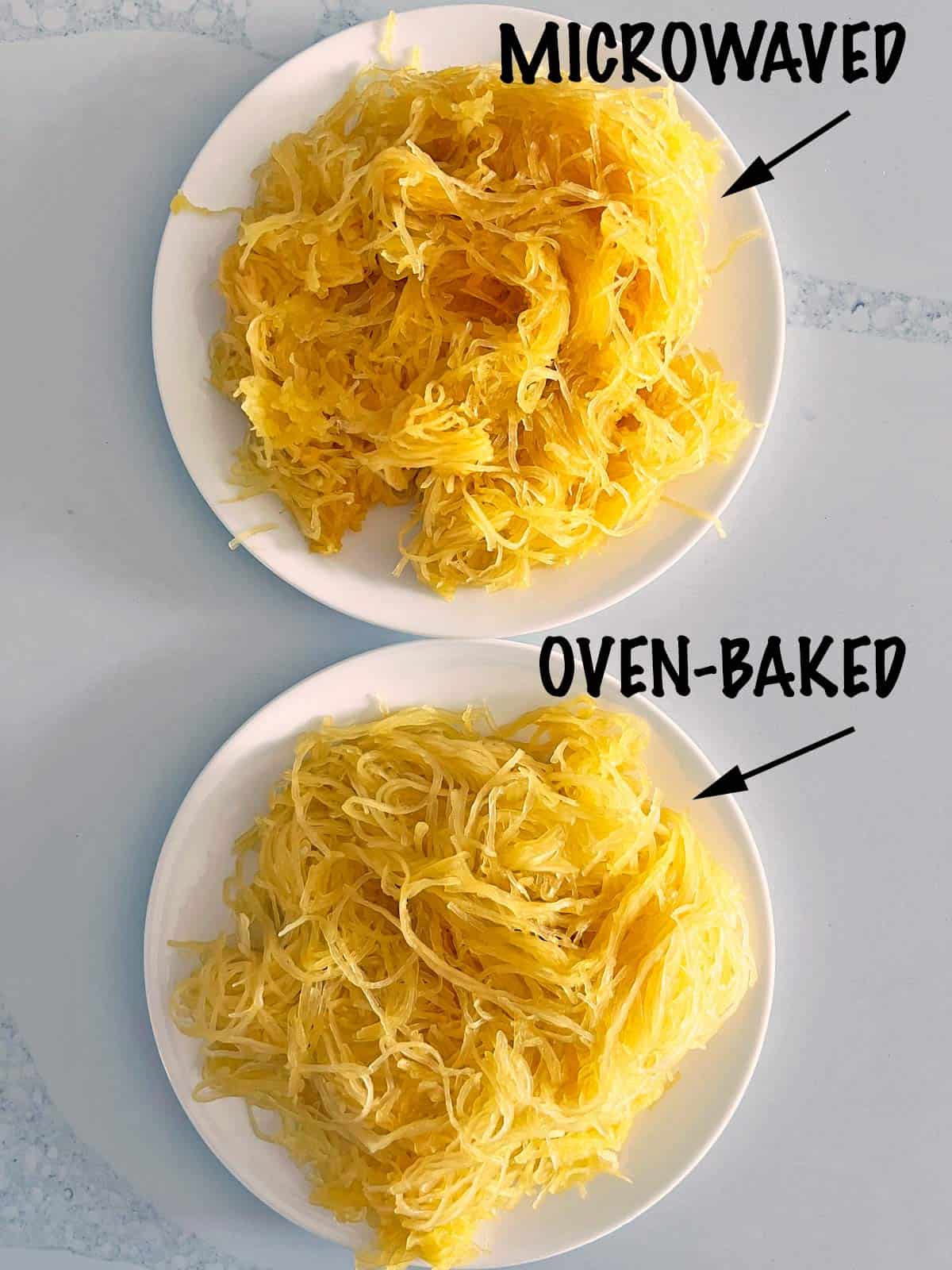
- Microwave. You can microwave spaghetti squash. This is the easiest method because it saves you from the task of cutting a raw squash. You simply pierce it with a fork, then microwave it whole until it’s fork-tender. The drawback of this method is that the strands it produces tend to be on the mushy side.
- Bake it in a water bath. In this method, you cut the squash, then place the halves, cut side down, in a rimmed 9 X 13 baking dish. Add enough water to come ½ inch up the sides of the baking dish. Cover with foil and bake until tender, about 45 minutes. This method produces a reliably tender, uniformly cooked squash.
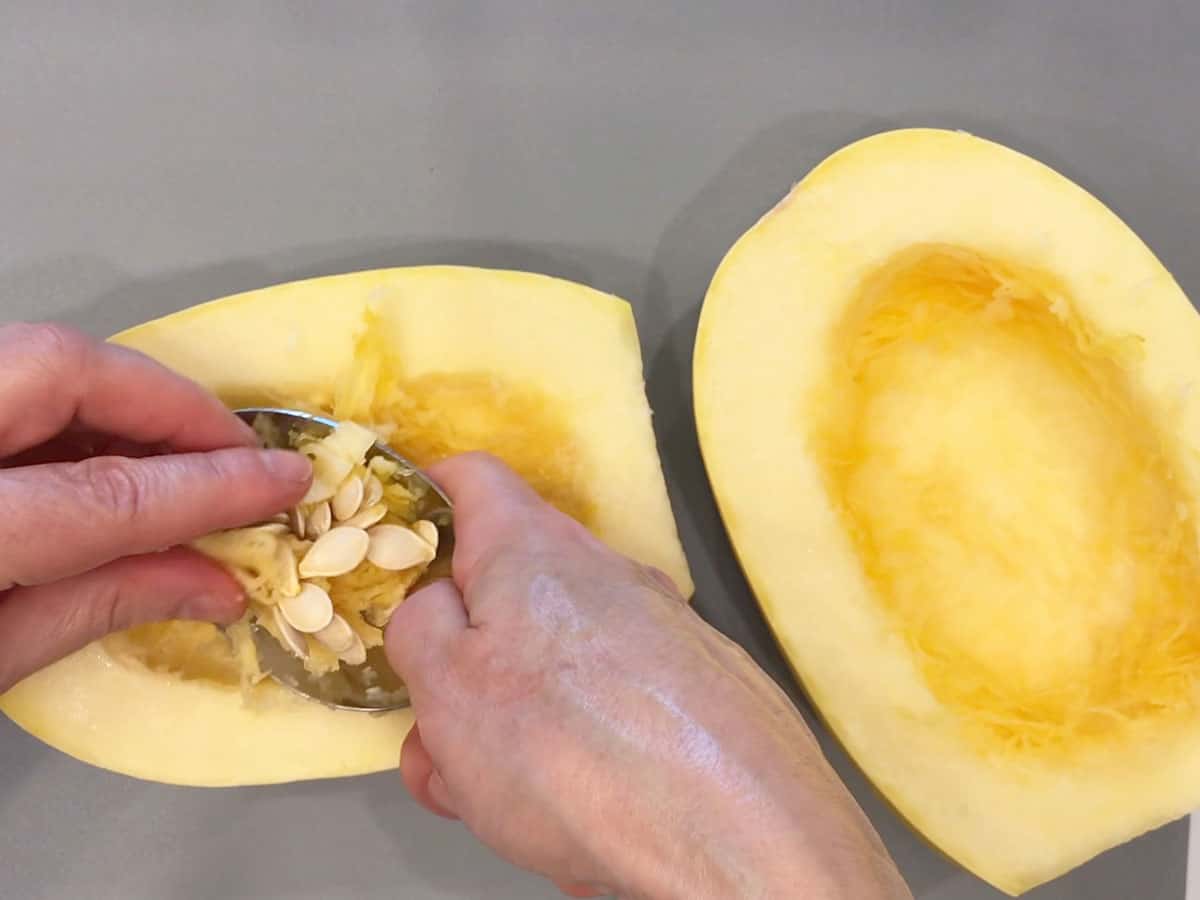
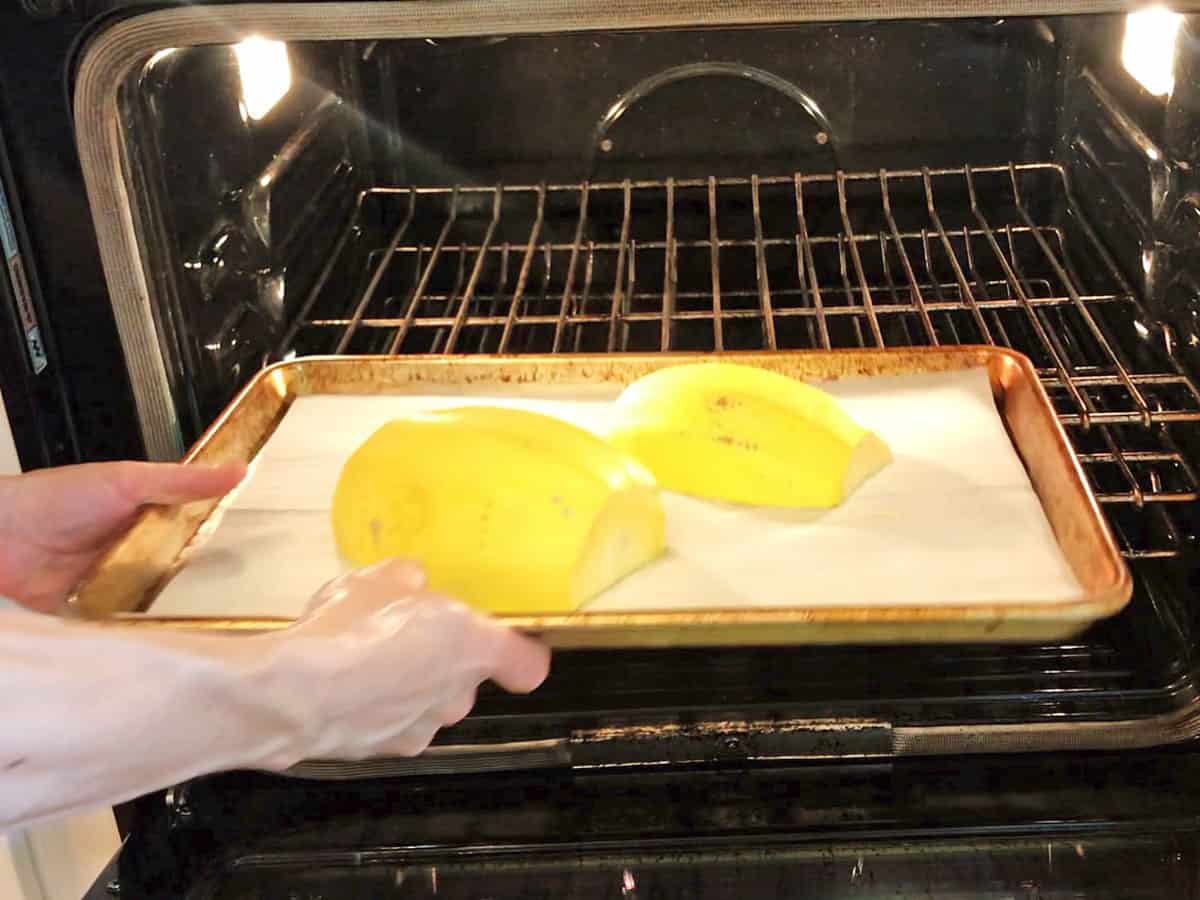
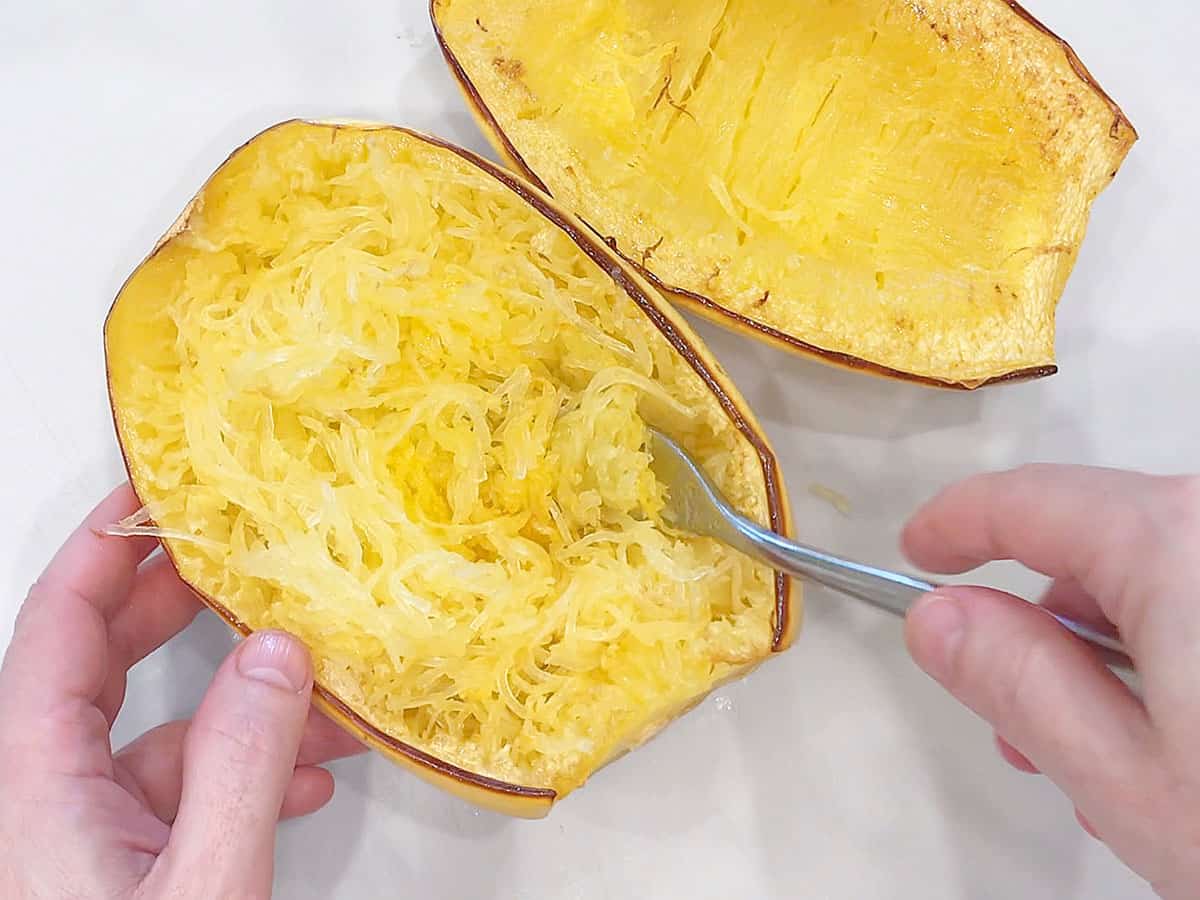
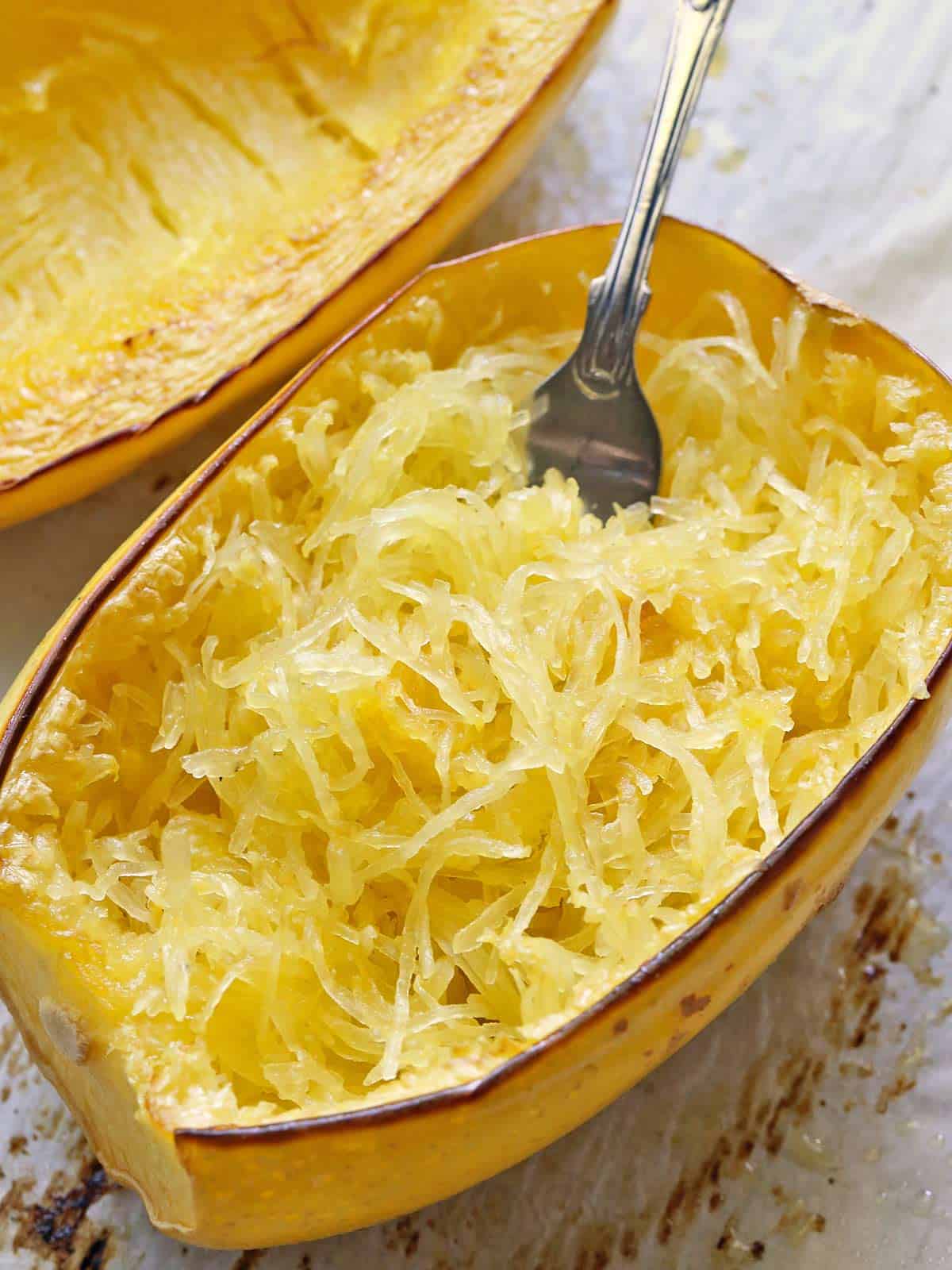
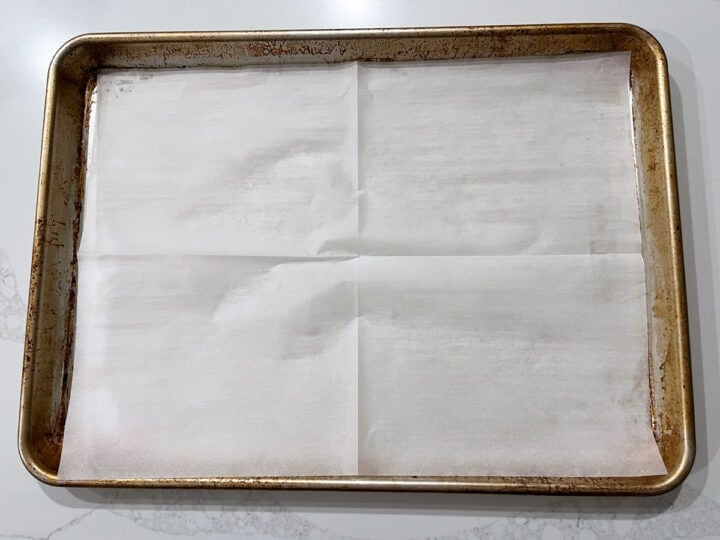
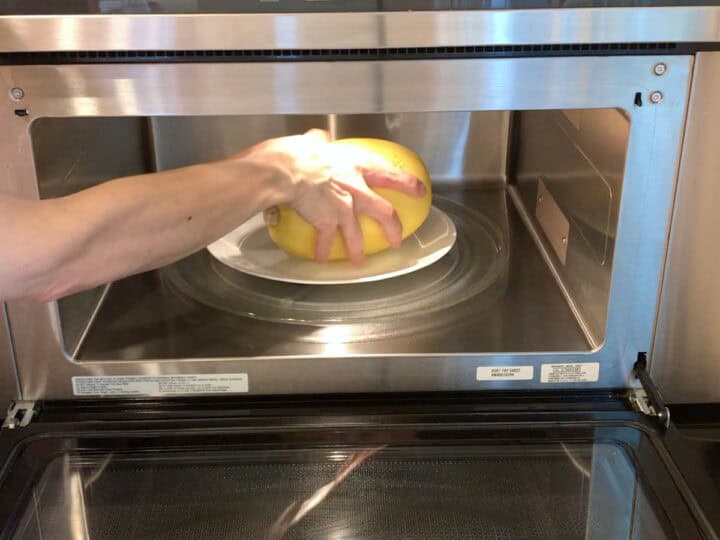
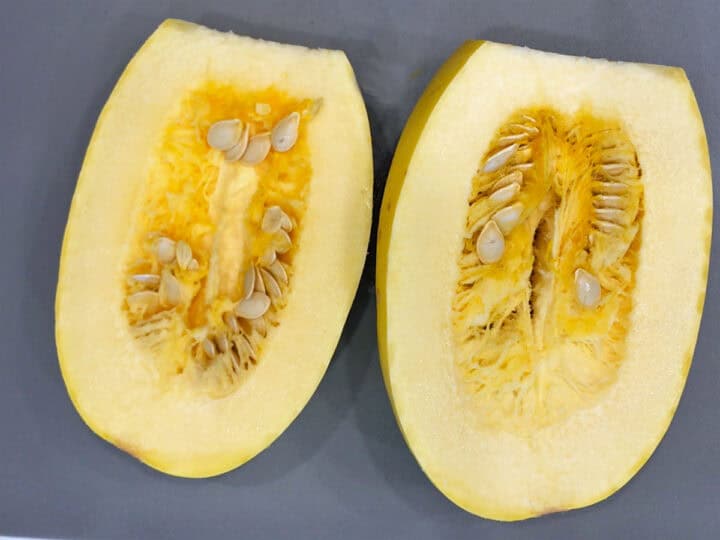
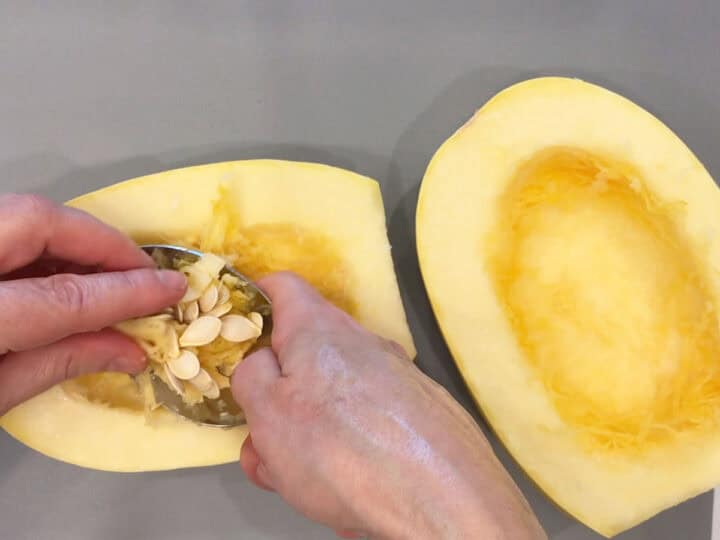
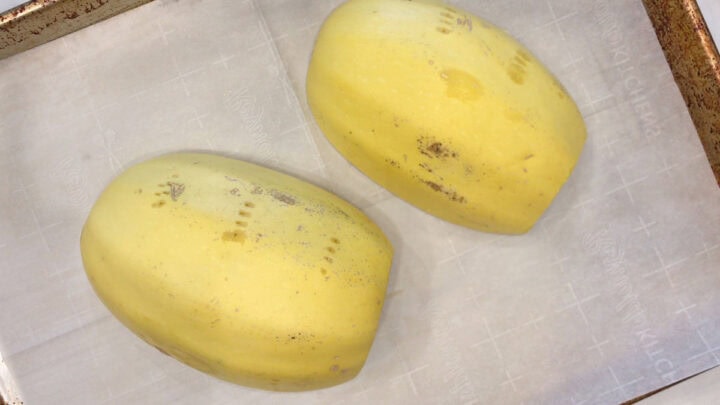
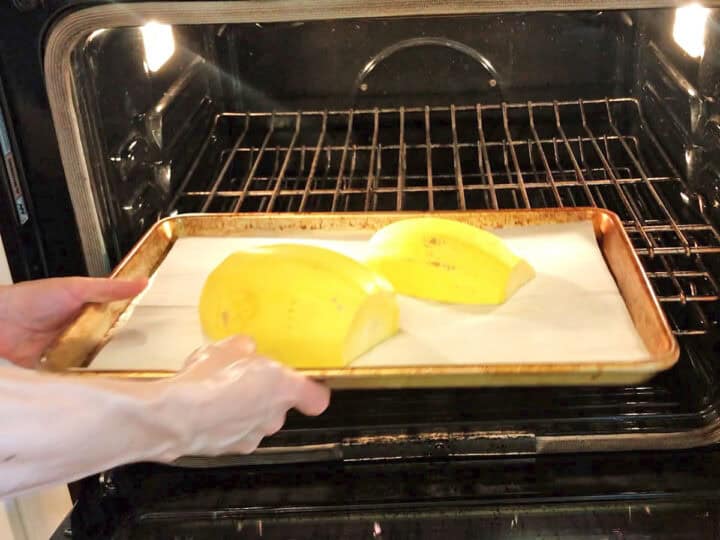
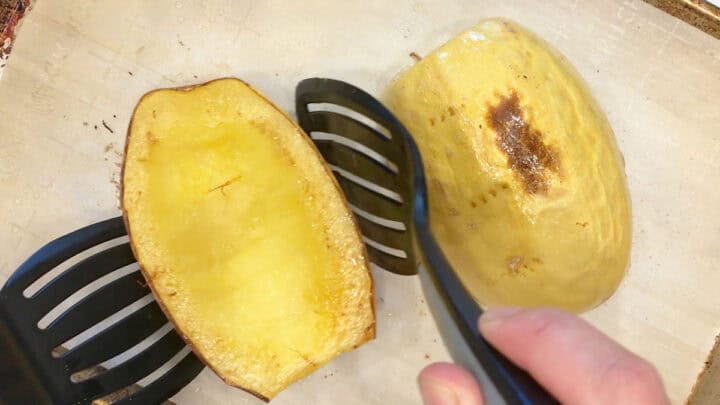
- Oven-bake. This brings me to the method outlined here, of baking the squash directly on a baking sheet. For this method, you cut the squash, then place it cut-side down on greased parchment paper (or you can lightly grease the squash itself). Bake until tender, for about 40 minutes in a 425°F oven. The third method yields the best texture. The squash comes out perfectly cooked, golden brown and fragrant, and when its flesh is raked back and forth with a fork, the strands are just right - soft but not mushy. See the photo below - it compares microwaved and baked spaghetti squash. This side-by-side comparison demonstrates that the baked strands are firmer than the microwaved ones: Pierce the squash in a few places with a fork and microwave it for just one minute to slightly soften, then cut it in half. Using a large metal spoon, remove the seeds and pulp. Lightly spray the cut side with olive oil and, if you wish, sprinkle it with salt and pepper. Place the squash halves, cut side down, in the prepared baking dish. Bake them until fork-tender, for about 40 minutes. Transfer the cooked squash to a cutting board and allow it to cool until easier to handle. Rake a fork back and forth across the squash to remove its flesh in strands, transferring the strands to a bowl. One trick I have learned over the years is to microwave the squash for just a minute or two, depending on its size. This ever so slightly softens the skin, making the task of cutting it less onerous. Once you’ve slightly softened the skin, but without actually cooking the squash, place it on a sturdy cutting board and work very carefully. First, using a large, freshly sharpened knife, slice off the stem end of the squash. Then stand the squash upright on that flat end and carefully use the knife to slice it in half lengthwise. Phew! That was the difficult part, but you’re still left with the slightly annoying task of removing the pulp and seeds - do that with a large metal spoon. You can also top the strands with meatballs - see this spaghetti squash and meatballs recipe, or with meat sauce - check out this spaghetti squash with meat sauce recipe. Another option is to use the strands as a bed for saucy dishes such as beef stroganoff, pulled chicken, Thai chicken curry, shrimp curry, or chicken chili. If you’re not going to use them in another recipe, you can simply reheat them in the microwave. You can also reheat them in a 350°F oven until heated through. You can freeze the leftovers in freezer bags for up to three months. Thaw them overnight in the fridge, then reheat them in the microwave or in the oven.