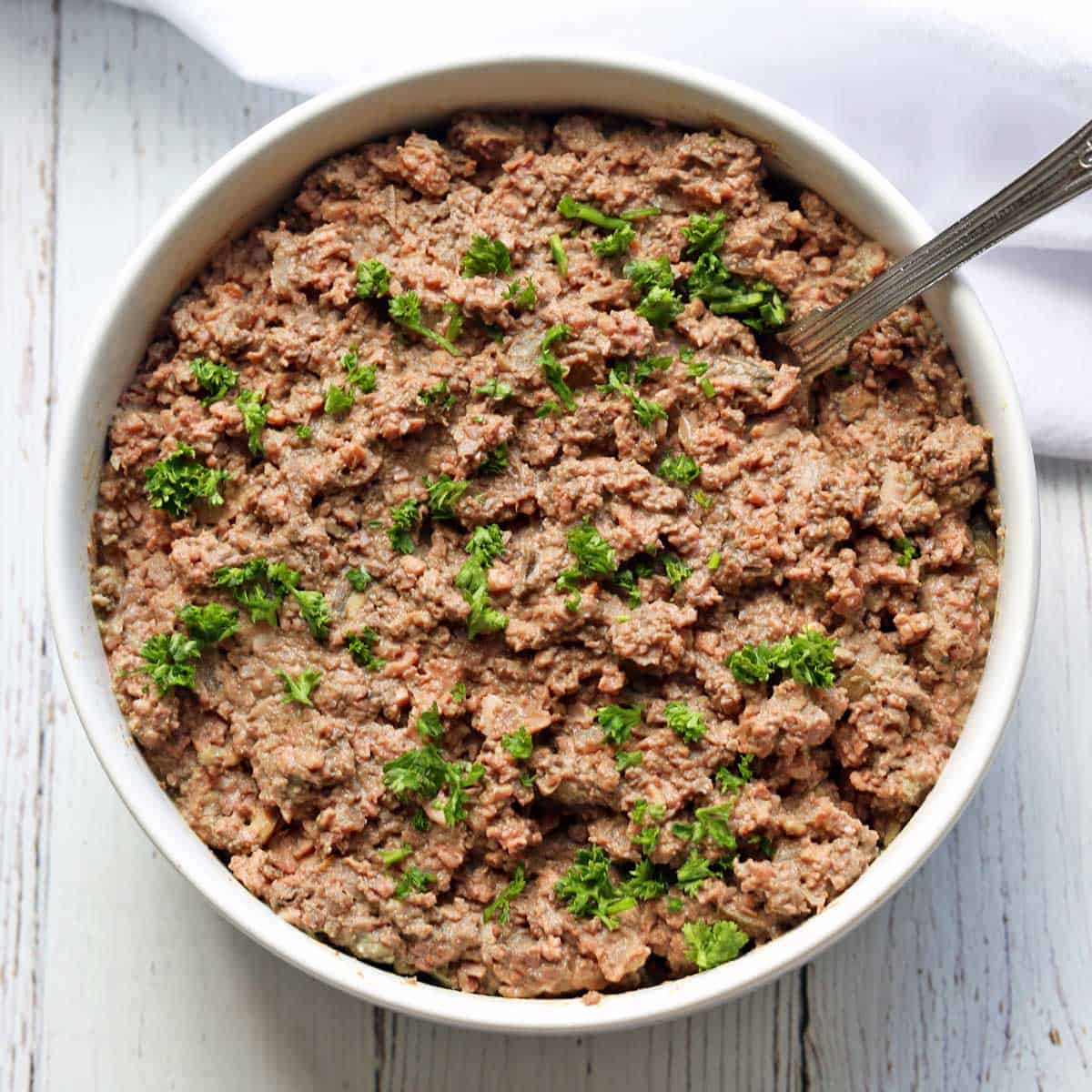
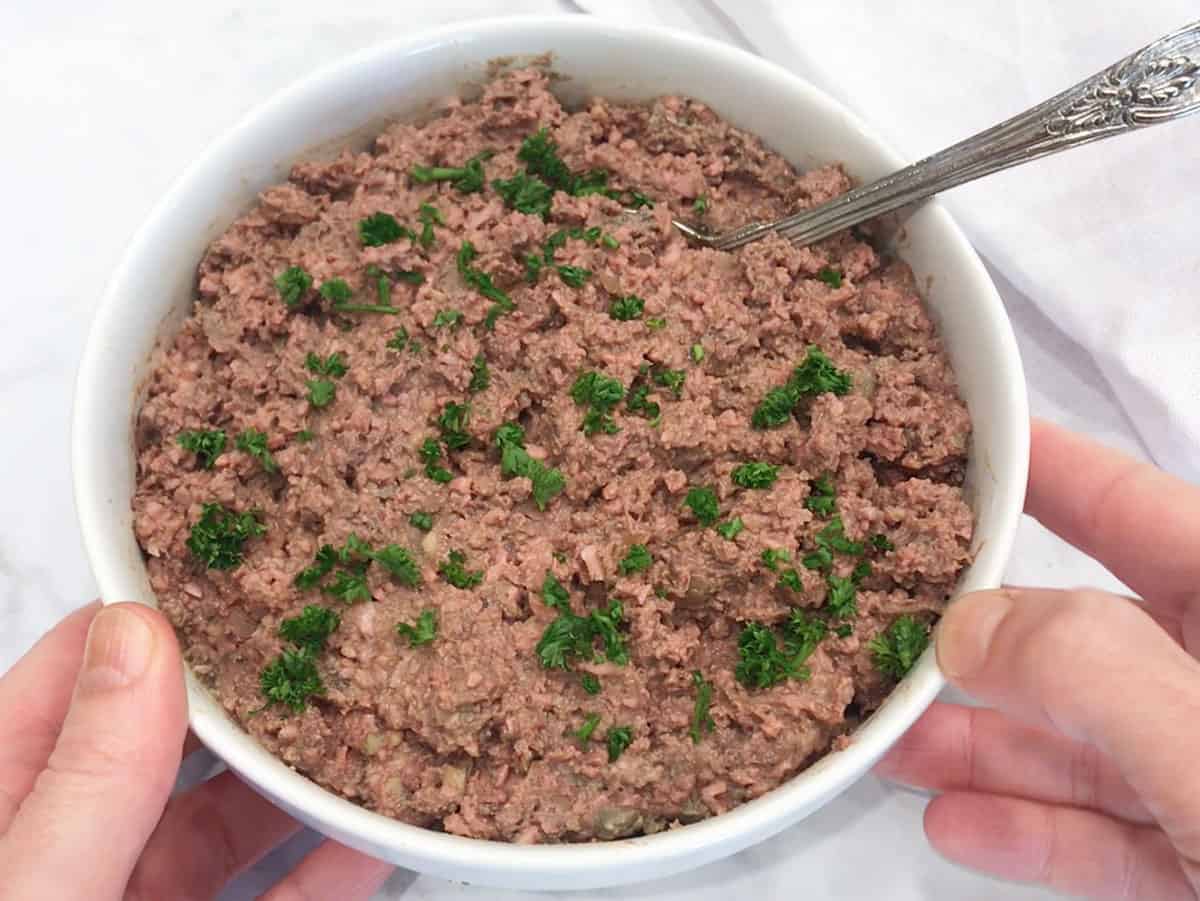
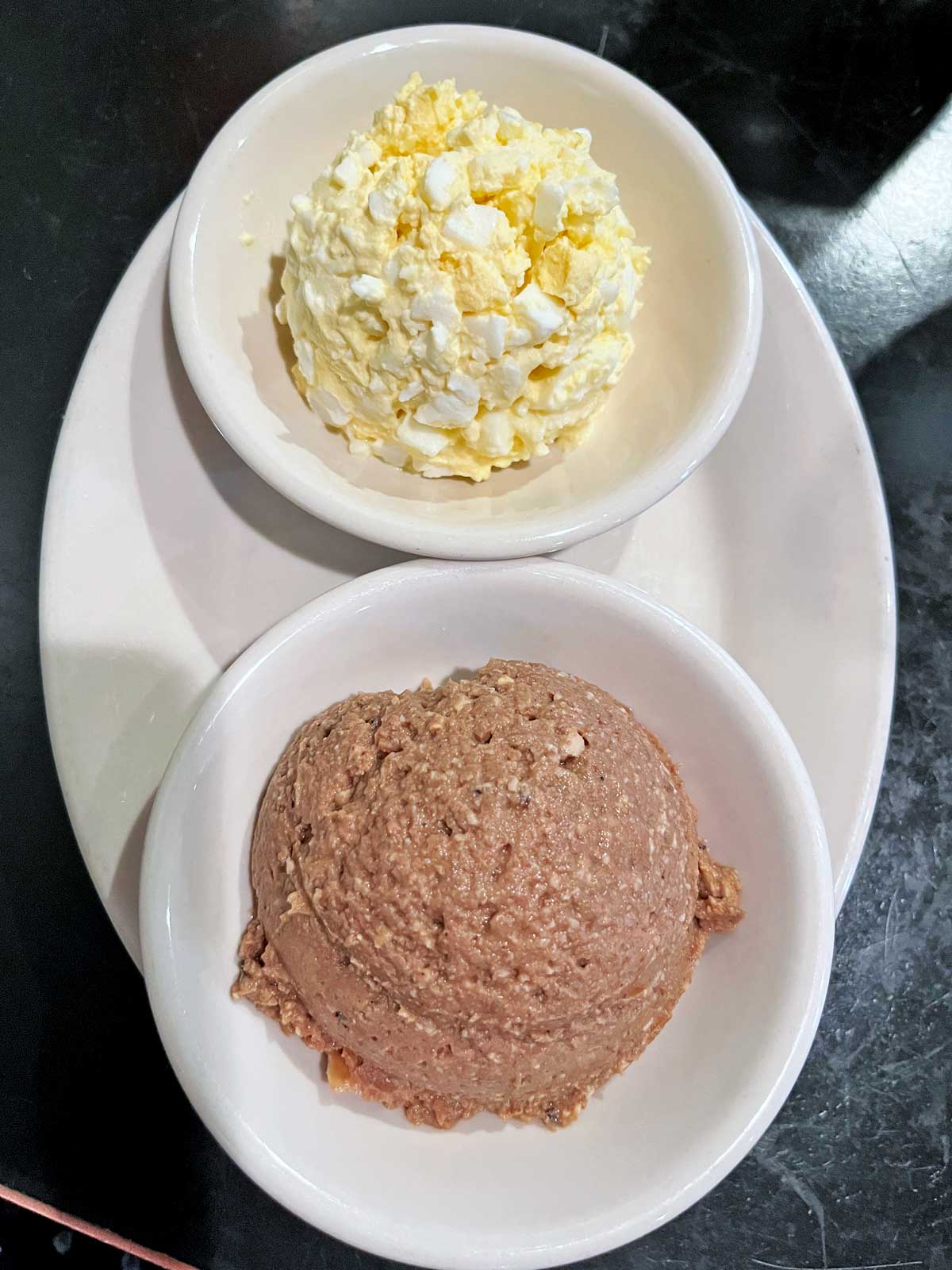
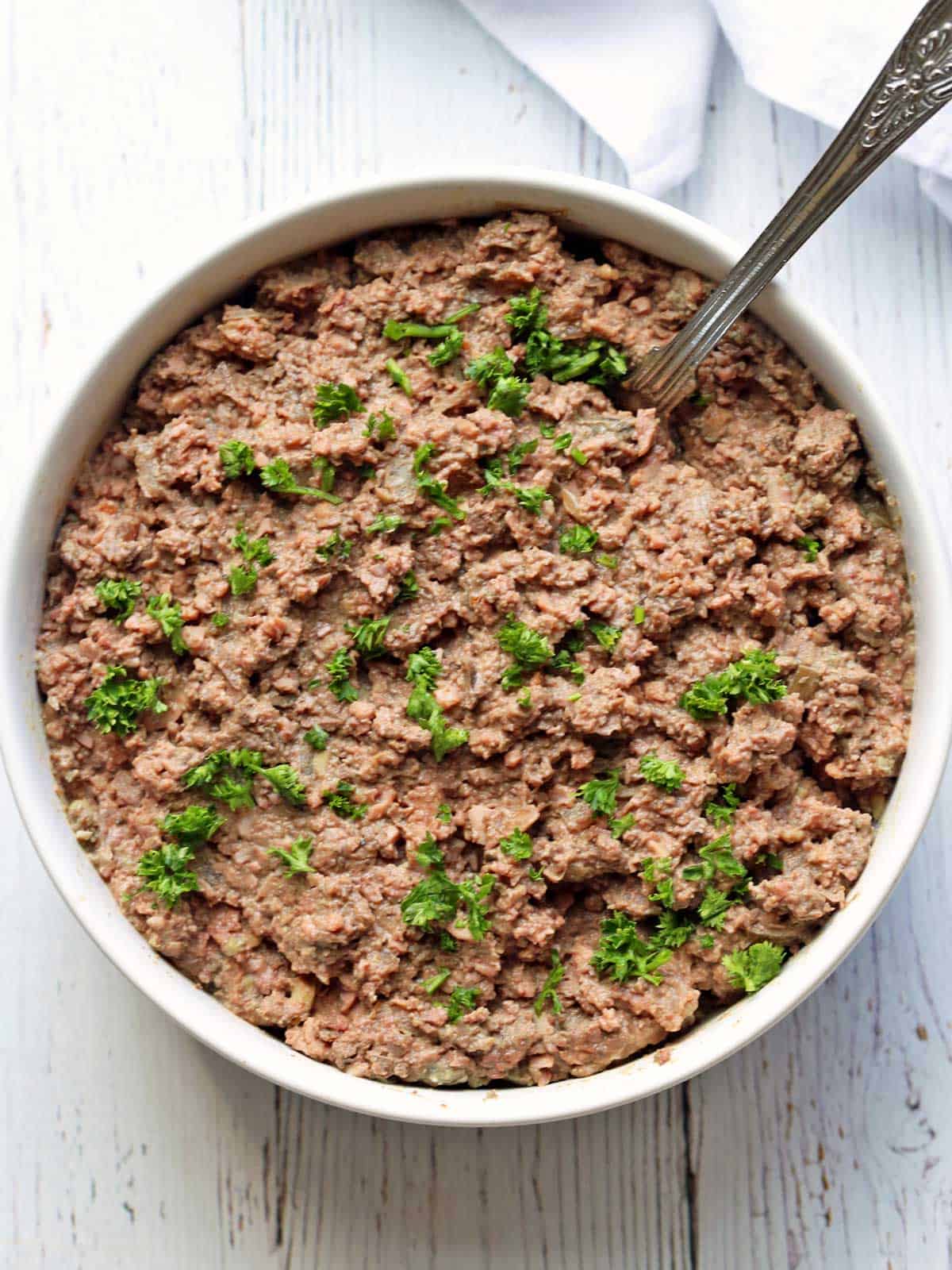
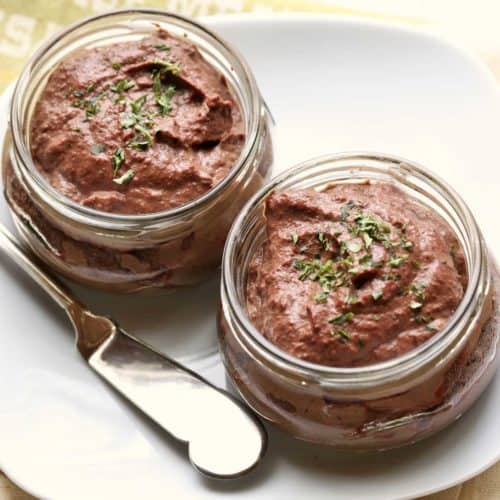
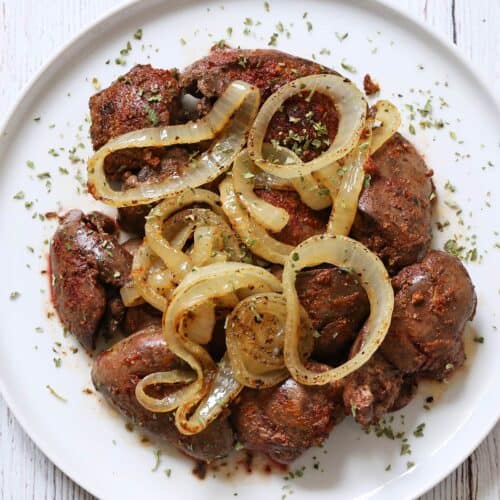
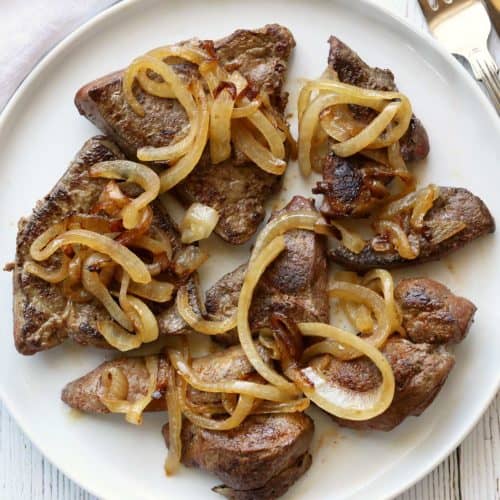
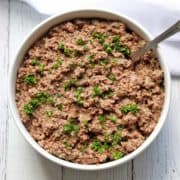
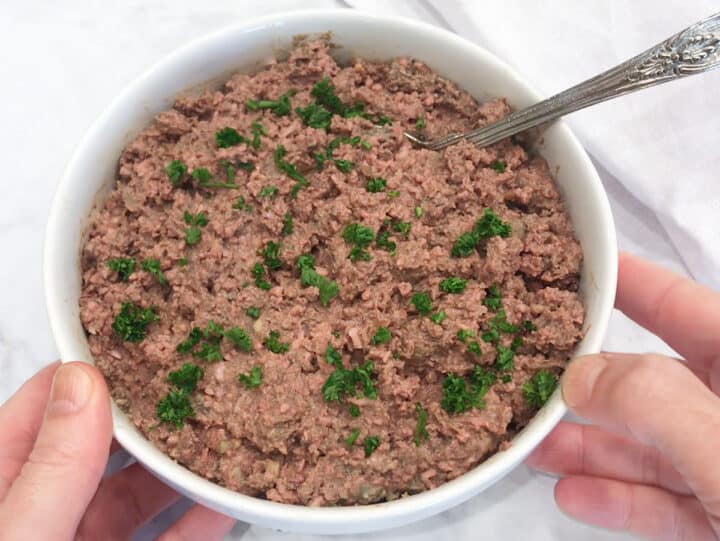
It takes just 20 minutes to make, but it tastes best after a short rest in the fridge. So you should make it a couple of hours in advance. Chopped liver is the Jewish version of chicken liver pâté. It’s simpler, heartier, and - just as important for observant Jewish people - kosher because it doesn’t contain butter or cream. I love chicken liver. I like sauteed chicken livers topped with sauteed onions, and I also like them chopped or made into a pâté. I appreciate the delicate texture and flavor of pâté, but I also love the rustic Jewish version. This is my grandmother’s recipe. The only change I make is using olive oil instead of chicken fat, but please feel free to use chicken fat if you wish.
Ingredients
Instructions
Recipe Card
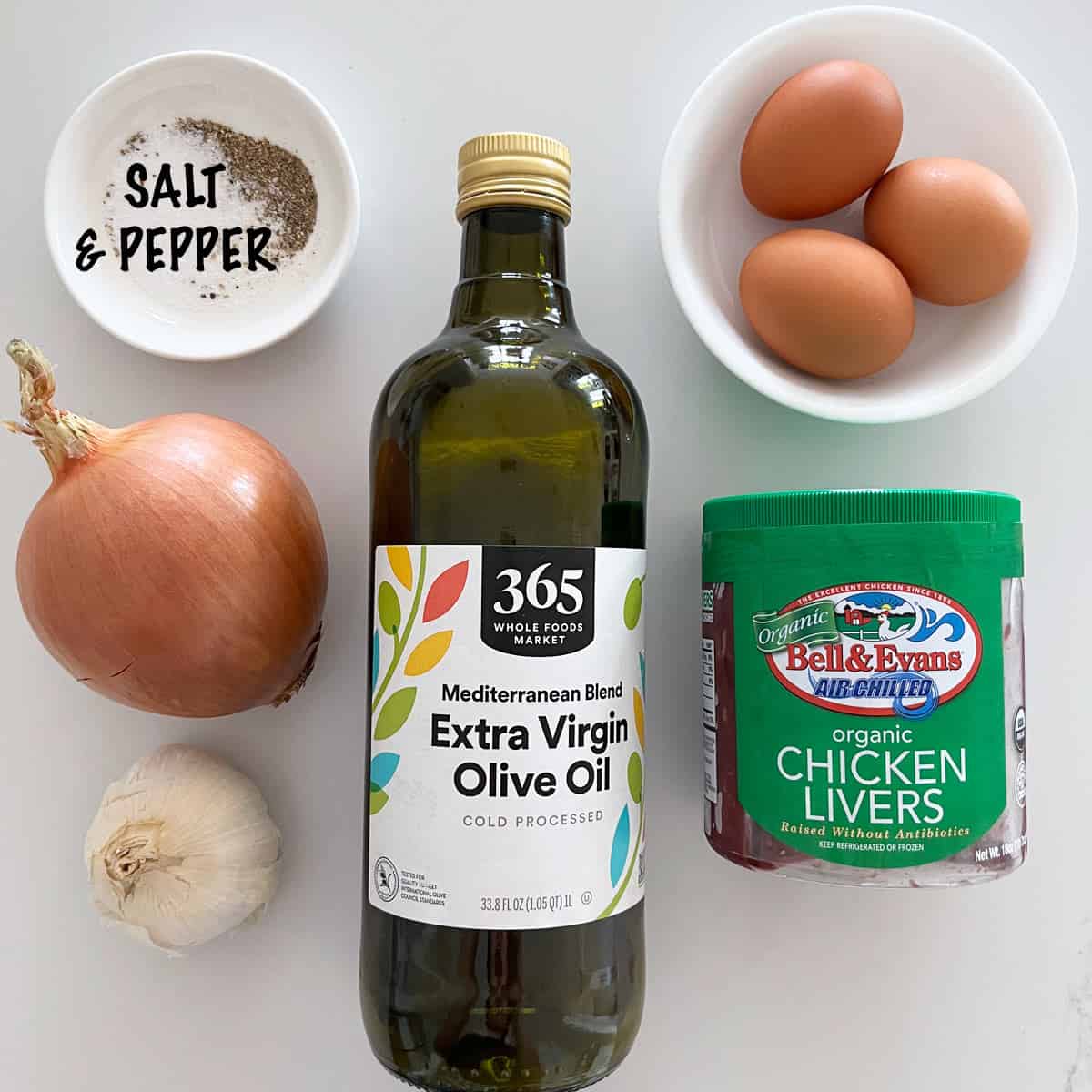
Fresh chicken livers: I usually get them at the meat counter at Whole Foods. They are also widely available in U.S. supermarkets. Hard-boiled eggs: These need to be hard-boiled, not medium-boiled. So, if you follow this recipe for hard-boiled eggs, leave them in hot water for 12-13 minutes. Extra-virgin olive oil: The traditional recipe uses chicken fat. This ensures the dish keeps Jewish kosher laws and does not mix meat and dairy. I prefer to use extra-virgin olive oil. It’s delicious! However, if you prefer to use chicken fat, that’s absolutely fine. Onion: Chop it finely. This is an important ingredient - it’s responsible for the dish’s bold flavor. It’s used here in much larger quantities than those used in a typical pâté. Minced garlic: It’s best to use fresh minced garlic, though sometimes I use garlic powder. Garlic is not usually included in traditional recipes, but I like the flavor it adds. Kosher salt and black pepper: I use Diamond Crystal Kosher Salt and freshly ground black pepper.
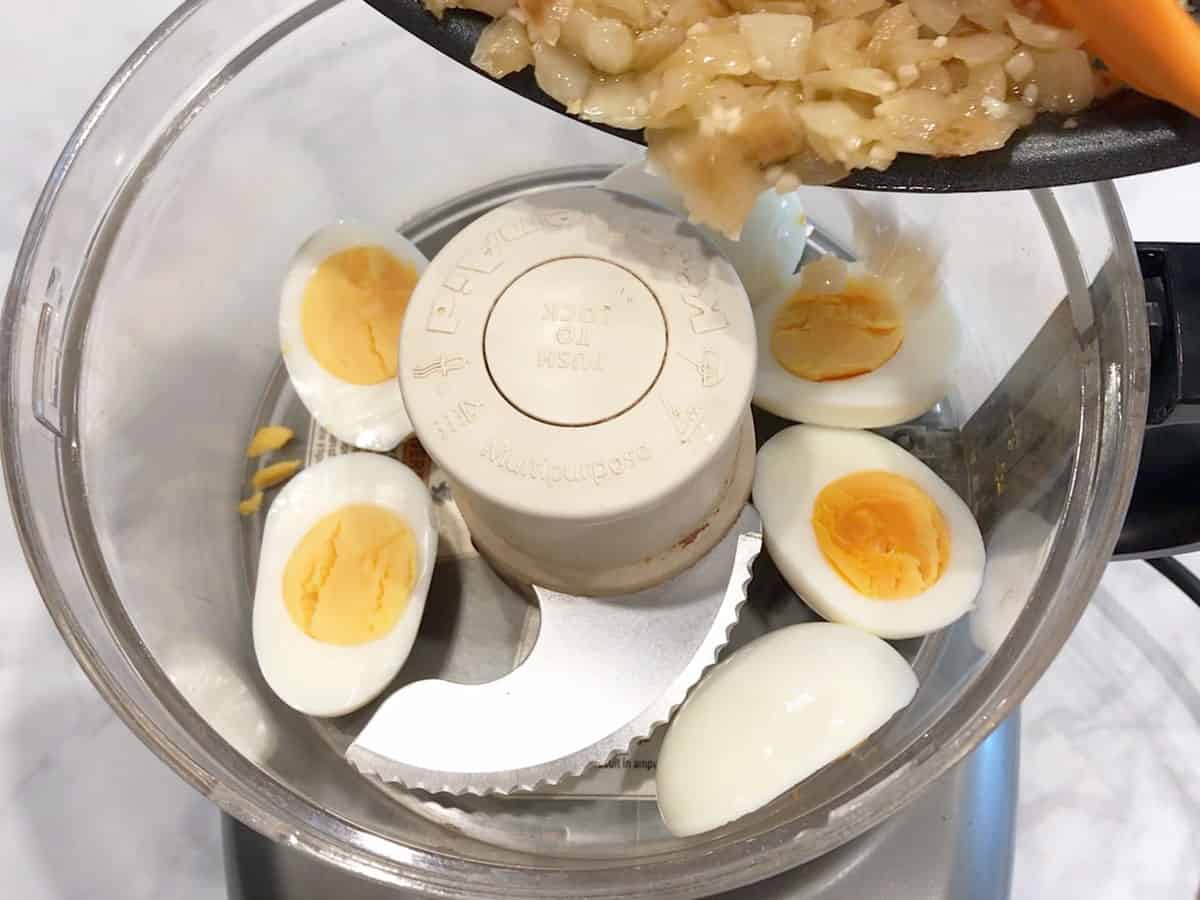
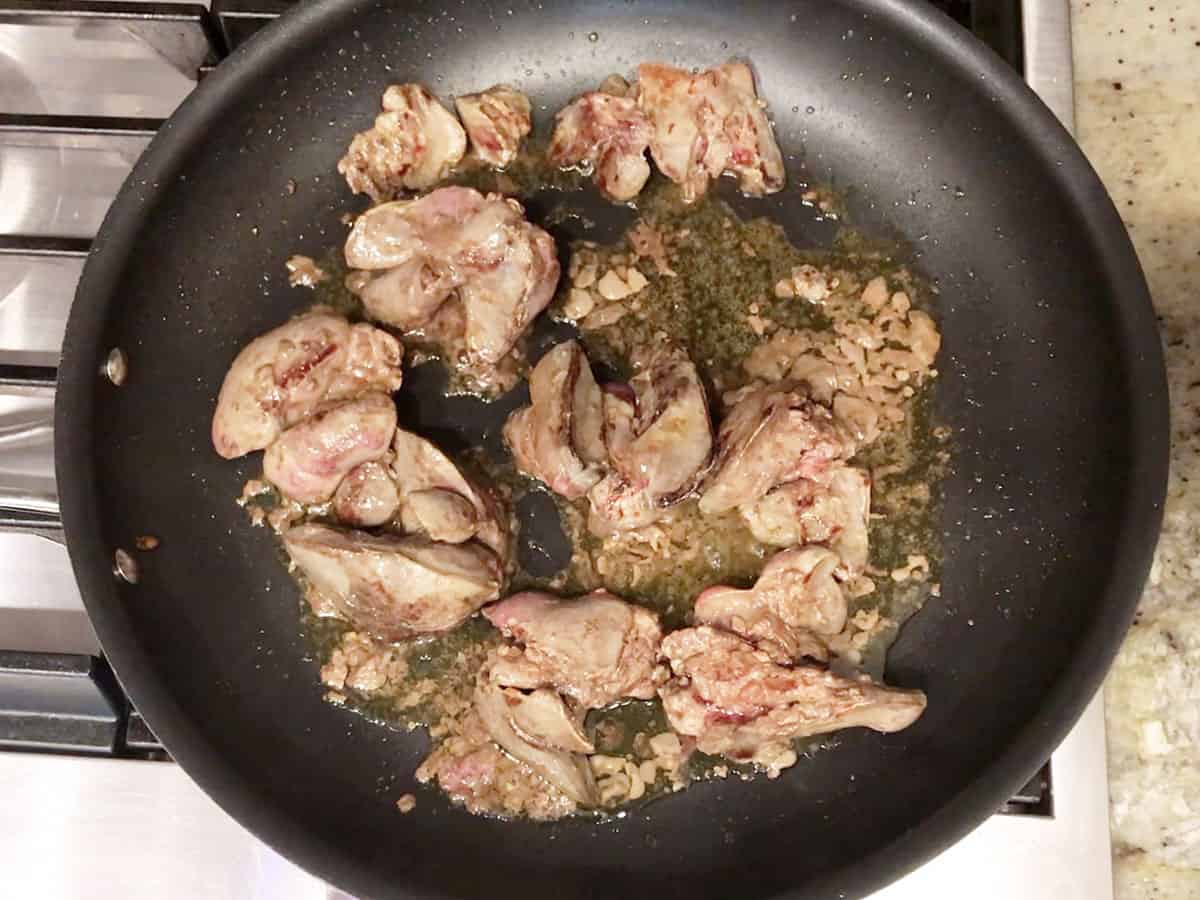
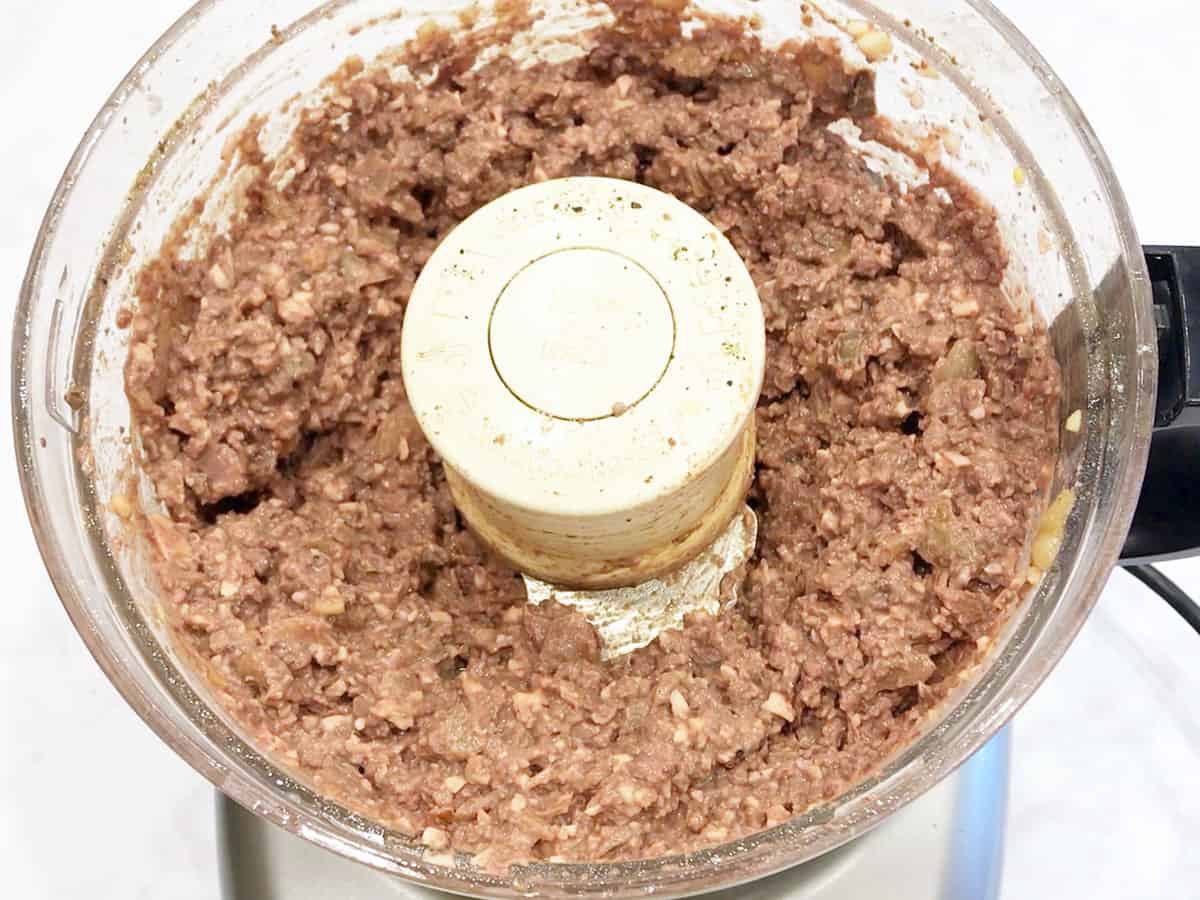
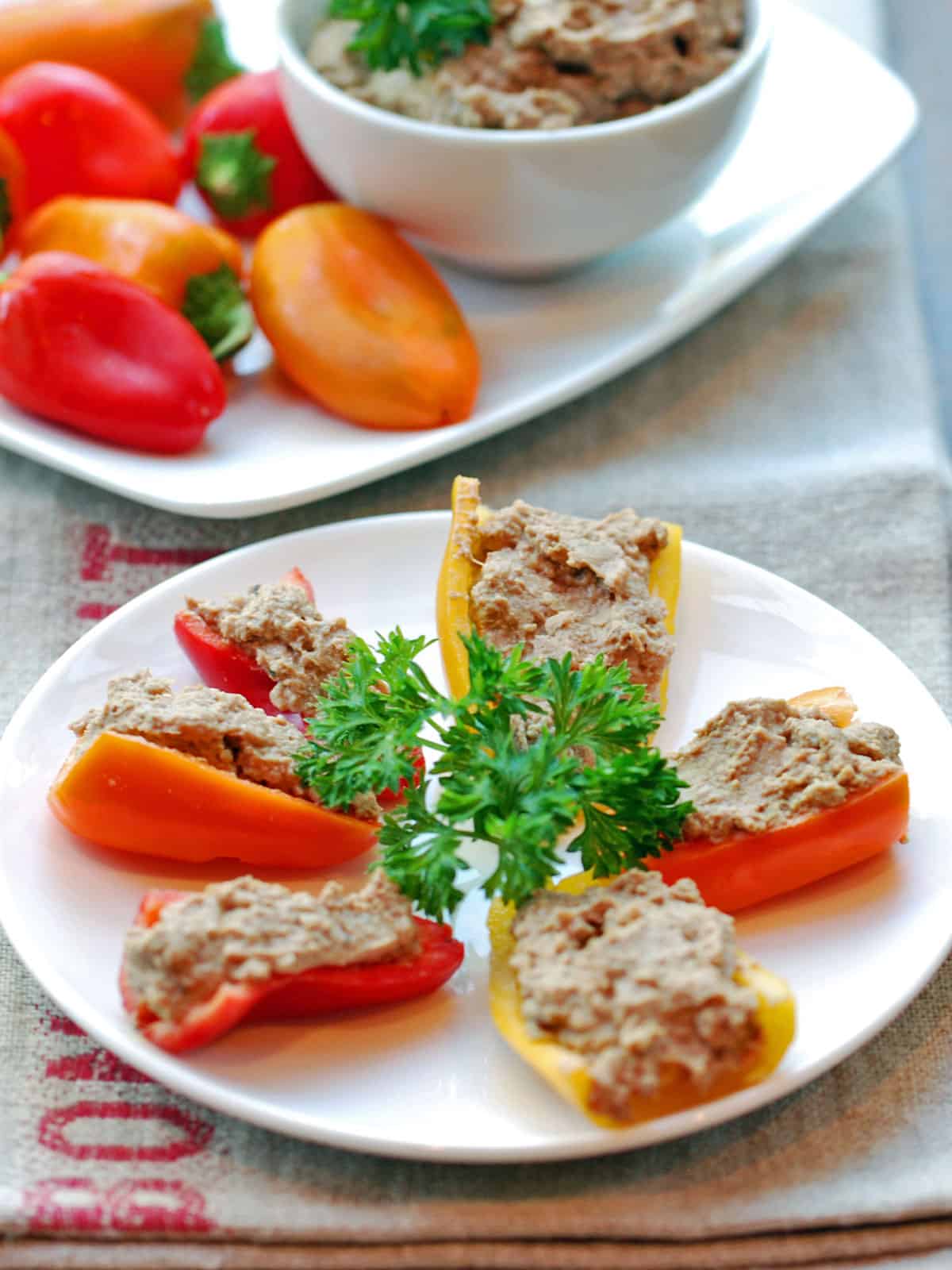
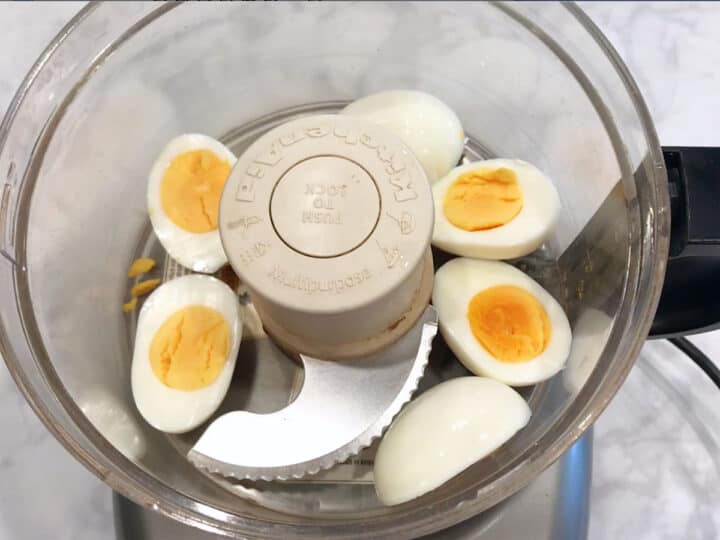
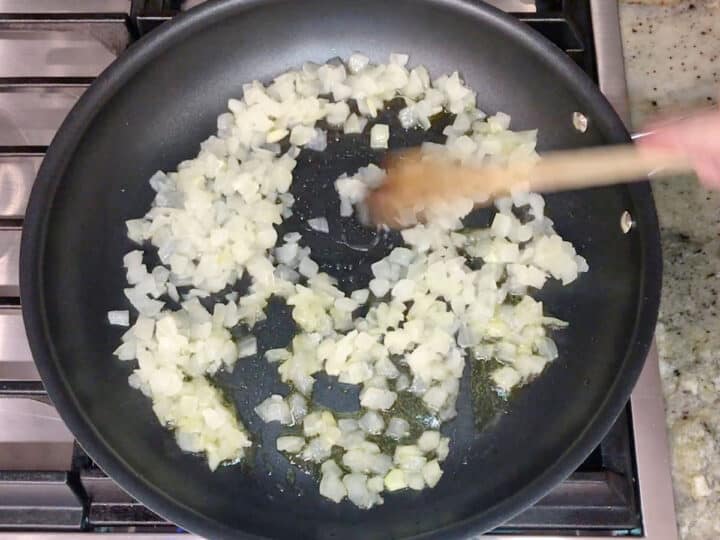
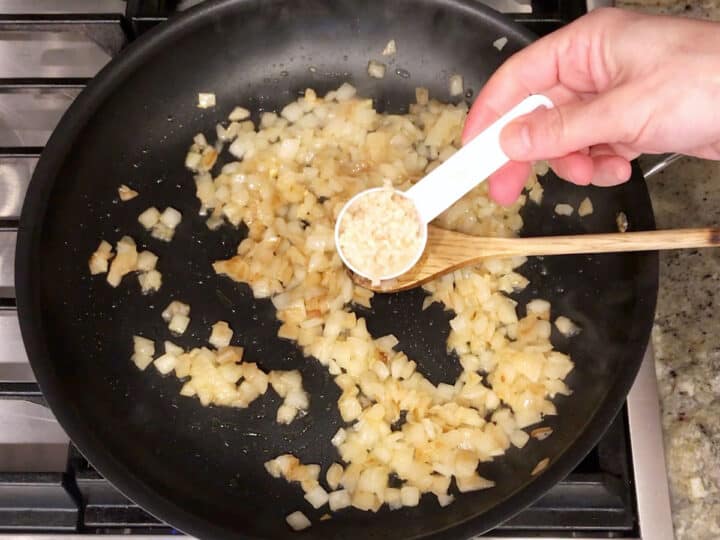
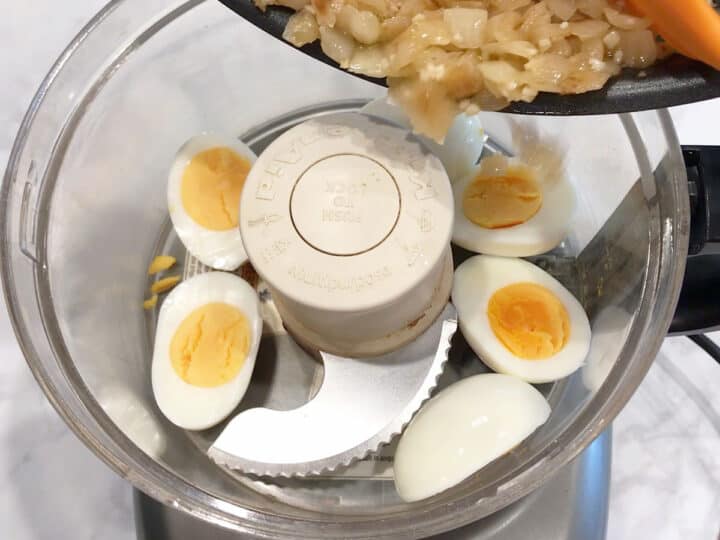
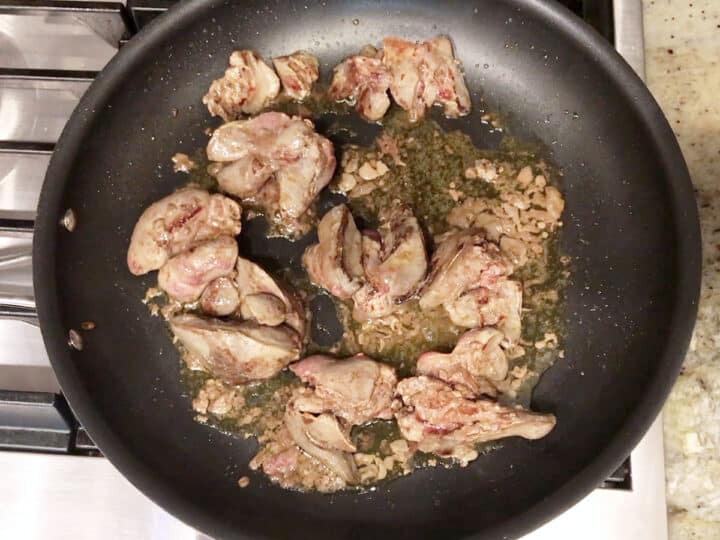
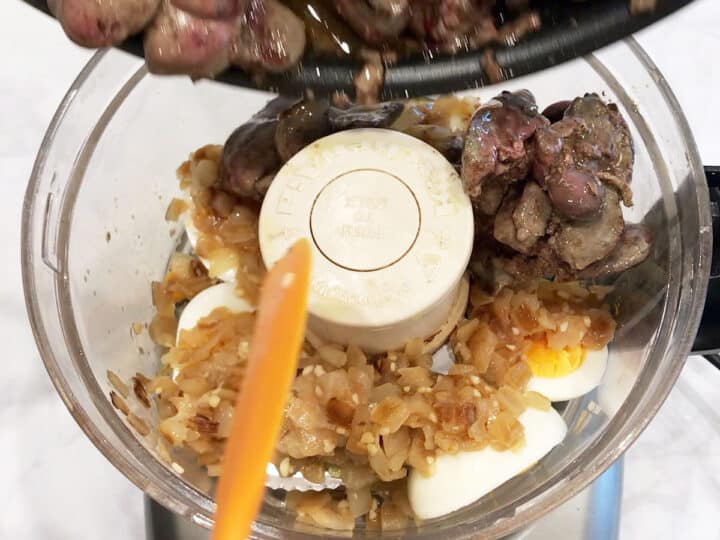
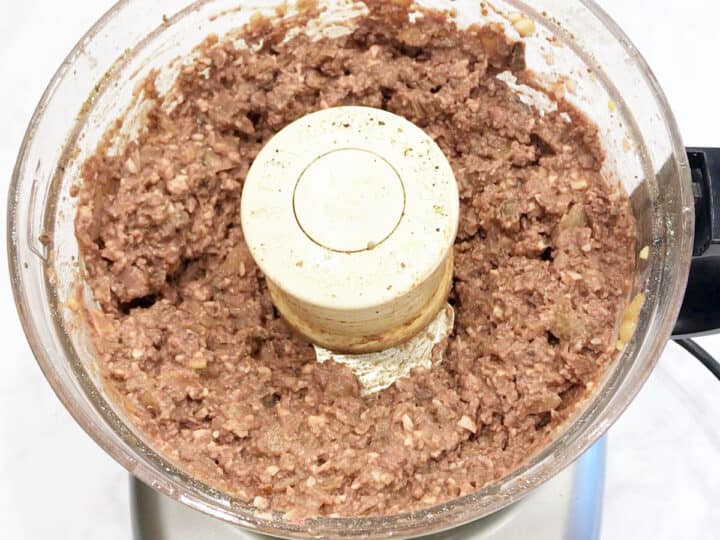
Cook the onions and garlic in olive oil. Transfer them to your food processor along with hard-boiled eggs. Add more olive oil to the skillet and saute the livers. Don’t overcook them! Refrigerate the spread for at least two hours before serving. This dish is traditionally served as an appetizer on Jewish holidays. My grandma used to make it for Rosh HaShanah and Passover. But I make it whenever I’m in the mood and serve it as our main course, alongside quick pickles or cucumber vinegar salad, stuffed olives, and crudites. Plan to make it a few hours ahead of time the day you serve it and finish it within a day or two. Store it in the fridge in an airtight container. You can also freeze it, although it will lose some of its creaminess. After defrosting, add a little more olive oil (1-2 tablespoons) and mix it well to make the spread fluffier.