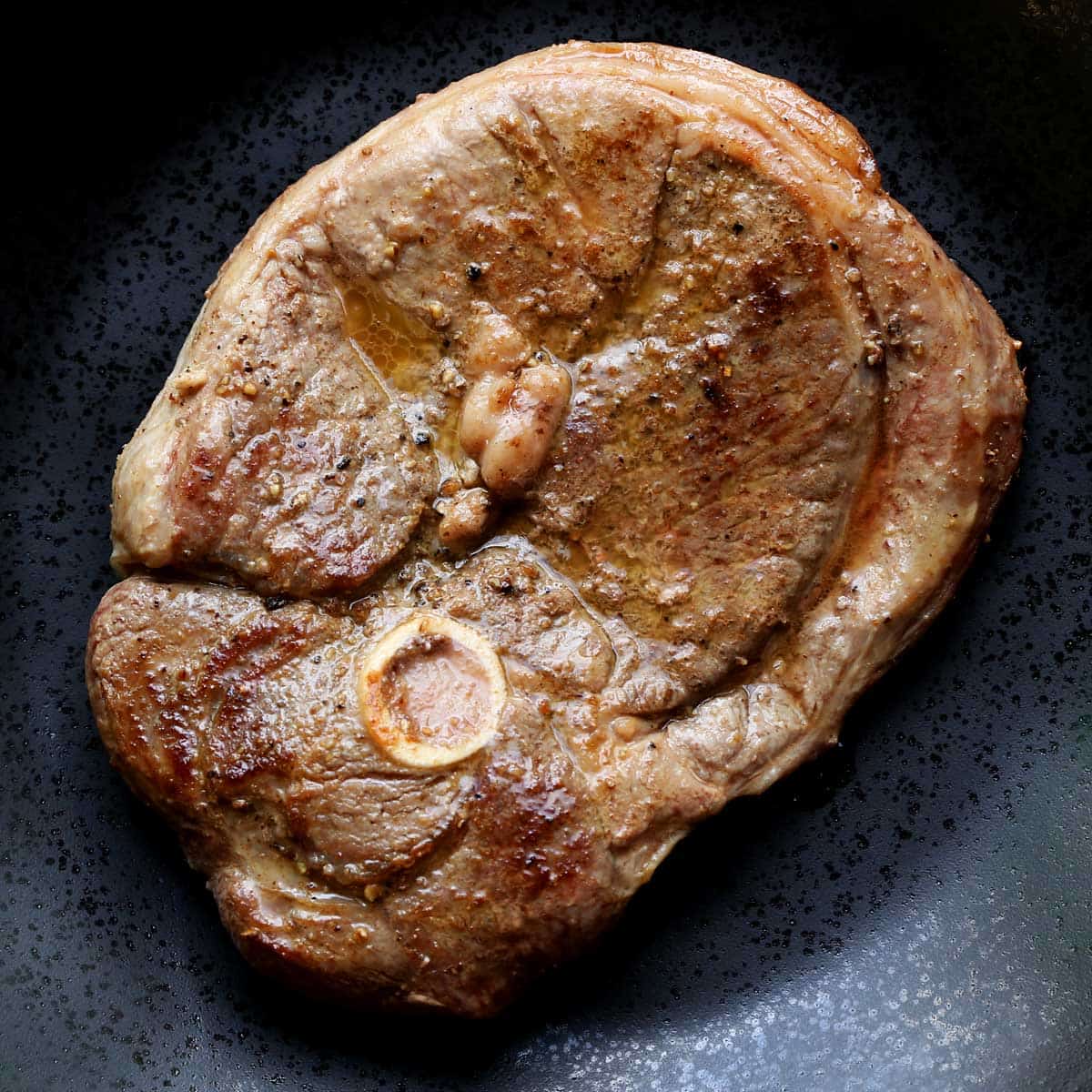
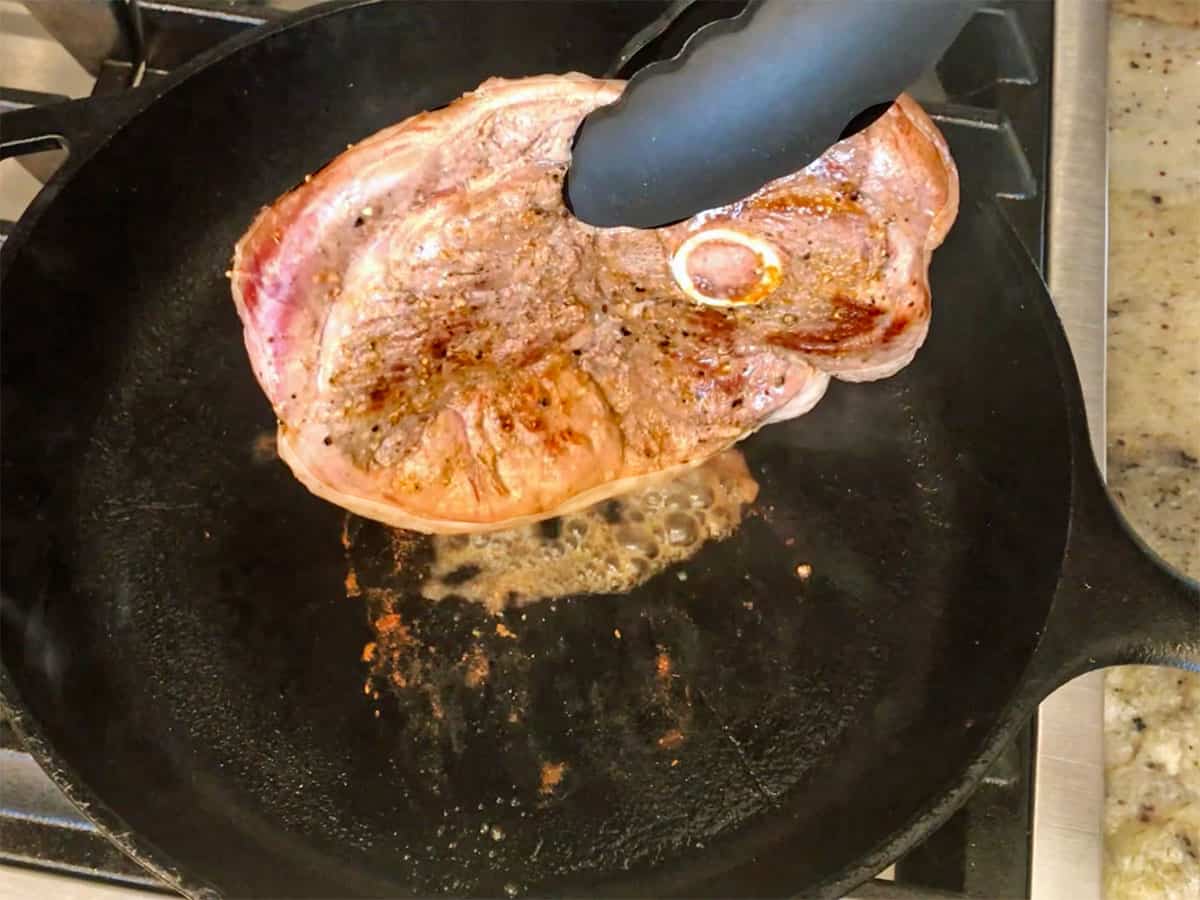
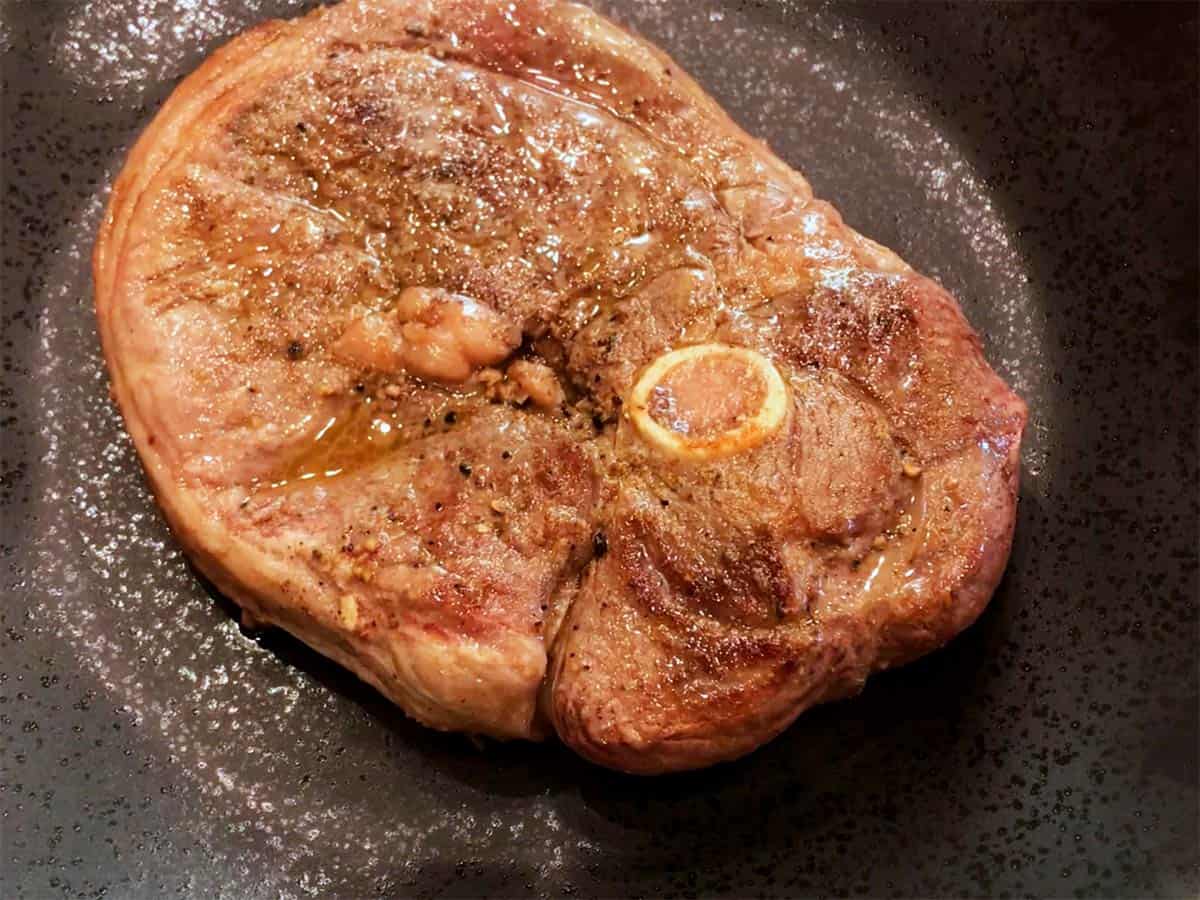
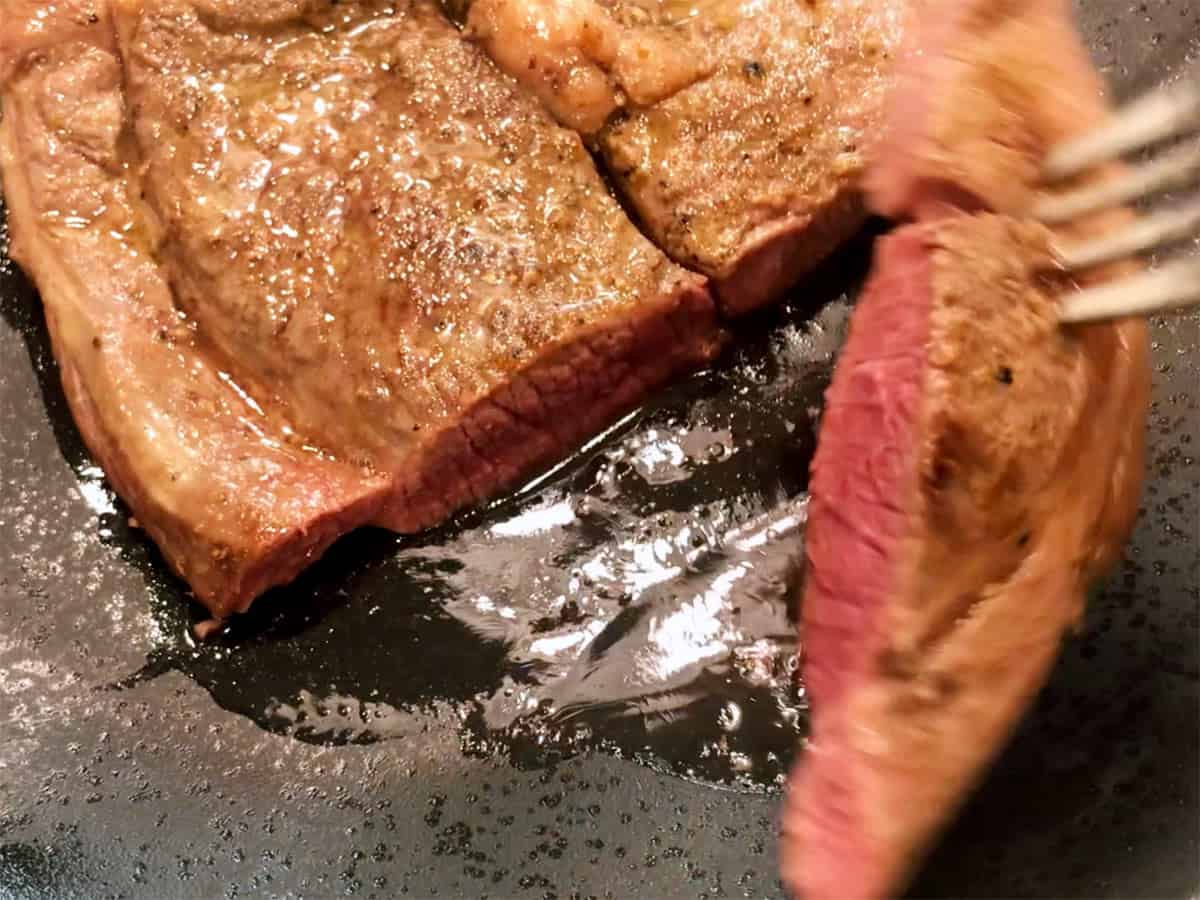
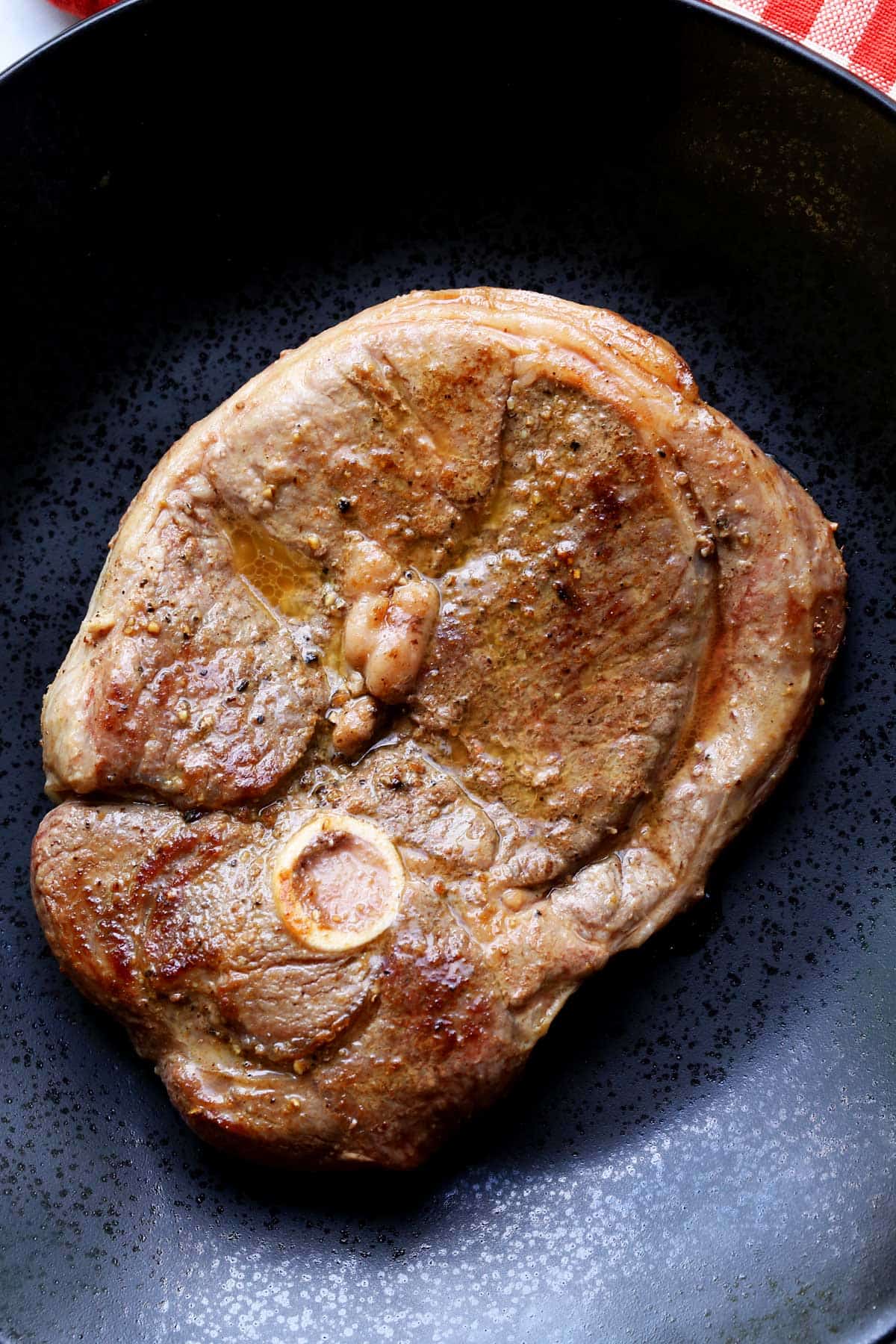
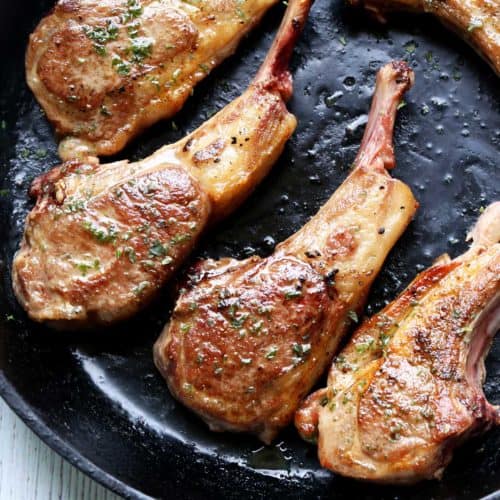
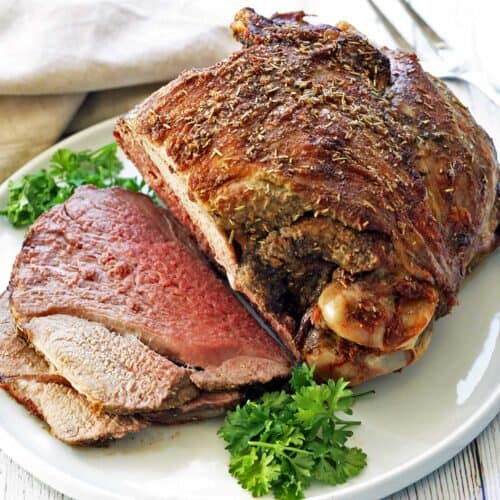
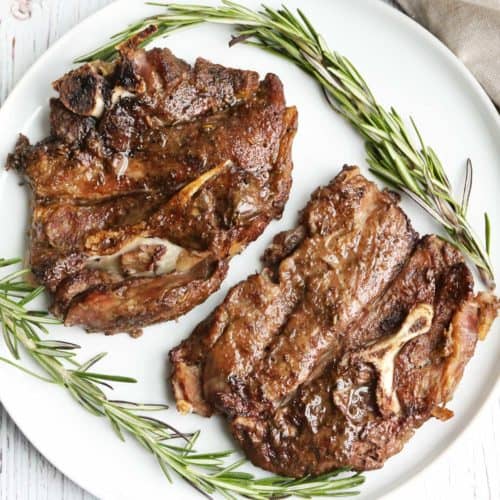
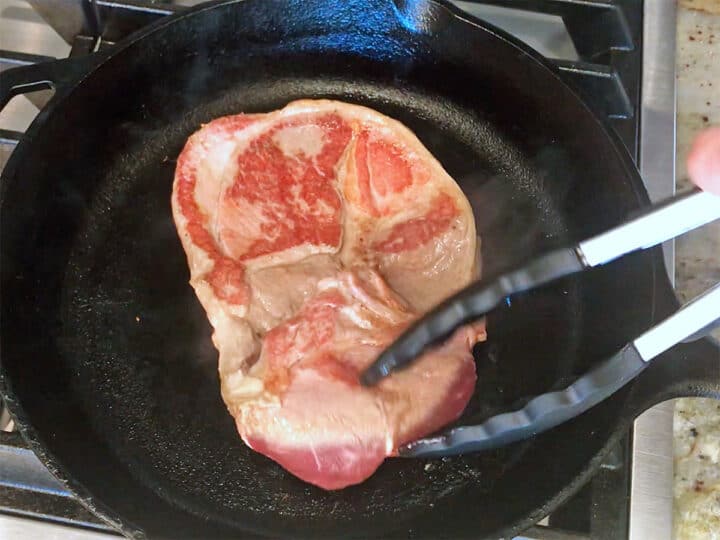
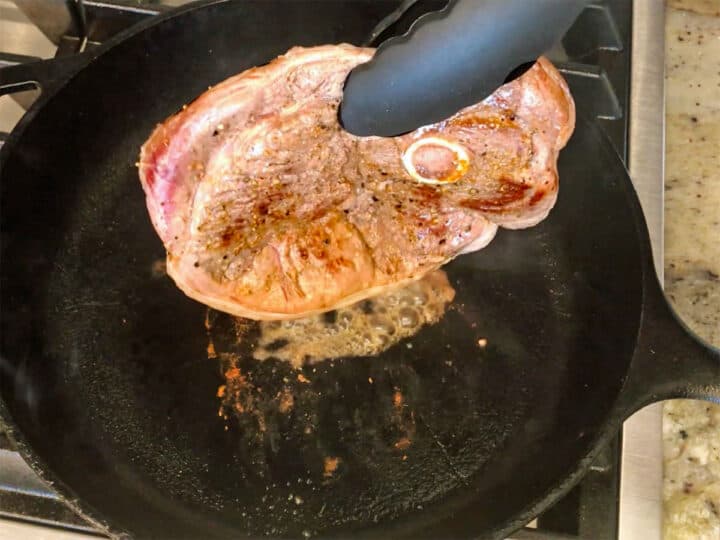
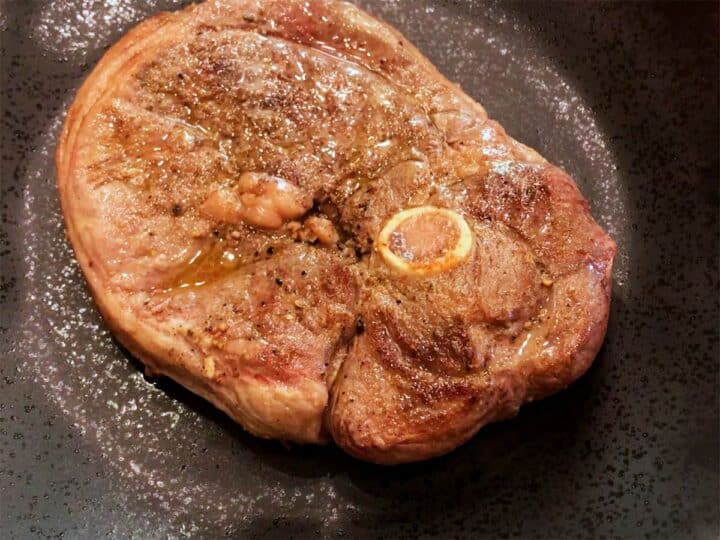
For the tastiest and juiciest results, I cook it for two minutes per side and a few more seconds on the edges. Lamb steak is a delicious and quick alternative to cooking a whole leg of lamb. I typically roast a whole leg of lamb in the oven. It comes out juicy and flavorful. But sometimes, I buy steaks instead - either at Whole Foods or online at US Wellness Meats. Another alternative is to buy a boneless leg of lamb, slice it yourself into thick slices, and quickly fry them in a cast-iron skillet. Either way, cook these steaks minimally for the best results.
Instructions
Recipe Card
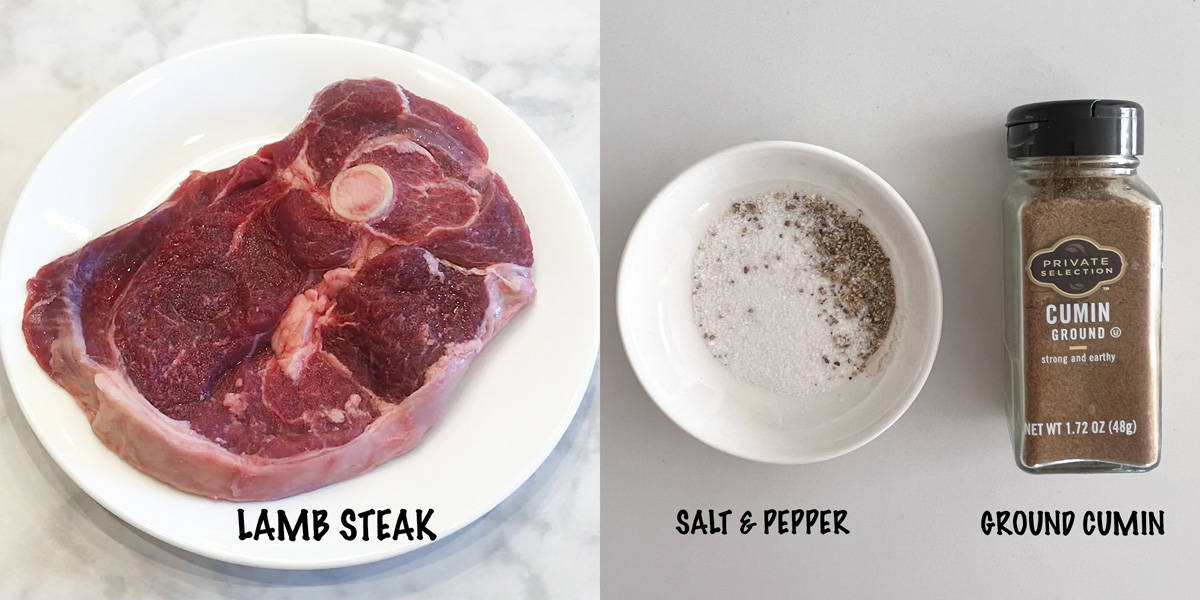
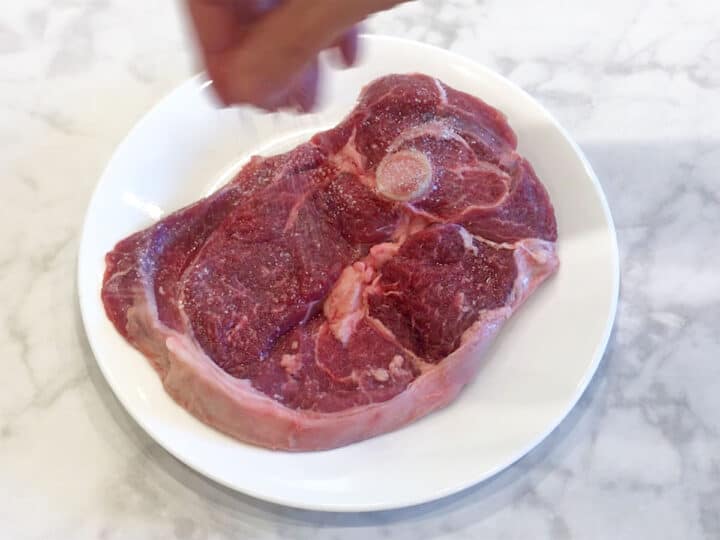
Lamb steaks: As mentioned above, you can buy them already cut or cut them yourself from a boneless leg of lamb. Kosher salt: I try not to use table salt to season steaks. Coarse, flavorful kosher salt - specifically Diamond Crystal Kosher Salt - is best. Black pepper: Freshly ground has the best flavor. Ground cumin: I season beef steaks such as New York Strip or ribeye with just salt and pepper. But when cooking a lamb steak, I like the warmth that cumin adds.
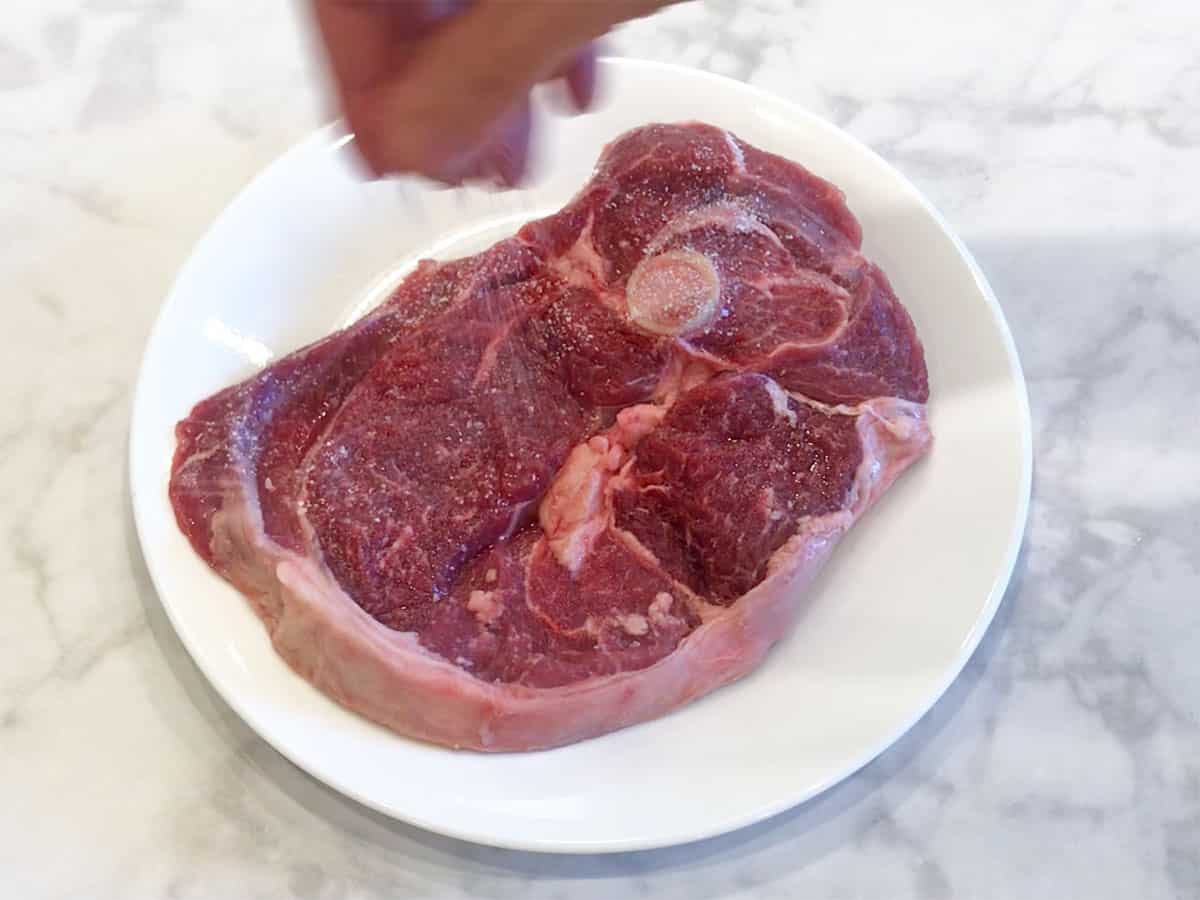
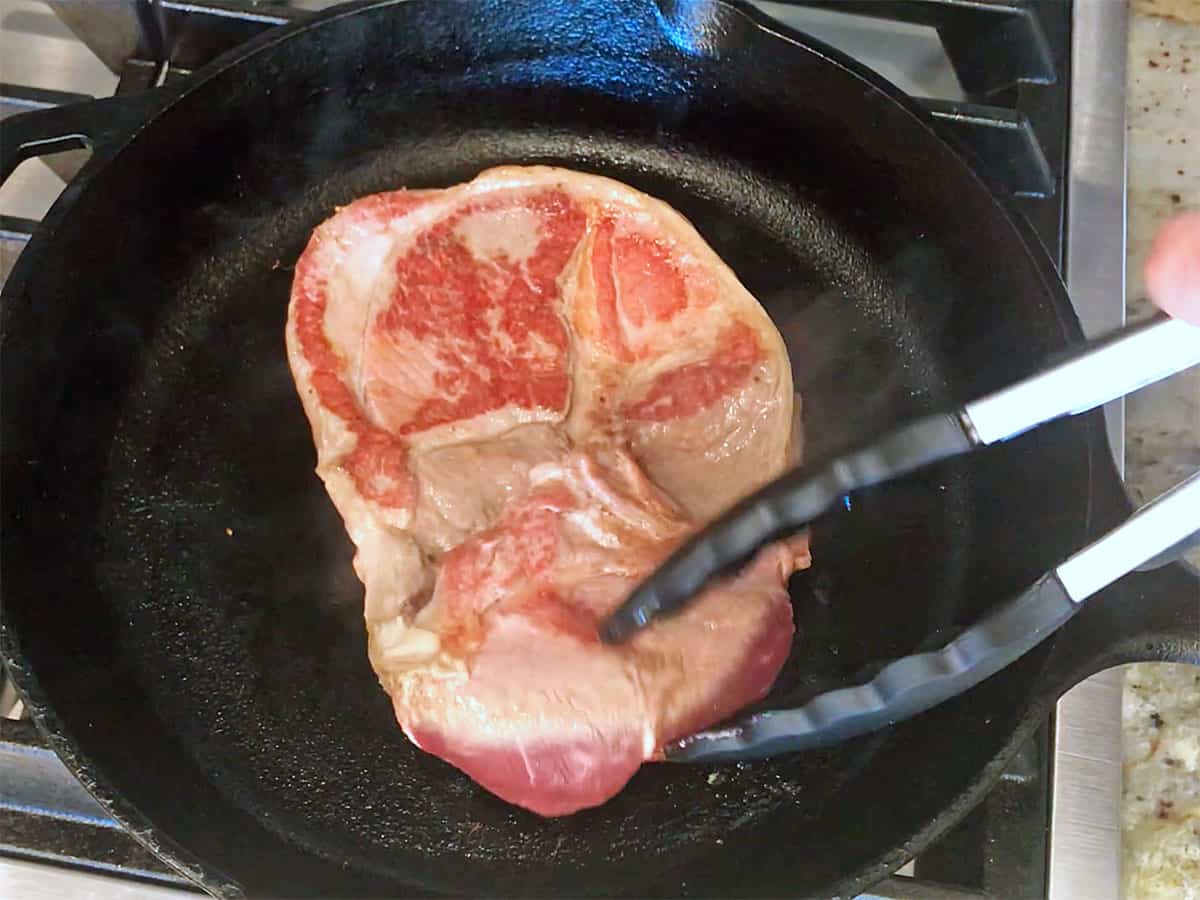
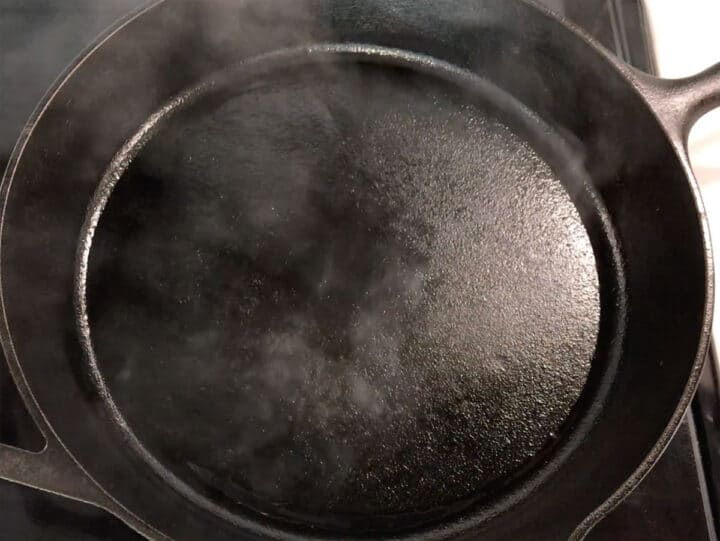
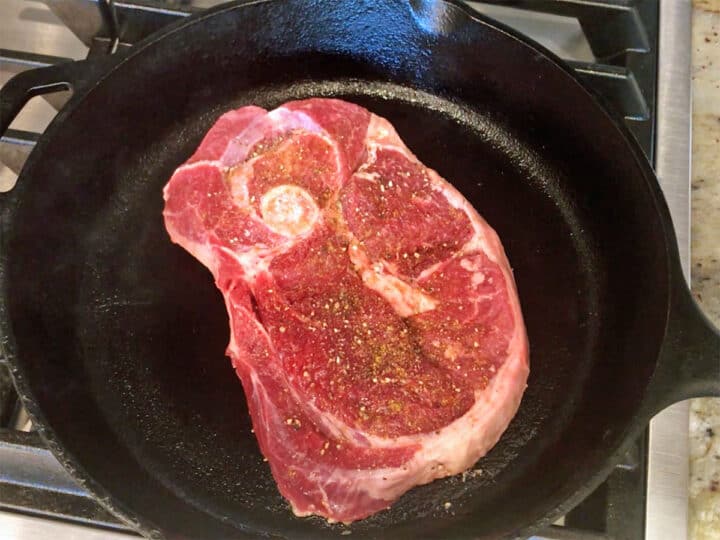
Good options that I tried and liked include garlic powder, dried thyme, dried rosemary, and dried oregano. You can add ¼ teaspoon of any of these spices/herbs. Heat a well-seasoned, large cast-iron skillet over high heat until smoking, for about 5 minutes. Meanwhile, season the steaks with kosher salt, freshly ground black pepper, and cumin. Carefully place the seasoned steaks in the hot skillet. Cook them until a brown crust forms on the bottom, for about 2 minutes. Flip the steaks and cook them for 2 more minutes on the second side. Transfer the cooked steaks to plates, loosely cover them with foil, and let them rest for about five minutes before serving them. To ensure medium-rare doneness and still cook the steaks enough to create a nice crust, cook them right out of the fridge. Don’t let them come to room temperature before cooking. A 1-inch-thick steak should be pan-fried for no longer than 2 minutes per side, plus a few seconds on the edges. Rest the steak before eating to allow juices to redistribute and settle. Please note that the CDC recommends cooking steaks and roasts to 145℉.
Roasted butternut squash Roasted carrots Steamed broccoli Zucchini noodles Mashed cauliflower Cucumber tomato salad Broccoli salad
But since reheating steak often causes it to become overcooked, I prefer to slice the leftovers and use them cold in a steak salad or lettuce sandwich.