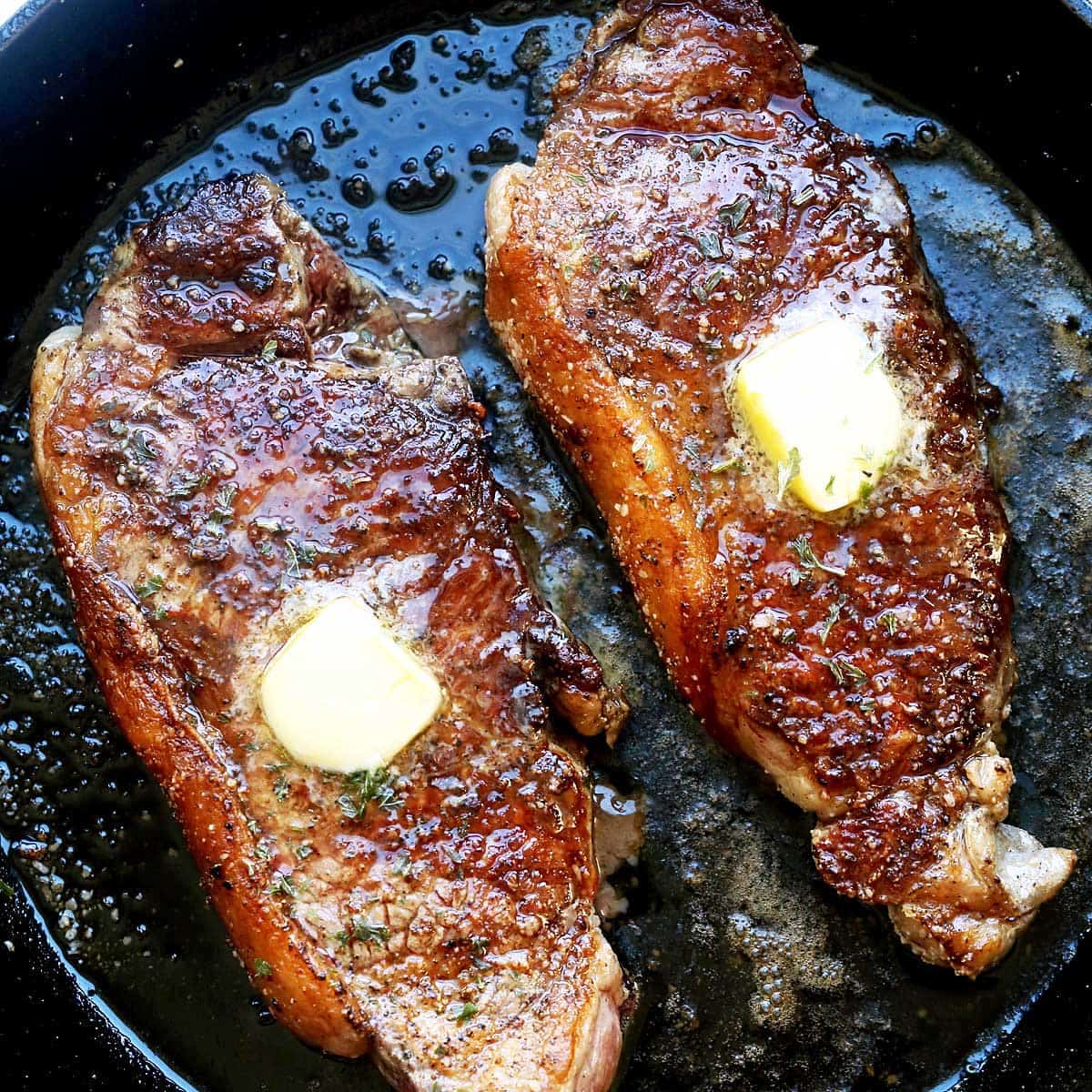
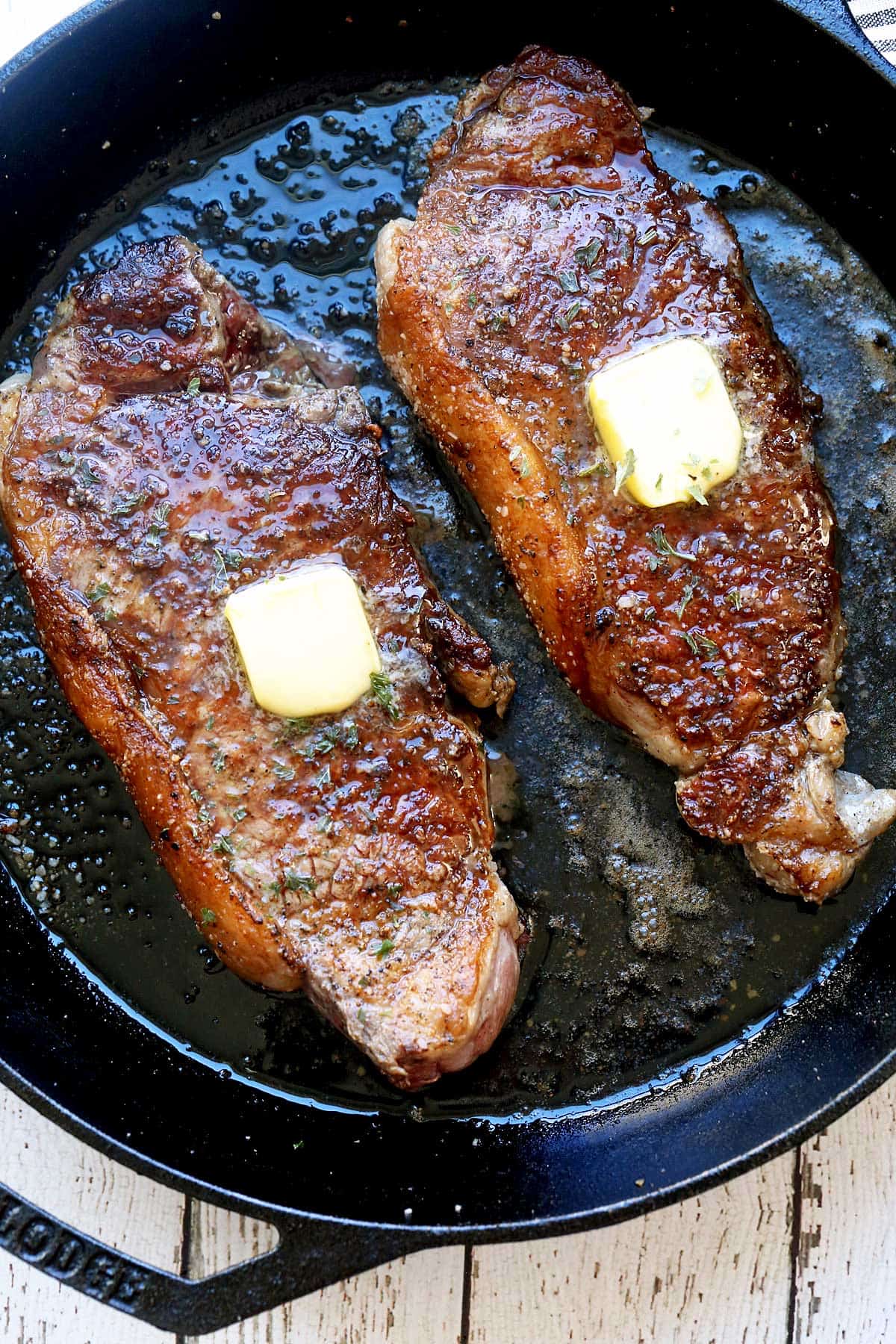
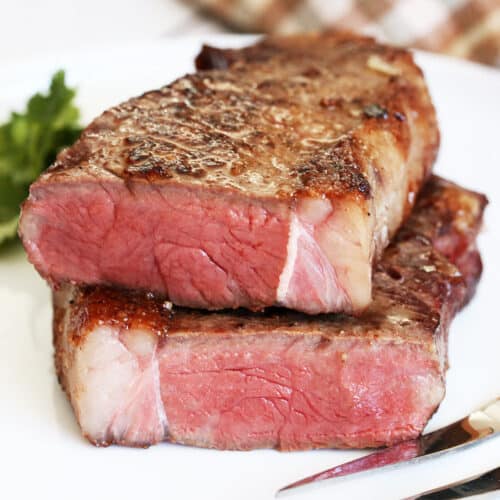
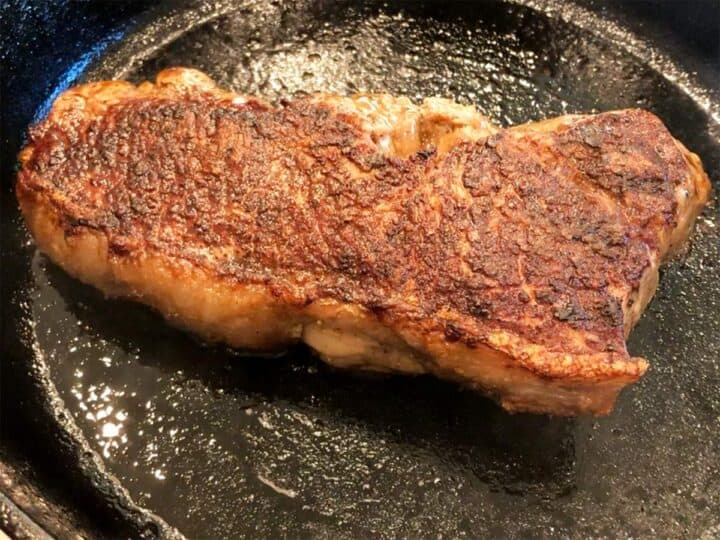
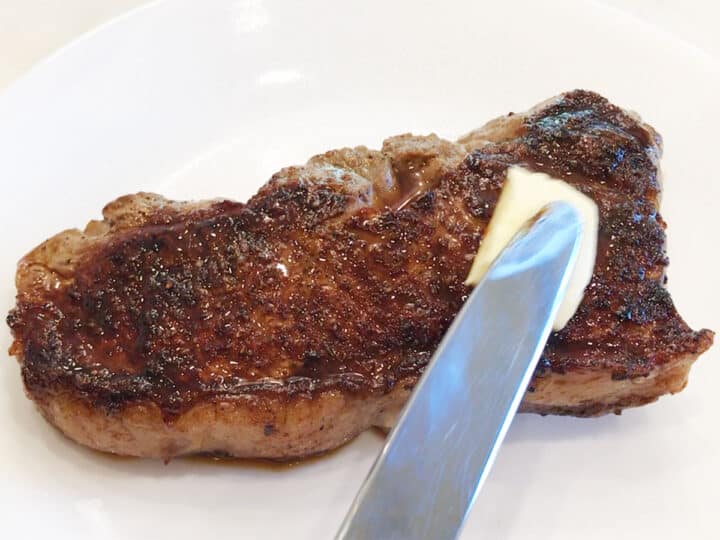
So how to cook it? Sear it in a hot cast-iron skillet, then finish it in the oven. You’ll get a deep brown crusty exterior and a juicy interior, just like in a steakhouse. Every time I order a New York strip steak at a good steakhouse, I’m in awe. It always comes out perfect - a thick, delicious crust on the outside, super juicy medium-rare meat on the inside. How do they do it? The secret is to cook the steak in two stages. First, sear it in a super-hot cast-iron skillet. Then finish cooking it in the oven. That’s how they do it in restaurants, and that’s how you should do it at home to achieve perfect results.
Recipe Card
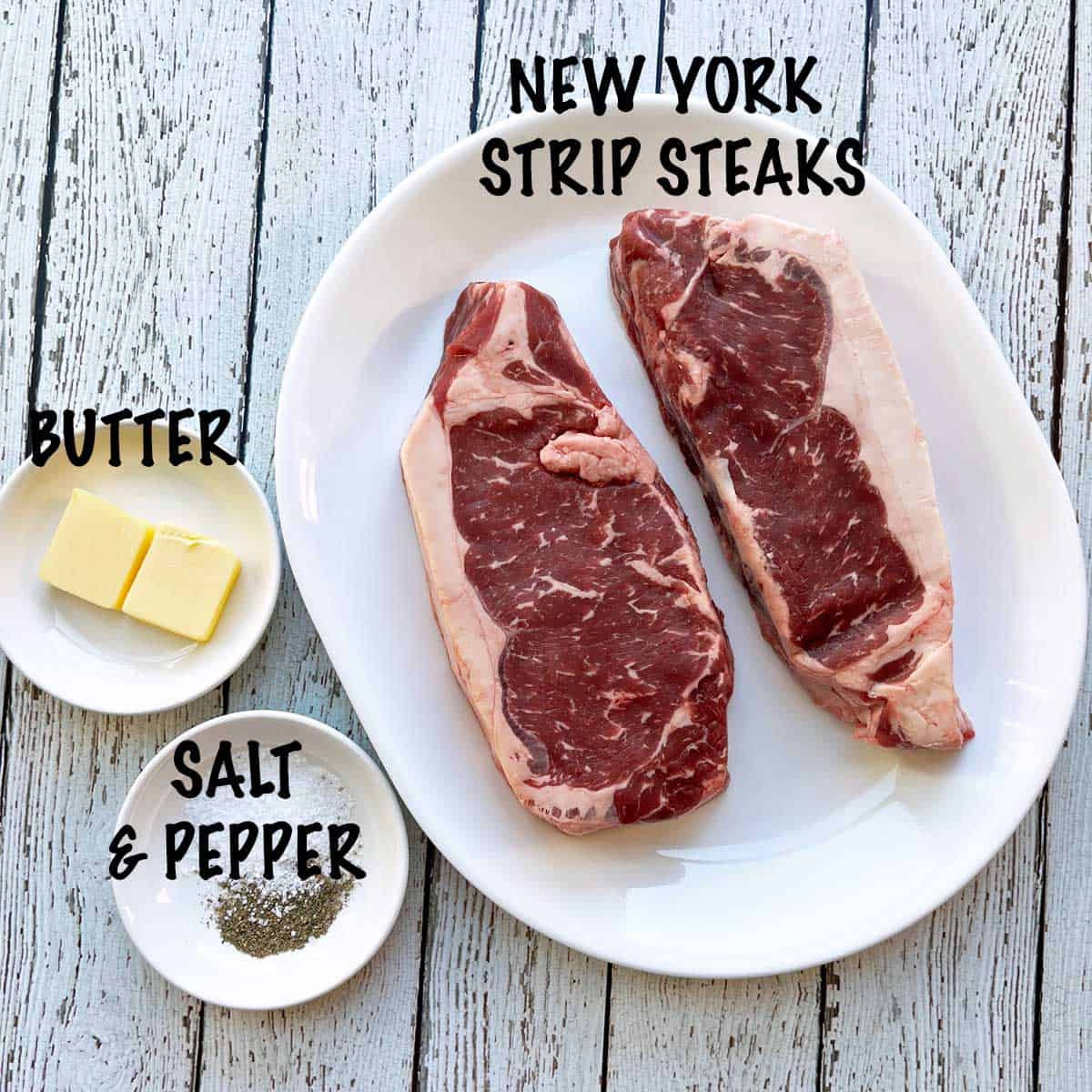
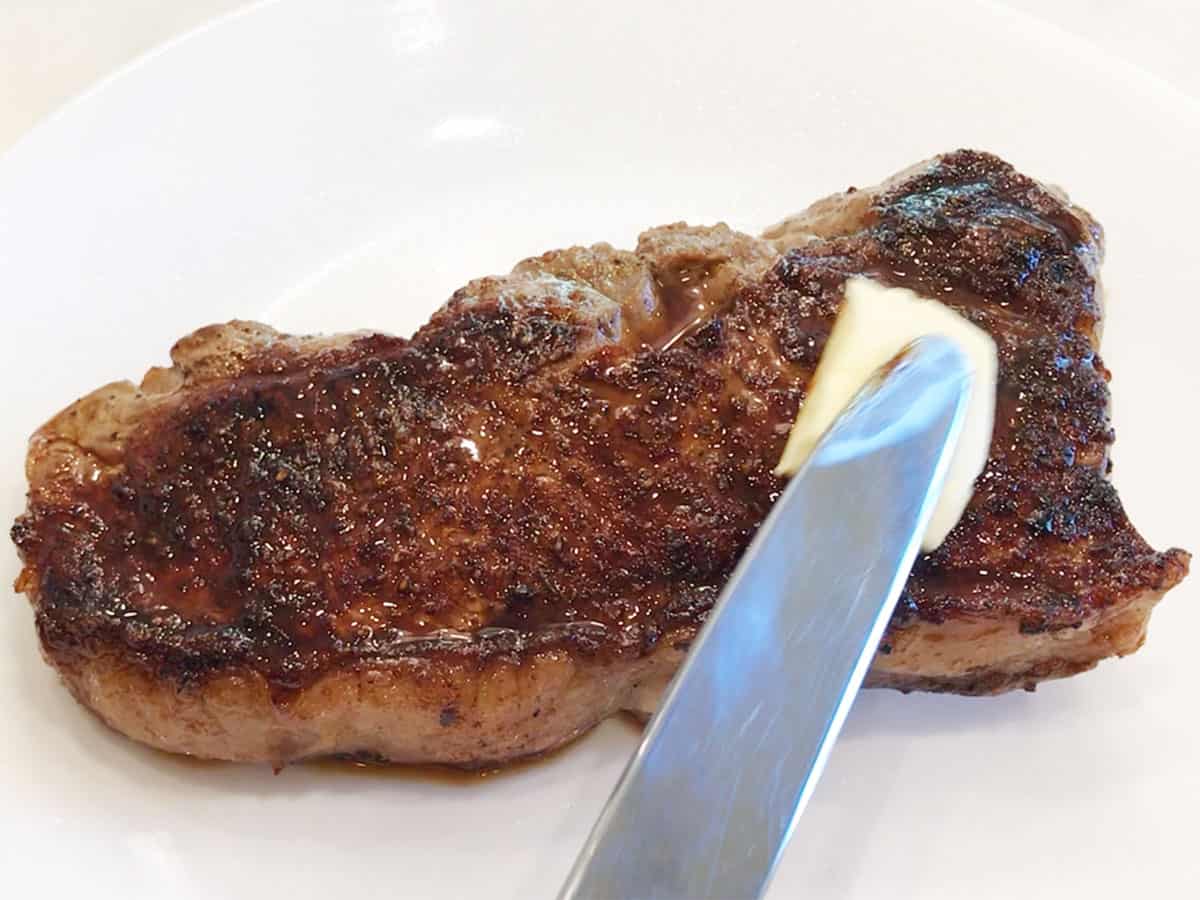
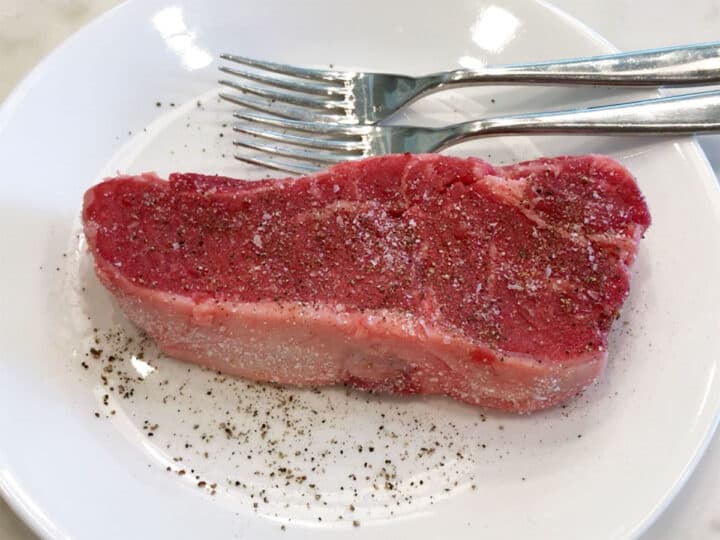
New York steak: Either USDA choice or (better yet) USDA prime. It should be about 1 inch thick. To season: Kosher salt and black pepper. Butter: To finish the steak. Steakhouses almost always top your hot steak with butter and allow it to melt into the steak. It greatly enhances its flavor.
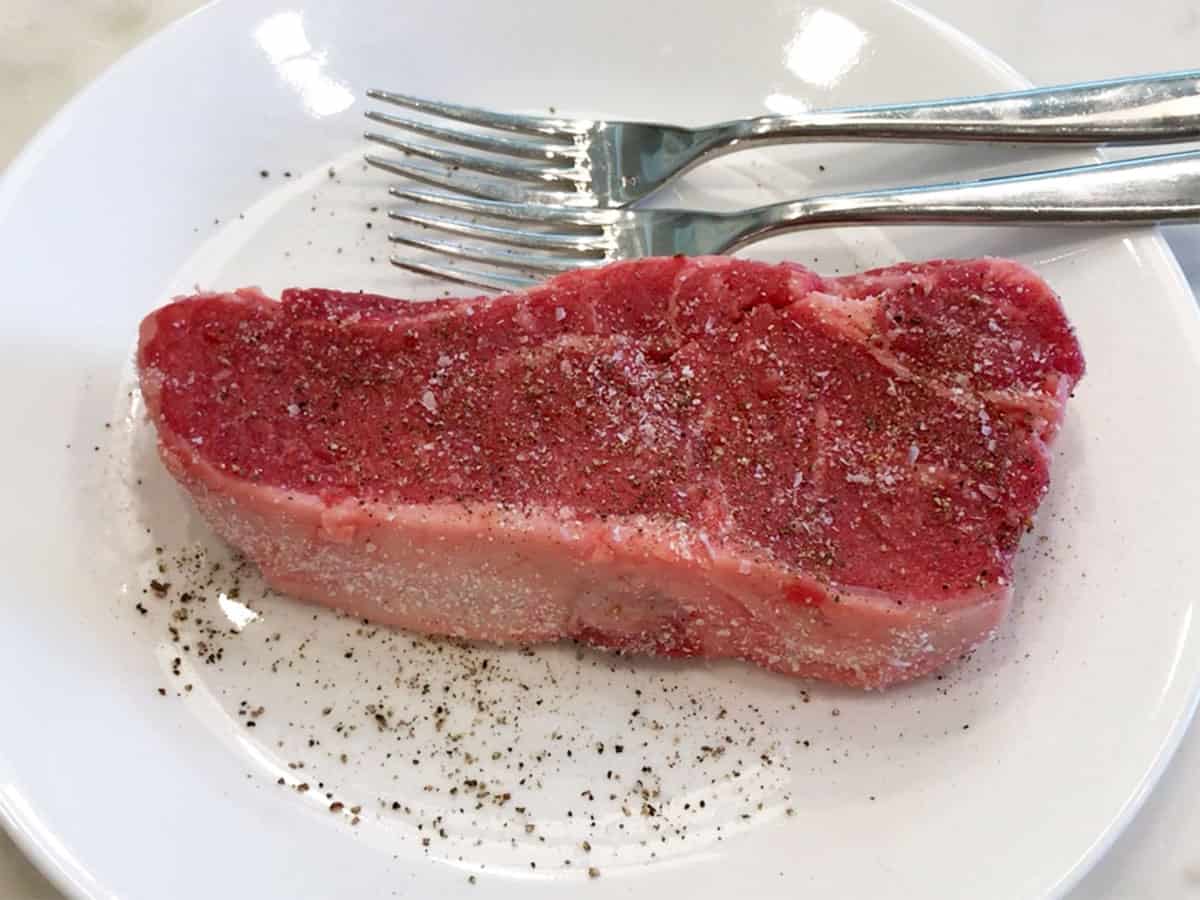
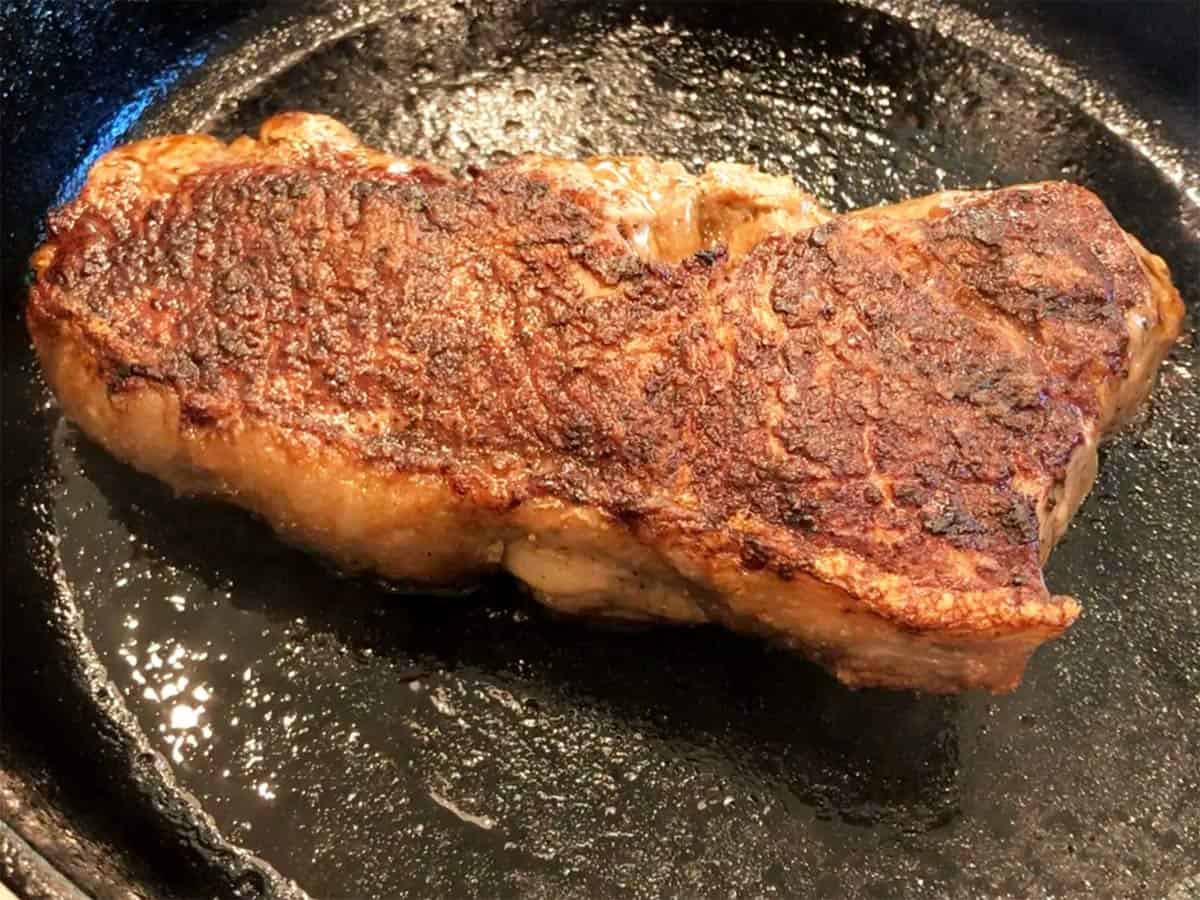
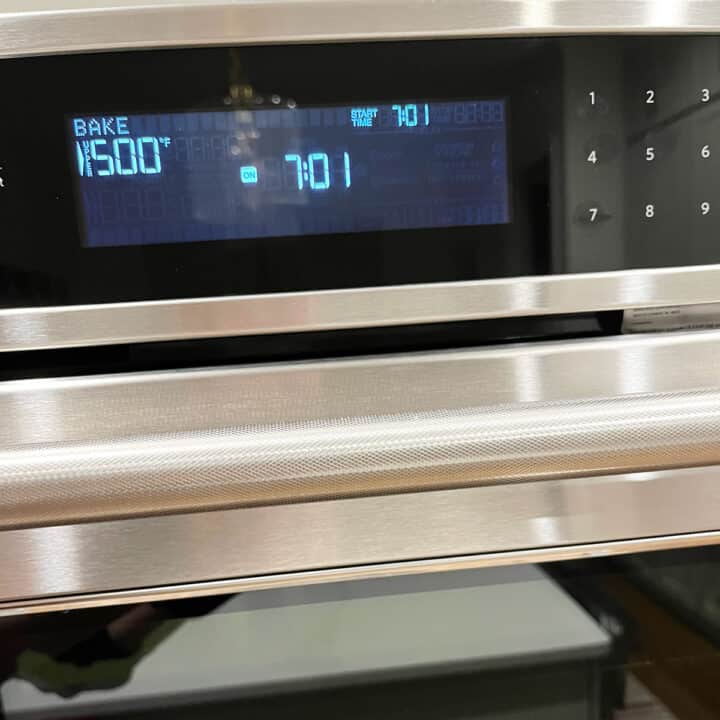
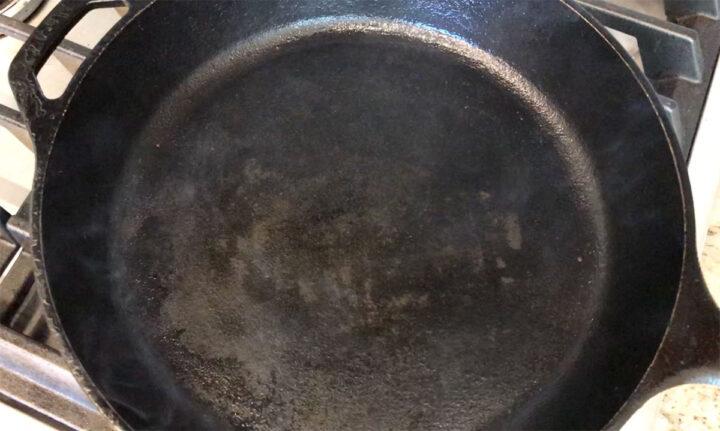
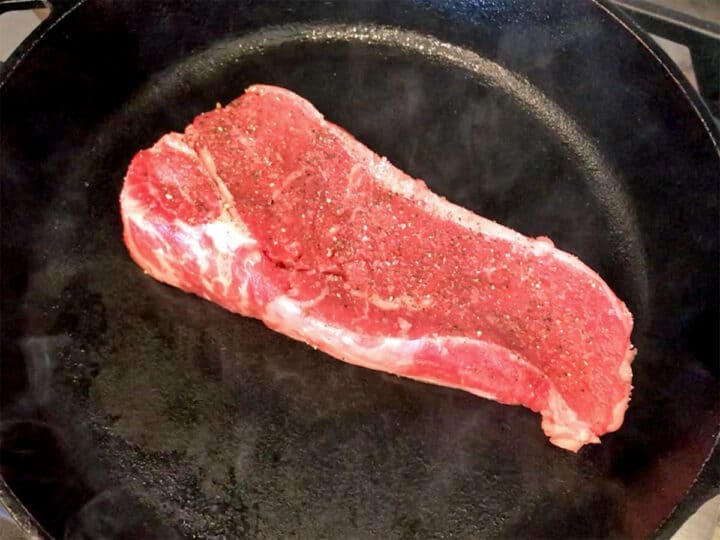
Preheat your oven to 500°F. Heat a well-seasoned cast iron skillet over high heat until smoking hot, 5-7 minutes. Meanwhile, sprinkle both sides of the steak with kosher salt and black pepper. Place the steak in the hot skillet. Cook, without moving, for 2 minutes on each side. This will create a nice crust. Then, cook the fat strip for 30 more seconds. Using oven mitts, transfer the skillet to the hot oven. Roast the steak to medium rare, 3-4 minutes. For medium, roast for 4-5 minutes. Place the steak on a plate and loosely cover it with foil. Allow it to rest for 5 minutes, then top it with butter and serve. Even if your steaks are thicker but you like them on the rare side, you could simply pan-fry them for 3-4 minutes per side plus 1 minute on the fat strip.
No Need for oil
If you use a well-seasoned cast-iron skillet, there’s no need to add oil to the pan. When it’s well-seasoned, it’s completely nonstick. For any other skillet, add any fat that can withstand high-heat cooking, such as avocado oil or ghee.
Trimming the Steak
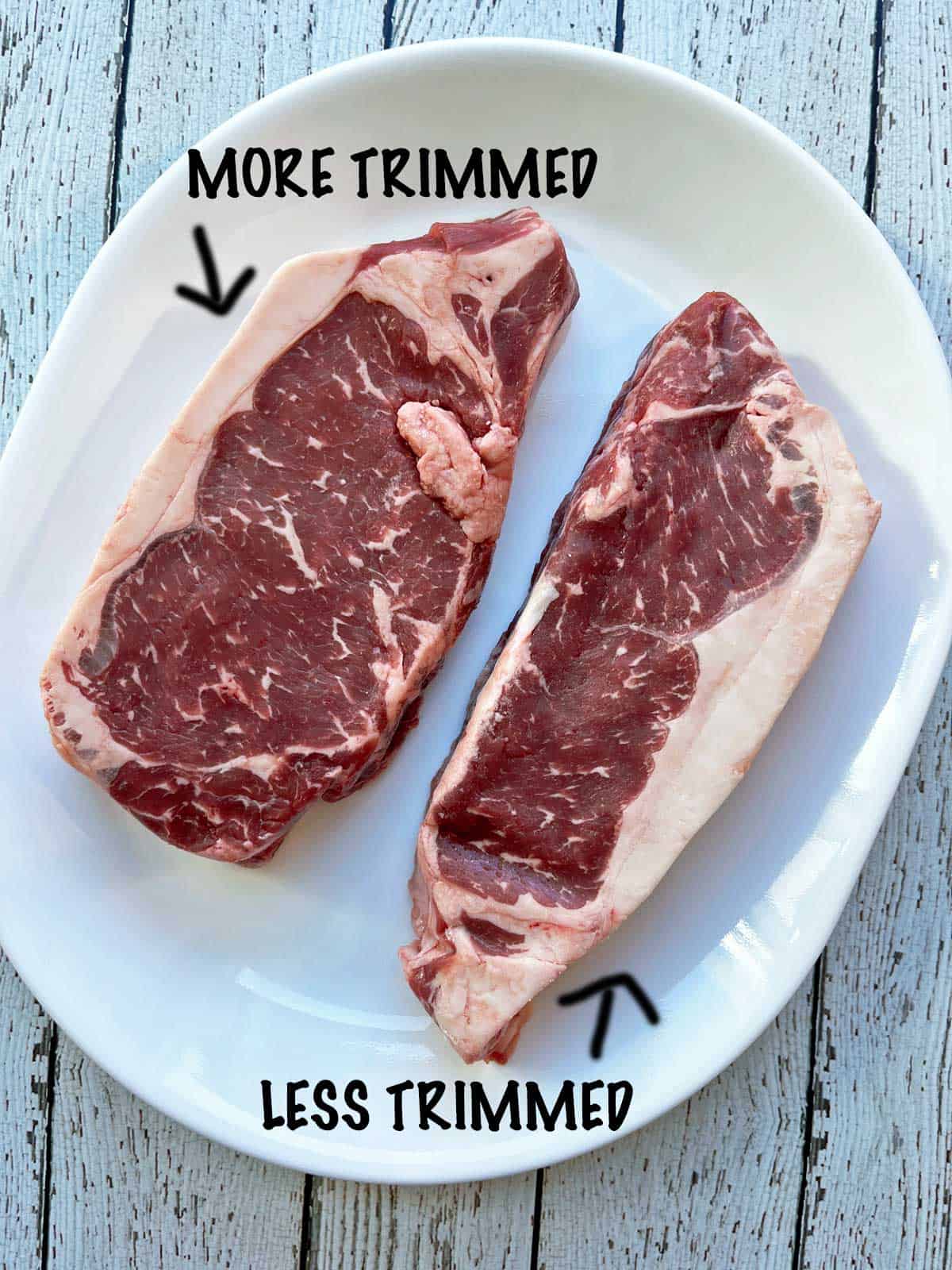
How trimmed you want your steaks is purely up to you and a personal choice. I love the fat cap on these steaks and always try to choose ones that are not too trimmed. You can see in the photo below how one of the steaks has a thicker fat cap than the other, although both look good. Personally, I find it quite sad when I see a steak with a super thin, over-trimmed fat cap.
Dealing with Connective Tissue
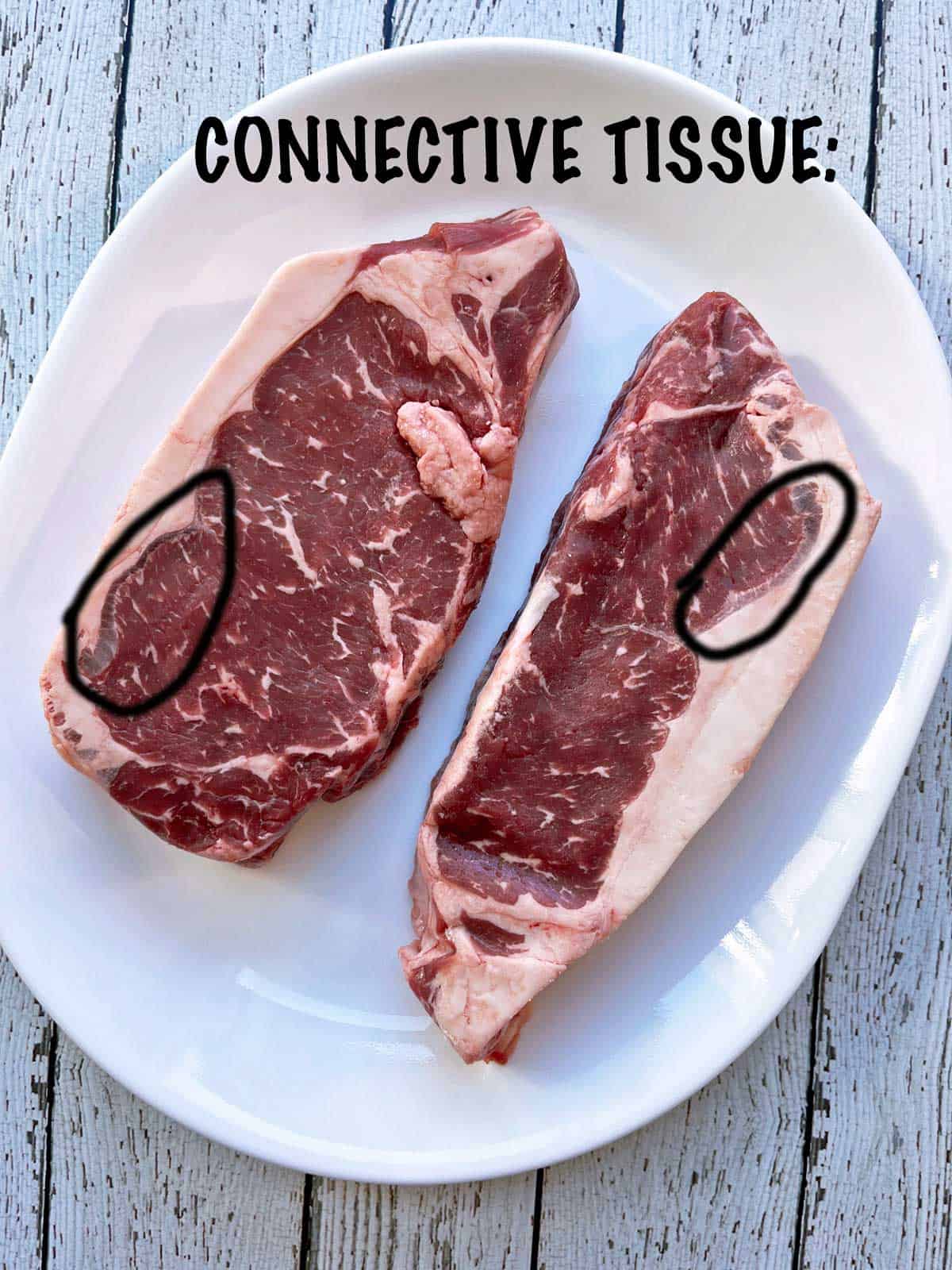
New York strip sometimes has a ribbon of tough and chewy connective tissue that runs between the meat and the fat cap. It’s best to choose cuts that don’t have it, but this is not always possible. The steaks I made today do have this ribbon, but thankfully, it’s quite thin and manageable, as shown in the photo below: Other good sides for steak include mashed cauliflower, roasted carrots, caramelized shallots, and sauteed kale. Instead of reheating them and risking overcooked meat, I like to slice the leftovers and add them cold to a steak salad or use them in a lettuce sandwich (slice them very thinly if you use them in a sandwich and remove the fat). But you can also reheat the leftovers gently, covered, in the microwave at 50% power.