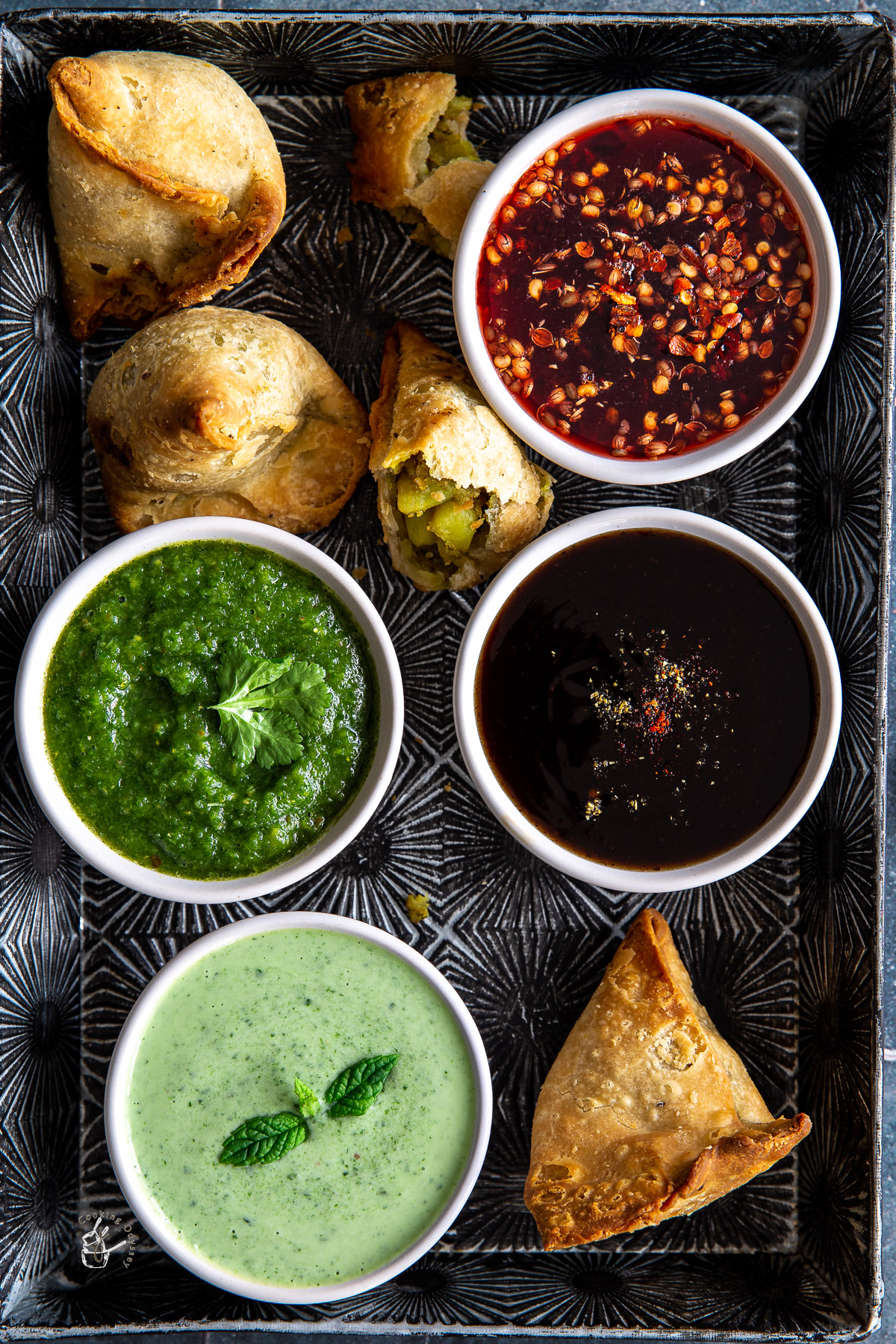
All sauce recipes are suitable for vegetarians, some vegan and are gluten-free. Included in the recipe card is a Red Samosa Sauce recipe with step by step instructions and video. Indian samosas are a delicious snack made with a thin flaky pastry and spicy filling. The filling is either vegetarian (like vegetable samosas or potato samosas) or meat (chicken, lamb). They are prepared in homes and enjoyed as street food in India. In vegetable samosas, the filling is made primarily of potatoes and other vegetables such as peas. Indian spices are added to give warm flavours. Samosas can be enjoyed as they are, or with a cup of Karak Chai, but nothing beats the combination of piping hot samosas dunked into a tangy, sweet and spicy sauce! Even in Indian snack shops and Indian restaurants, samosas are always accompanied with some sort of condiment, whether its has a tamarind base or a mint-coriander base.
What kinds of sauces go well with samosas?
Surprisingly, a wide variety of ingredients and flavor go well with samosas! Luckily Indian cuisine is packed with easy recipes for chutneys. Sauces for Indian samosa tend to be either sweet or tangy but most are mildly spiced. They are designed to enhance the flavours of the fillings but not overpower! The sauce also cuts through any dryness and greasiness of the samosas. Most of the samosa chutneys can easily be typically grouped into colours as they are made with varying fresh ingredients:
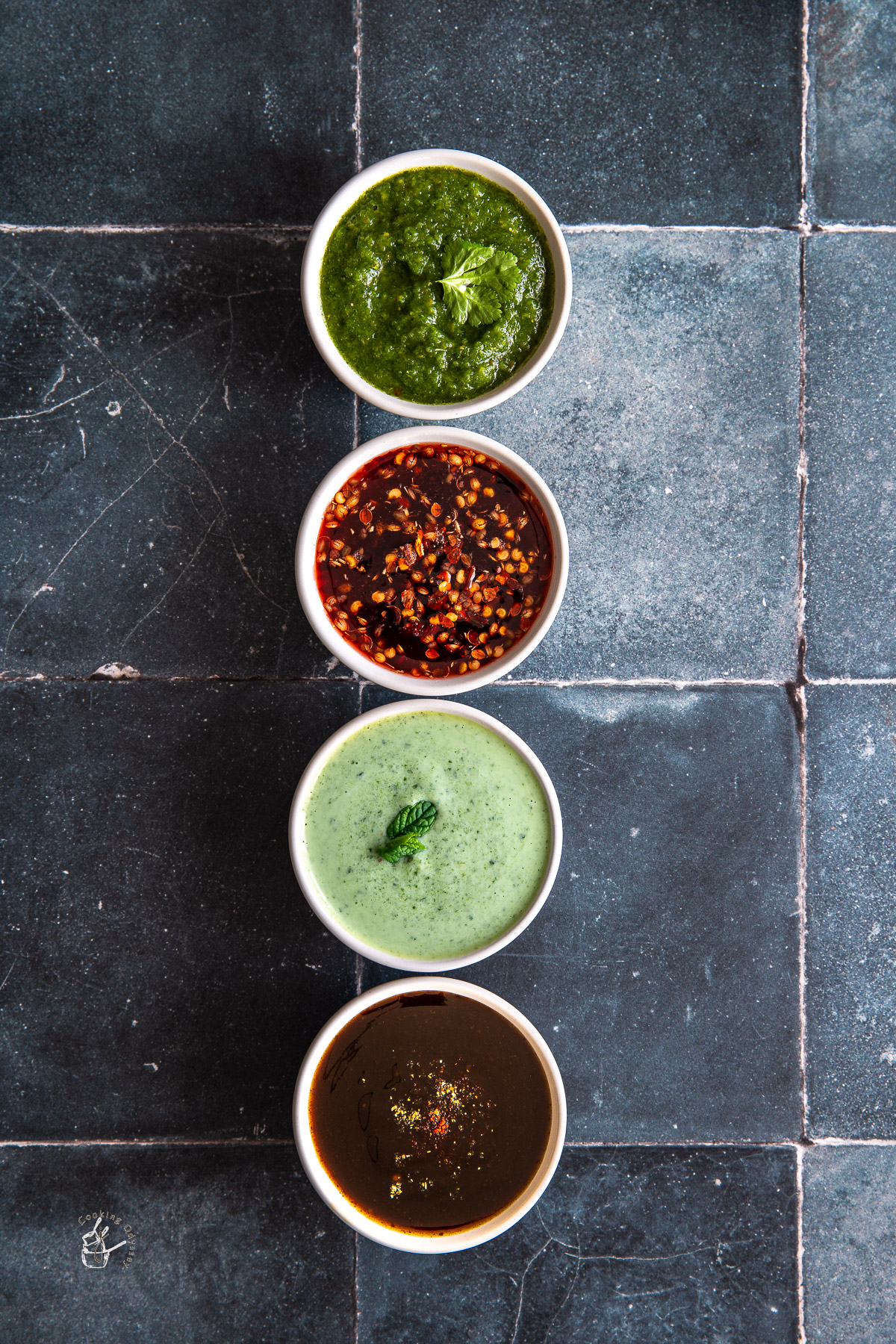
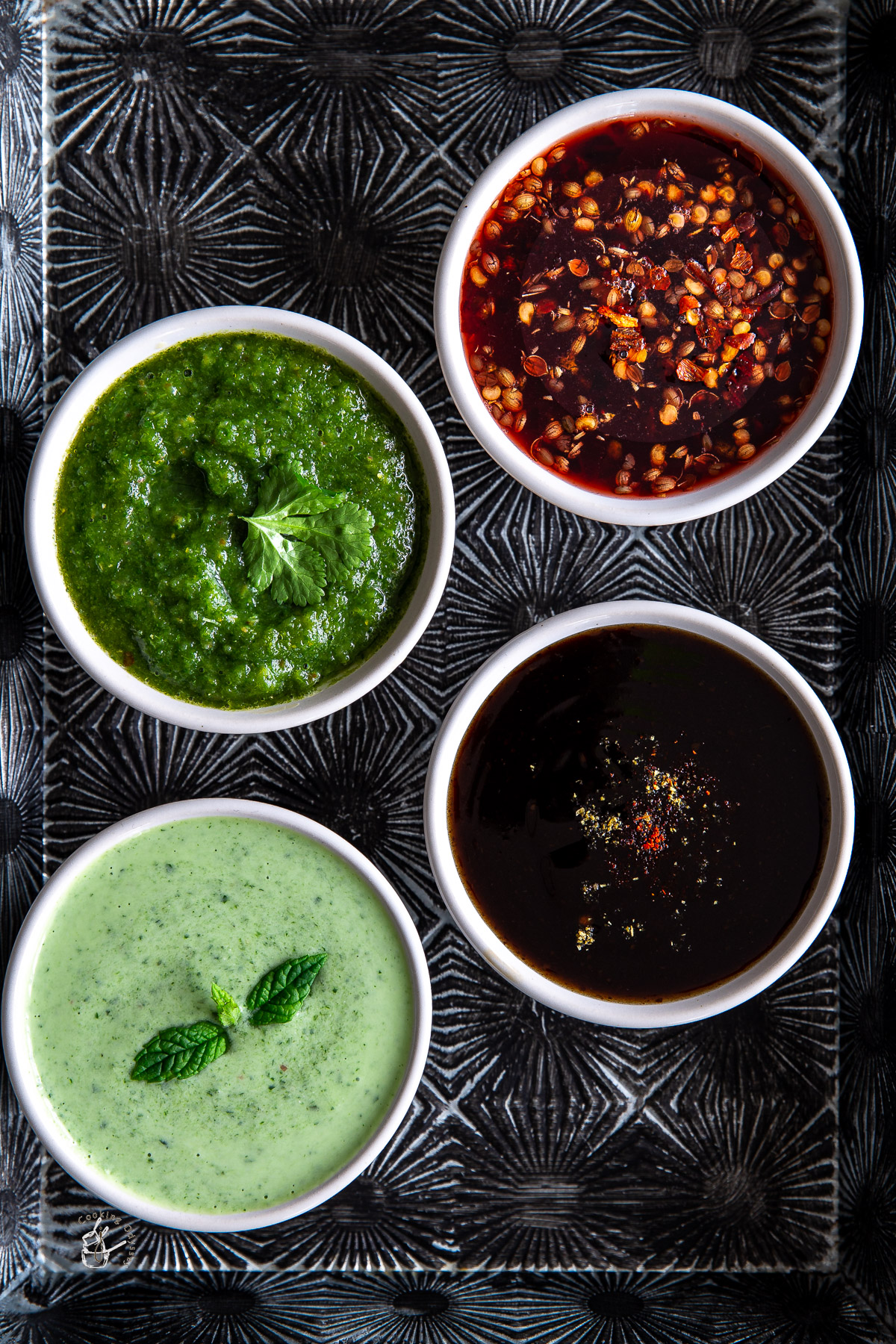
Red samosa dipping sauce – this is a sweet and sour sauce Green samosa dipping sauce – based on cilantro and mint and taste fresh. Variations include green yogurt chutneys. Brown samosa dipping sauce – for tamarind based sauces, again these are sweet but not at all spicy
These dips are incredibly versatile and can also be used for so many other dishes:
homemade poppadoms onion bhajis & air fryer onion bhajis air fryer punjabi samosas puffs – made with store-bought puff pastry chaat recipes such as samosa chaat and sweet potato chaat dry fruit kachori/masala kachori pakoras such as Sandwich Bread Pakora paneer tikka
You can purchase Trader Joe’s samosa sauces or from Indian grocery stores, but it is well worth the effort of making them at home. Many of these dips can be made in 5 minutes or less and with easy to find ingredients. Let’s dive into the best sauces for samosas!
Trio of Chutneys
In Indian restaurants, you will often find appetizers are served with an Indian pickle tray set with three different dips. These condiments are mango chutney, Indian onion chutney and Indian mint sauce – the most popular sauces. Mango Chutney can be made using ripe mangoes or unripe mangoes. If using ripe, the end flavour will be similar to the sweet store-bought mango chutneys. You can learn more about all these recipes in Poppadom Dips.
Red Samosa Sauce
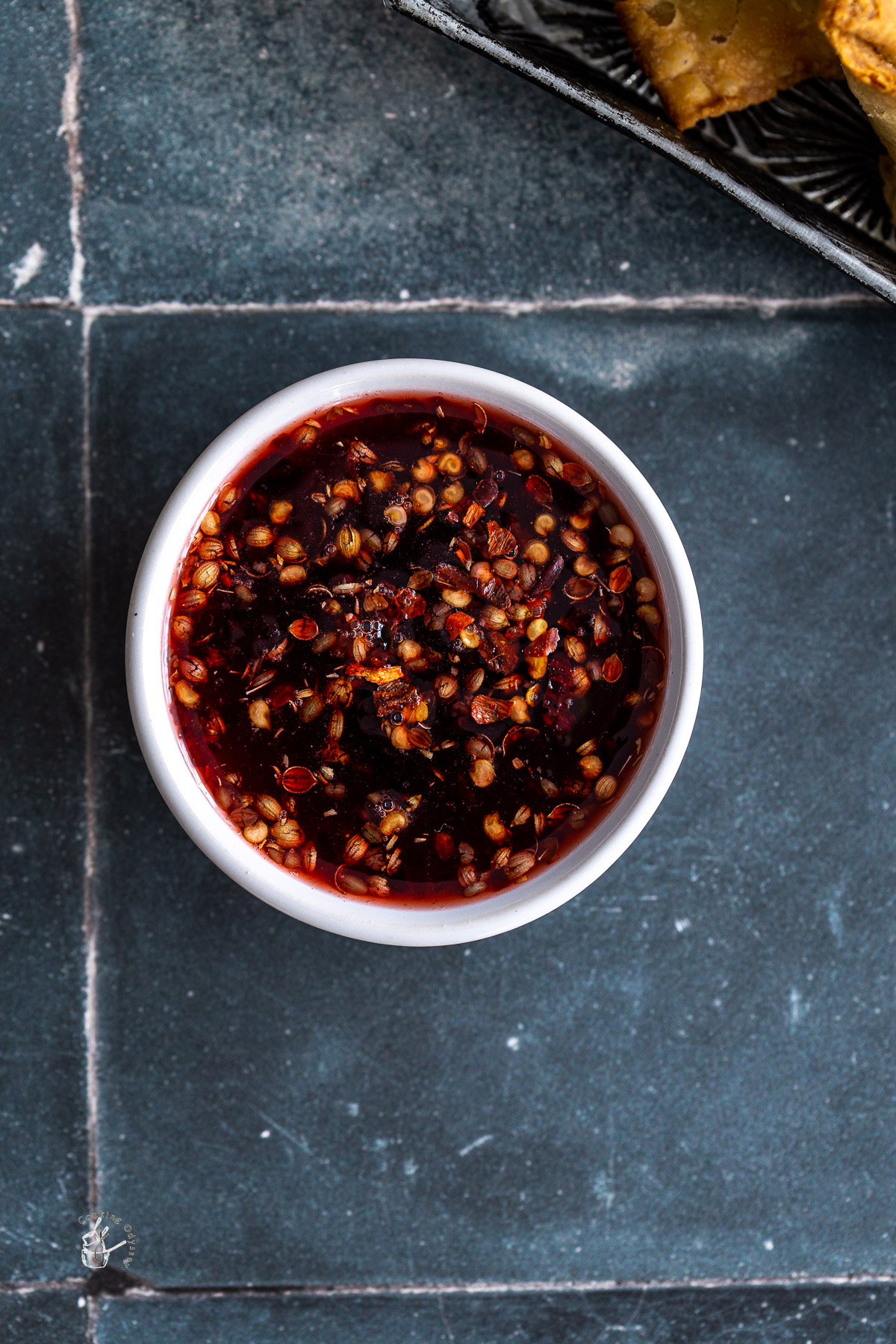
This is the sweet dipping sauce that is given with samosas in farsan or snack shops. This red samosa chutney is made with red chilli flakes and has a hint of tamarind. It is sweetened with sugar making it different from tamarind chutney which is made with jaggery as is dark brown. To this red sauce, you can add a dollop of mint sauce to give a zingy taste similar to my local snack shop.
How to make the red sweet samosa dipping sauce
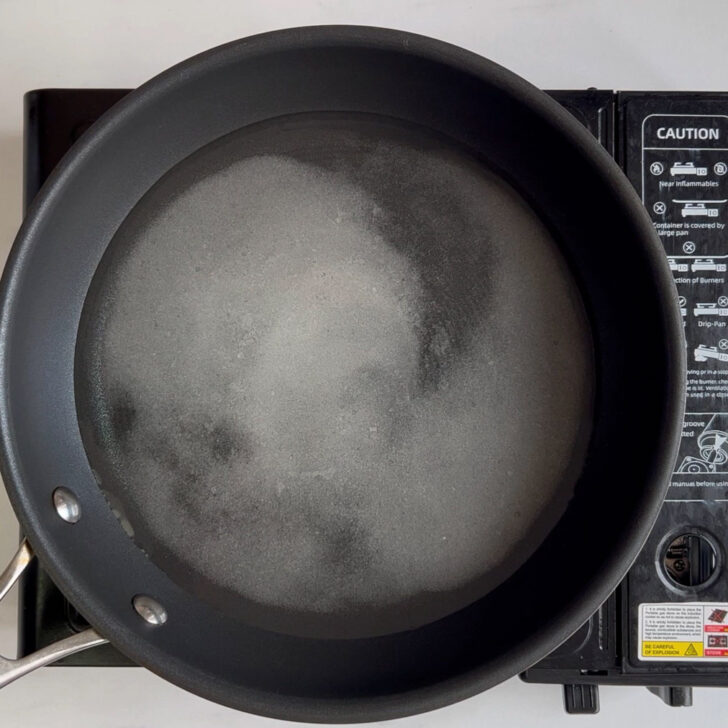
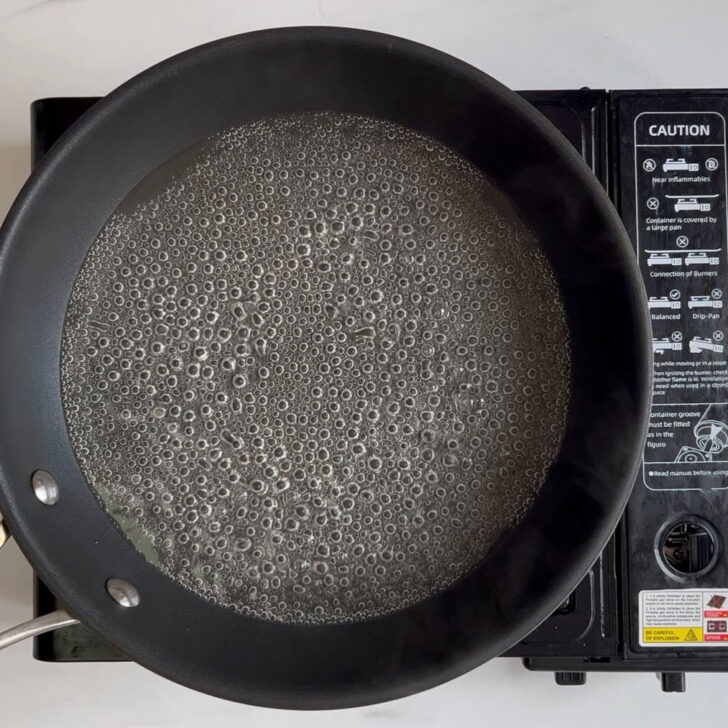
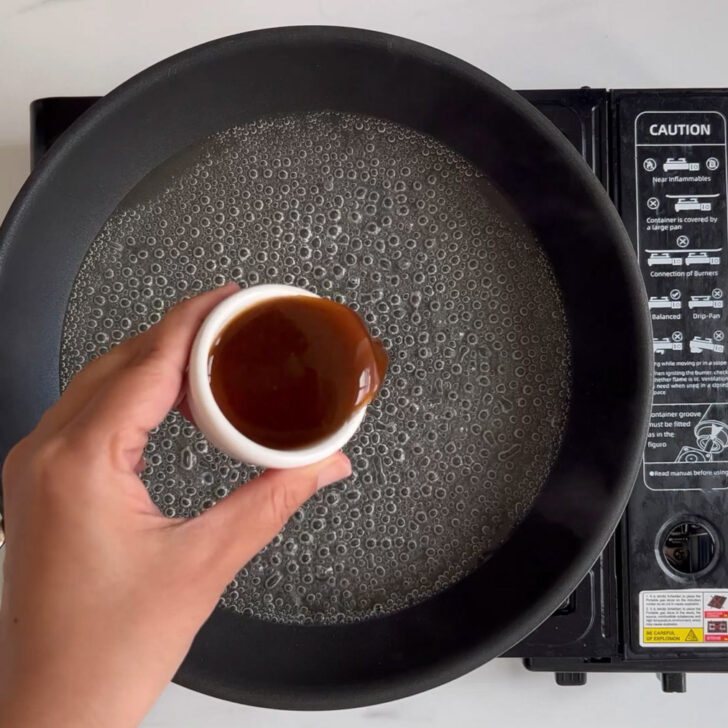
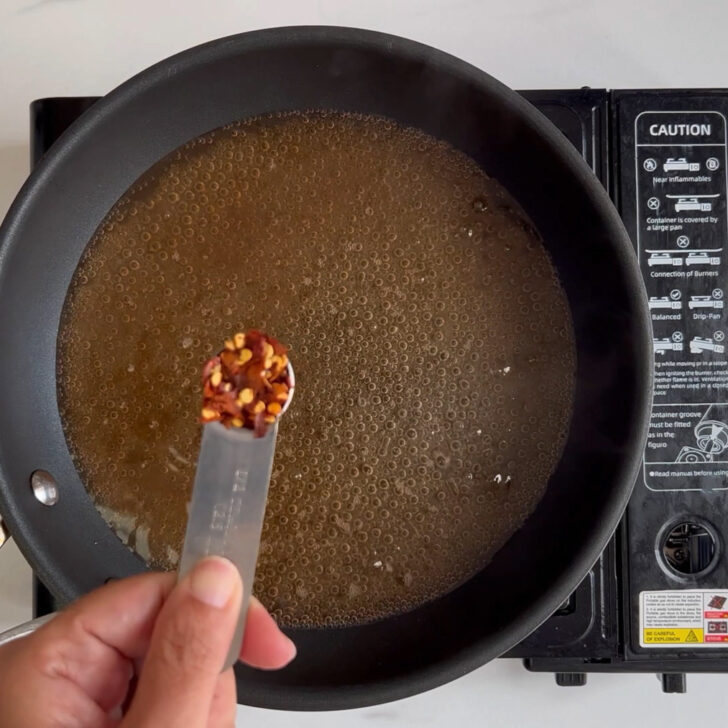
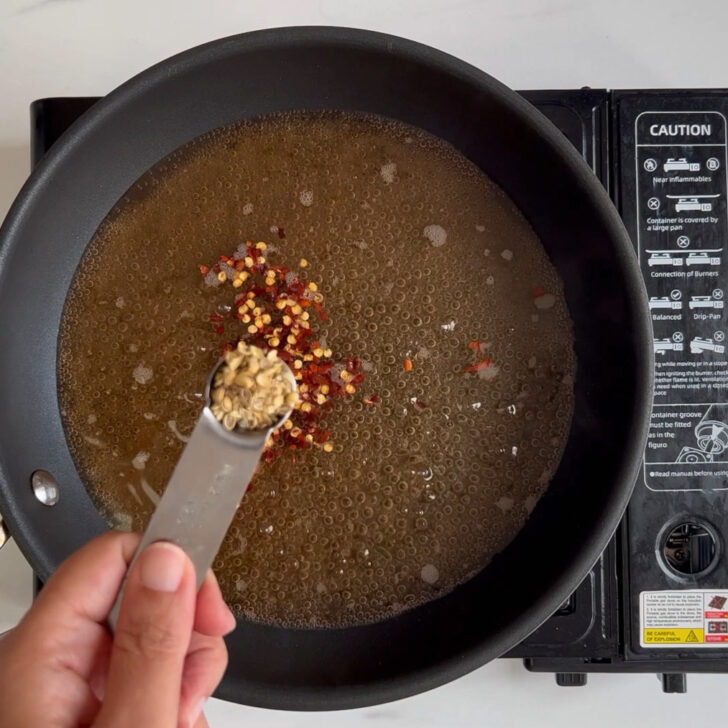
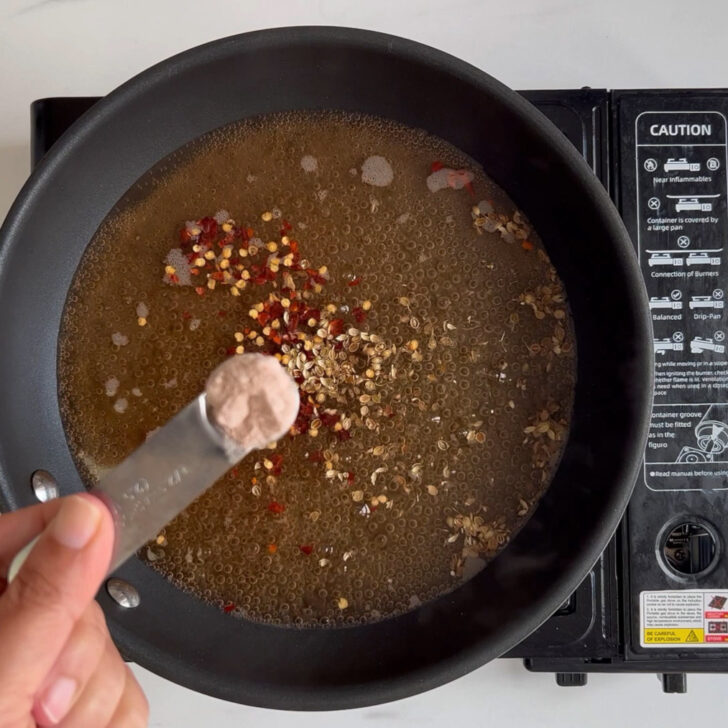
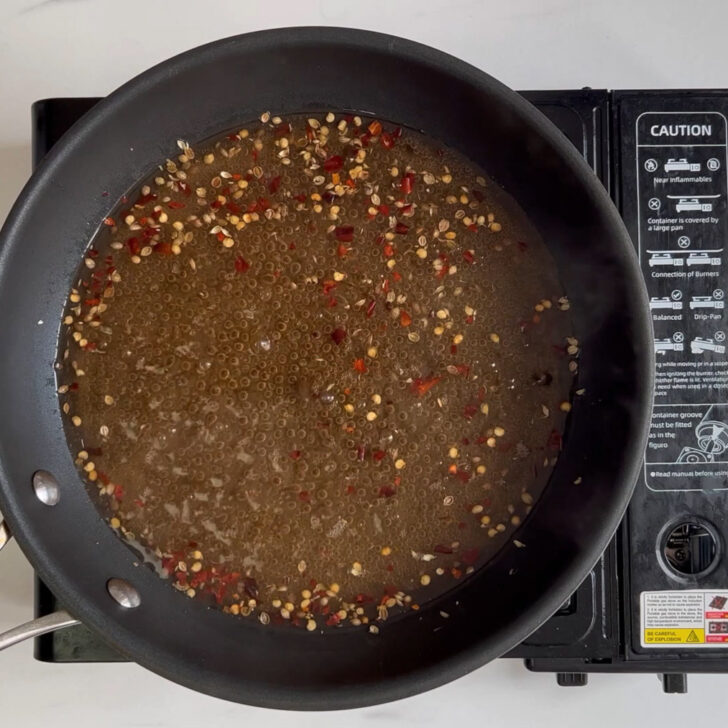
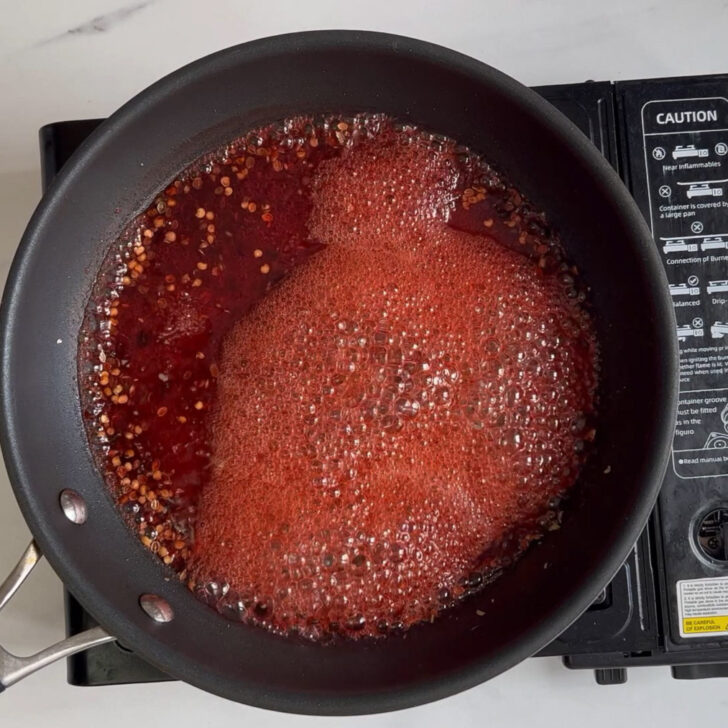
Full ingredients with measurements are available in the recipe card below at the end of this post In a pan, heat water and sugar on medium heat until the sugar dissolves. Add in tamarind pulp, red pepper flakes, crushed whole coriander seeds (you can also use coriander powder), black salt and allow to cook. Add red food coloring or use Kashmiri red chilli powder. Mix cornflour and water and add this slurry. You can use arrowroot powder instead of corn starch. Allow it to cook until the sauce thickens. Turn off the heat. As the red chutney cools and reaches room temperature, it will thicken further.
Storage
Fridge – Store leftovers in an airtight container once cooled and keep in the refrigerator for up to 1 week. Freezer – You can also freeze in batches and allow to defrost whenever you want it.
Green Samosa Sauce
The green samosa dipping sauce is Mint cilantro chutney and is known in households as “green chutney”, “hari chutney” or “mint chutney”. It is an Indian classic. It is vibrant in colour, tangy in flavour with a medium heat thanks to the green chillies! Fresh coriander leaves, green chilies, fresh mint, ginger, cumin seeds, lemon juice and salt are ground in a blender until smooth. To thicken the chutney, sometimes chana dal, peanuts or desiccated coconut is added. This turns it into more of a coriander coconut chutney which is absolutely delicious and can even go great with dosas.
Yogurt Samosa Dipping Sauce
The mint yogurt dip served with appetizers such as poppadoms, onion bhajis and samosas is this Indian Mint Sauce. This green sauce is made with plain yogurt such as greek yogurt, fresh mint leaves, garam masala and green chillies. It is refreshing and cooling thanks to its yogurt base. With the slight addition of sugar, it takes on a slight sweet flavour which can be irresistible! MAKE IT VEGAN using a dairy free yogurt. It is a great option as a no tamarind samosa sauce. Other Indian yogurt dips include raita, but this would not be served with samosa.
Tamarind Samosa Sauce – Brown Samosa Sauce
There are two varieties of the brown sauce served with samosa and other Indian meals such as chaat. The Gujarati version is imli chutney or amli ni chutney. This tamarind chutney recipe is made with added dates which provide extra sweetness. It is an authentic Indian sauce. The other version is Tamarind Sauce which is the version served in Indian restaurants as a dipping sauce for appetizers. It is also known as sweet tamarind chutney. Jaggery is added but you could also use brown sugar. The key ingredient in both is tamarind paste which can be found as a block of pulp or in jars. To both recipes, spices such as red chili powder and ground cumin and coriander are added.
Garlic Chutney
There are a few different types of garlic chutneys. Lasan ni Chutney or red garlic chutney is a Gujarati recipe. This dry garlic chutney is made using red chilli powder, raw garlic cloves and sesame seeds. It is “instant” as it does not require any cooking and is ready in less than 5 minutes. It is a fairly spicy chutney. One can use a food processor or pestle and mortar for this recipe. The following types of chutneys have a unique taste thanks to the king of fruits – mango. These chutneys are no cook and are full of vitamin c. Raw Mango, Red Chilli and Garlic Chutney is a super quick red dip made with raw mangoes and red chillies. You can use either red chilli powder or dried red chillies. It can also be enjoyed with dhokla or paratha or methi thepla. Green Mango and Garlic Chutney – similar to above, this chutney is made with raw mango but uses fresh green chillies, coriander and mint. It can be prepared within minutes, perfect for you to enjoy with crispy samosa.
Fruit chutneys
Fruit chutneys are not traditionally served alongside authentic samosas but if creating a fusion samosa recipe, you may want to try these out! Pineapple chutney – this chutney is a South Indian recipe made from fresh pineapple, red chillies, jaggery and coconut. It can be eaten with Indian food but also in sandwiches! Jam chutney – this Indian jam chutney, known as Dabeli chutney, is served with Dabeli. Spices are mixed into a fruit jam. Apple chutney – apple chutneys are sweet and have a gentle heat thanks to the addition of Indian spices. Apple chutneys can be eaten with Gujarati curries but can also work with aloo samosas as a sweet alternative to tamarind chutney. Cranberry Sauce – I love cranberry sauce with this Tandoori Paneer Tart au Soleil. As always if you make this recipe, be sure to leave me a comment, rate this recipe and tag me on Instagram @jcookingodyssey or #jcookingodyssey. I love seeing all your photos of my recipe recreations! Don’t forget to follow me on social media using the buttons below – I can’t wait to see you all there!
Instagram Facebook Pinterest YouTube