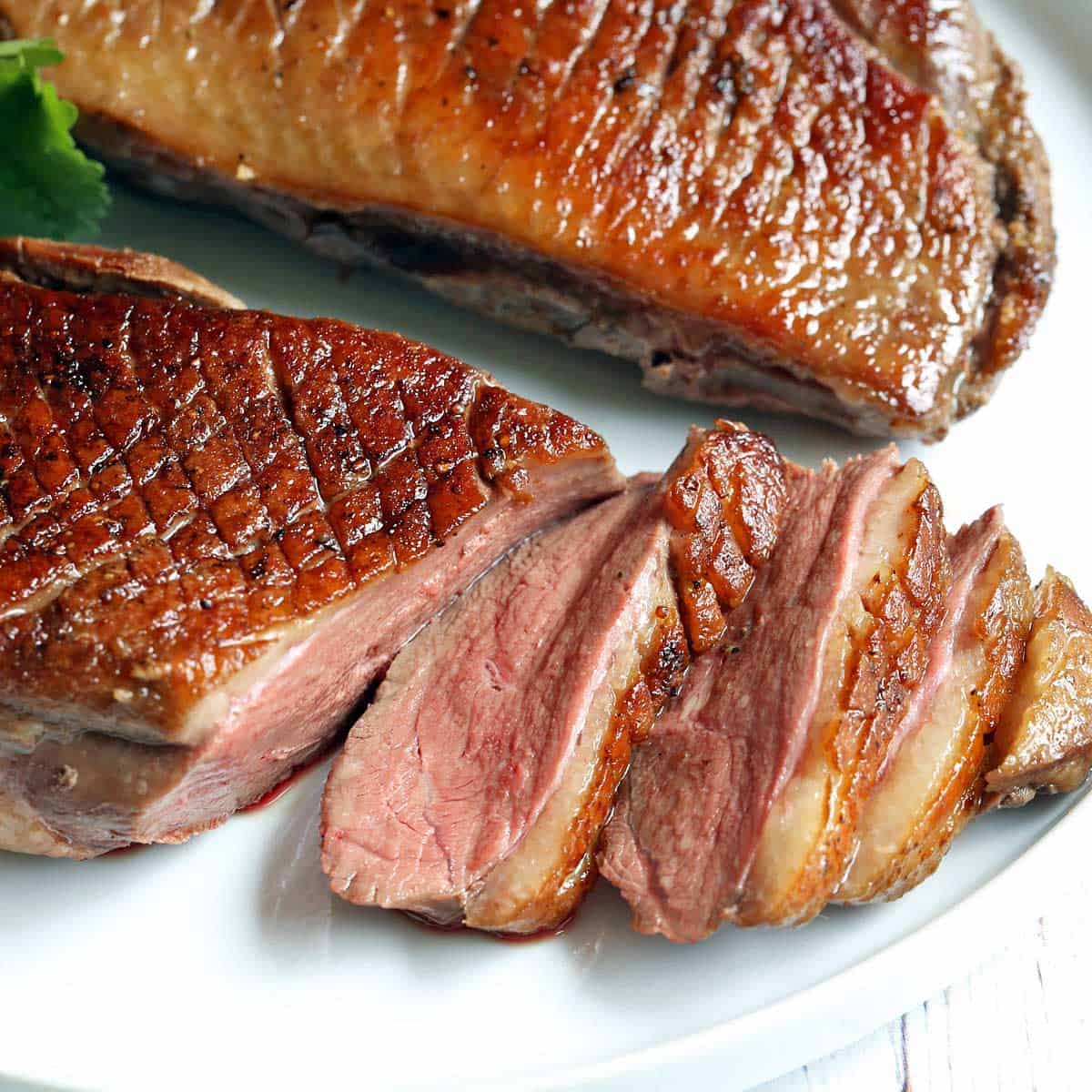
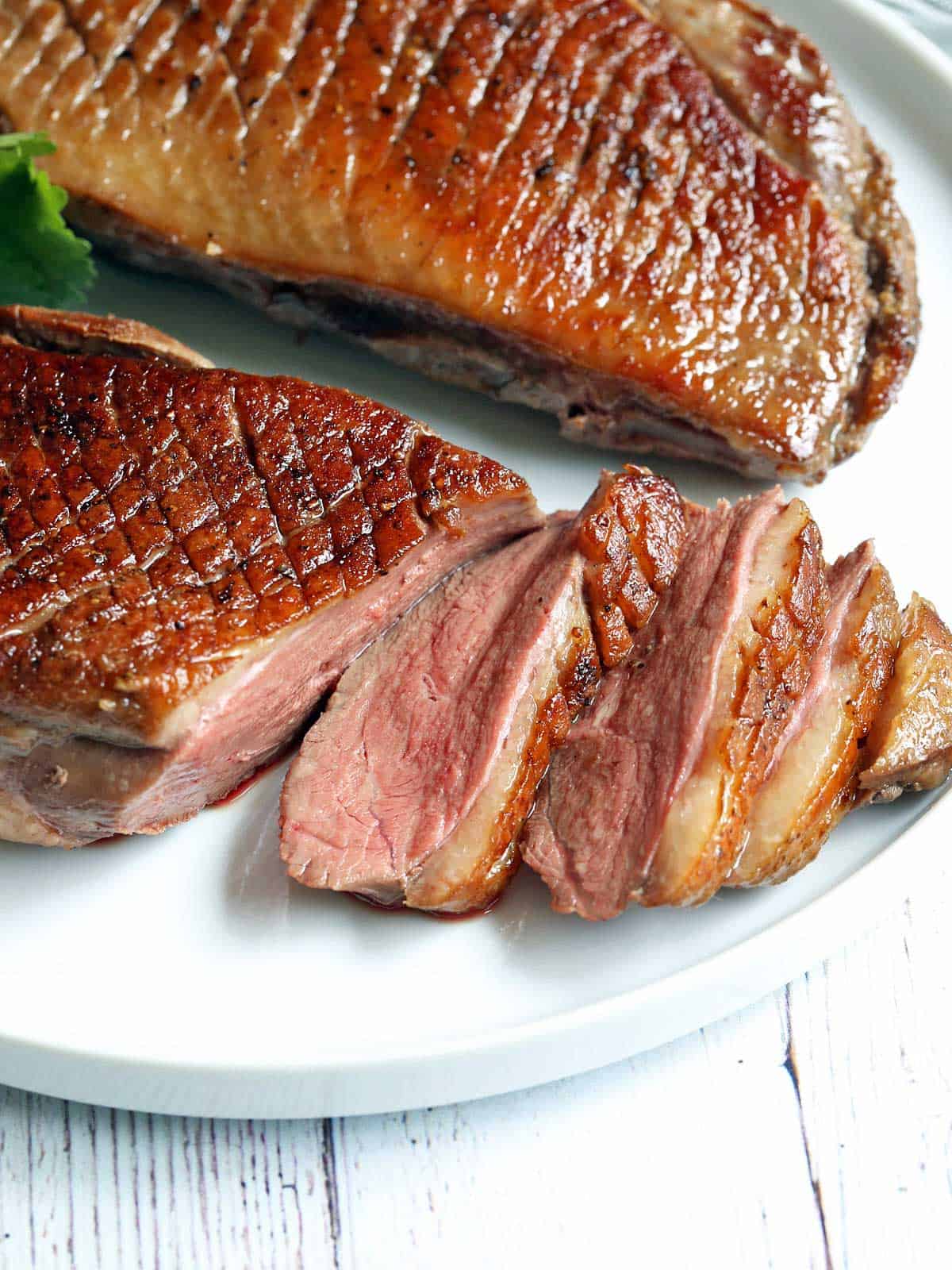
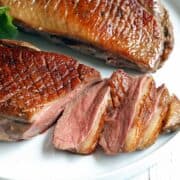
Ready in just under an hour (and this includes resting the cooked meat), this recipe is quite suitable for a weeknight dinner. Seared duck breast is one of those entrees you typically find on fancy restaurant menus, and you would think it was a complex recipe. But cooking duck breast in a skillet is easy. I don’t usually add a sauce. I’d much rather appreciate the flavors of the duck itself. It’s fatty and marvelous and deserves my full attention. But if you’d like a sauce, I give you that option too.
Ingredients
Instructions
Recipe Card
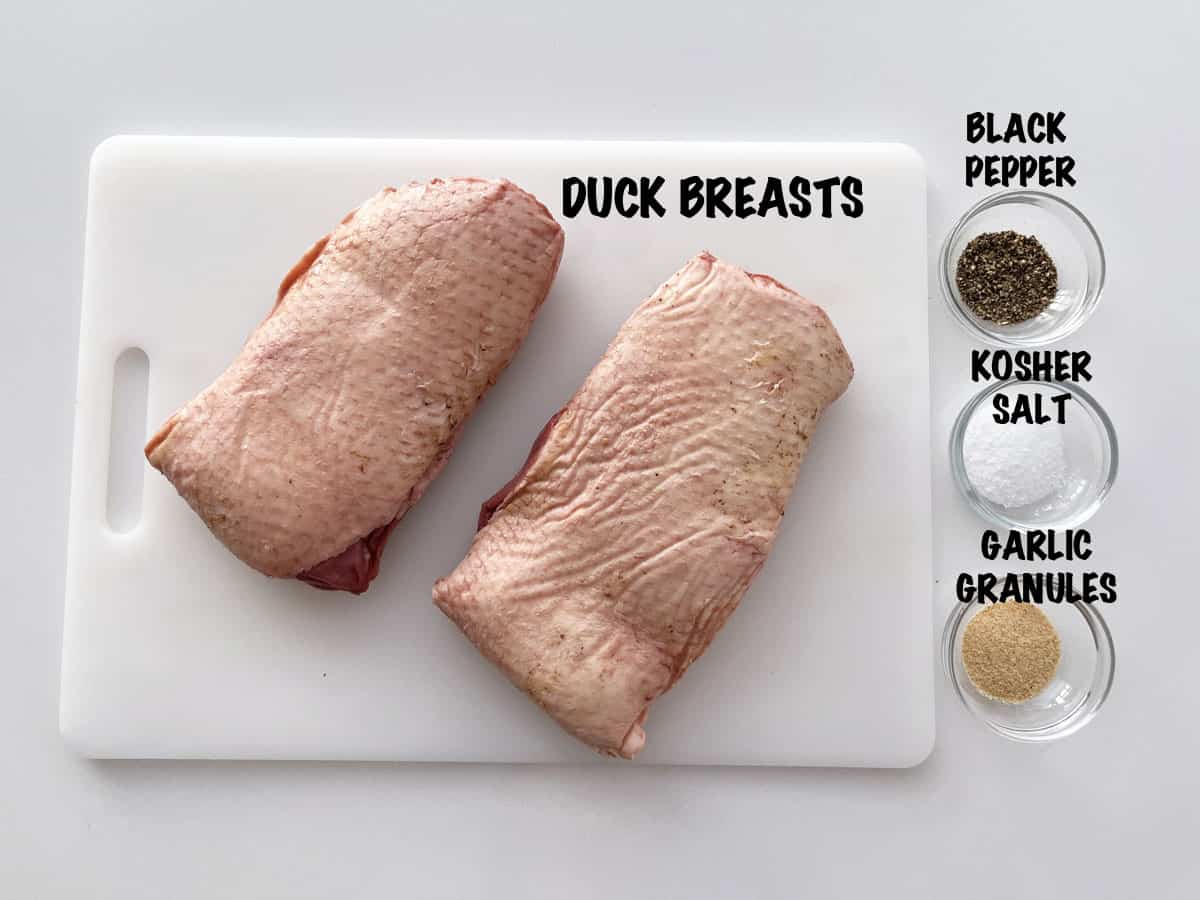
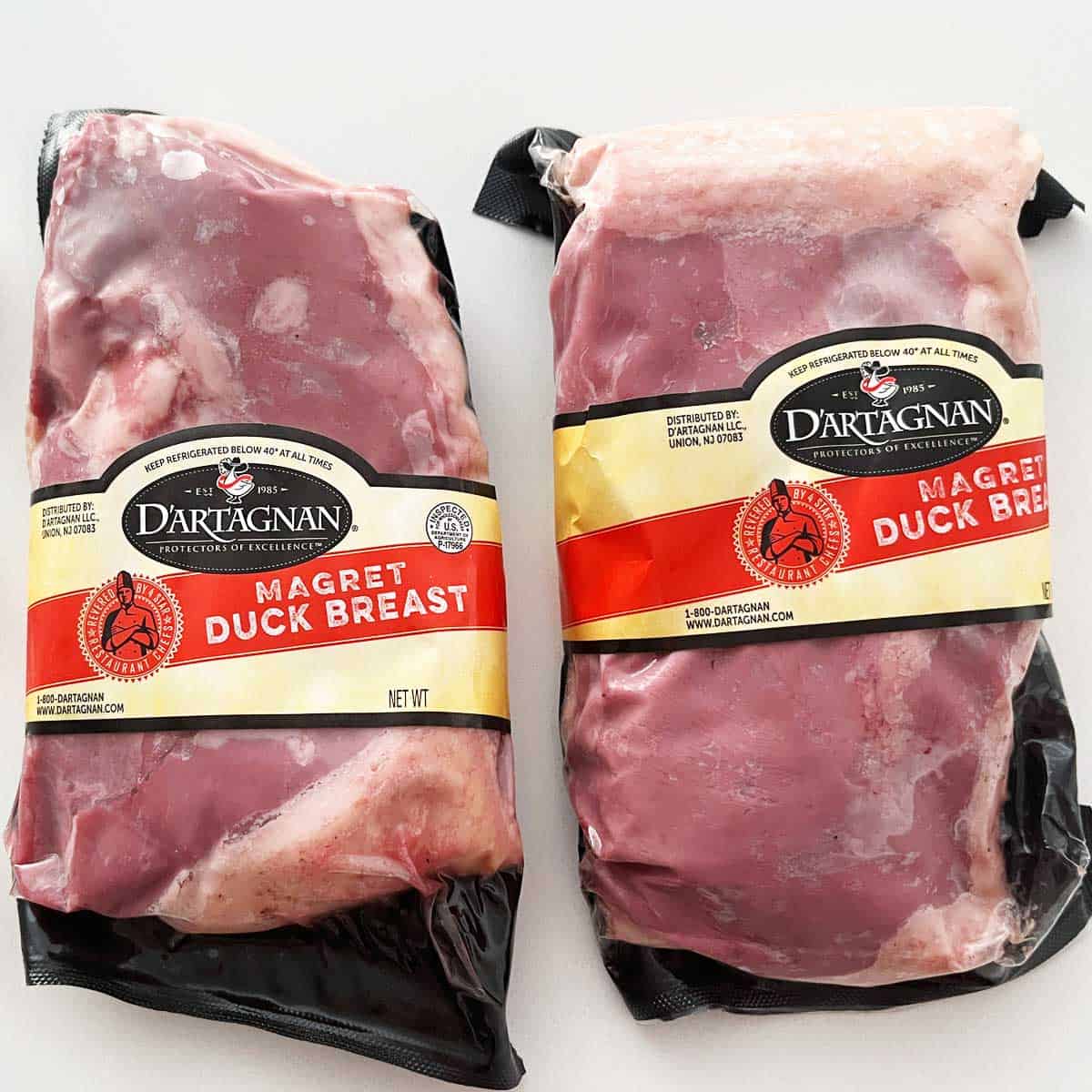
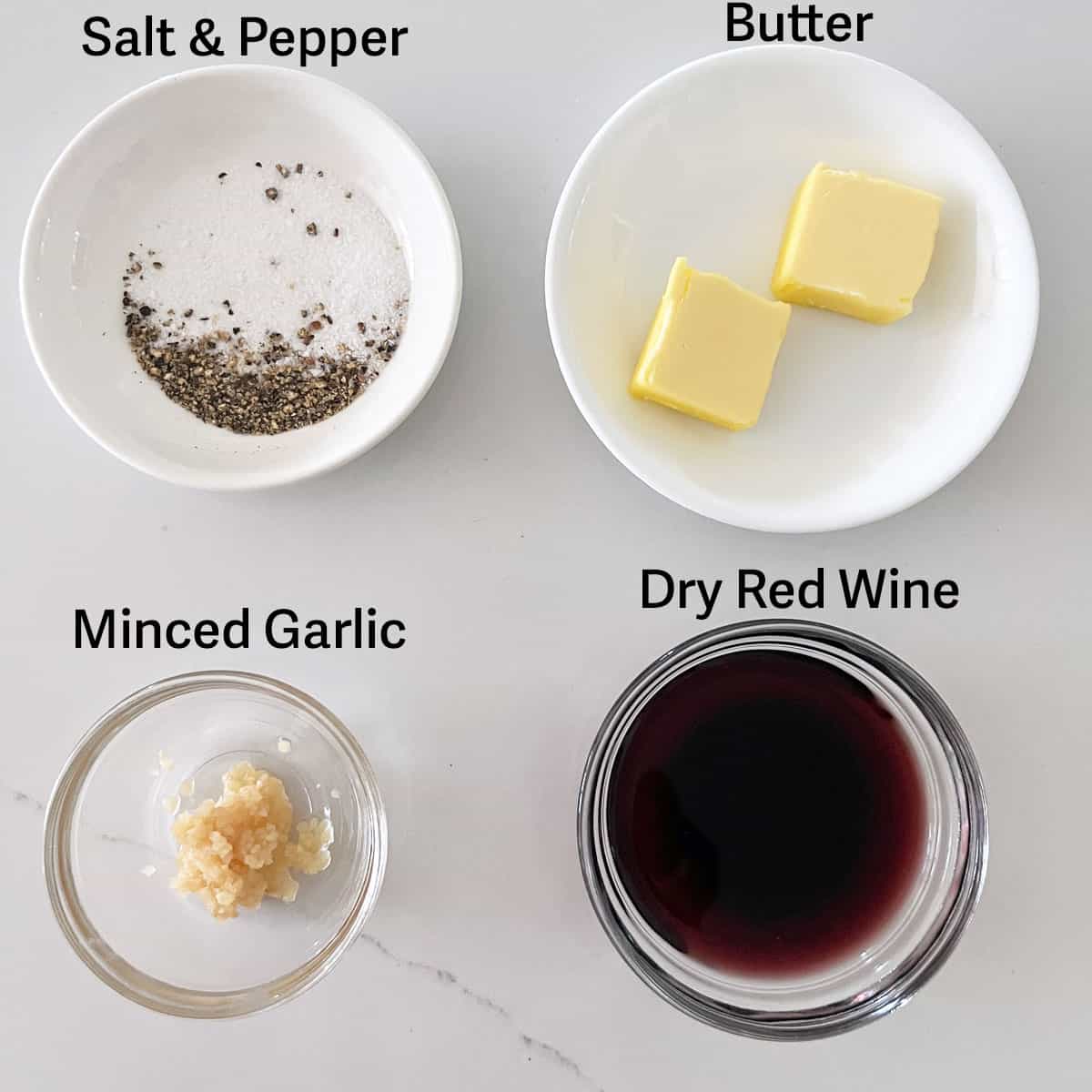
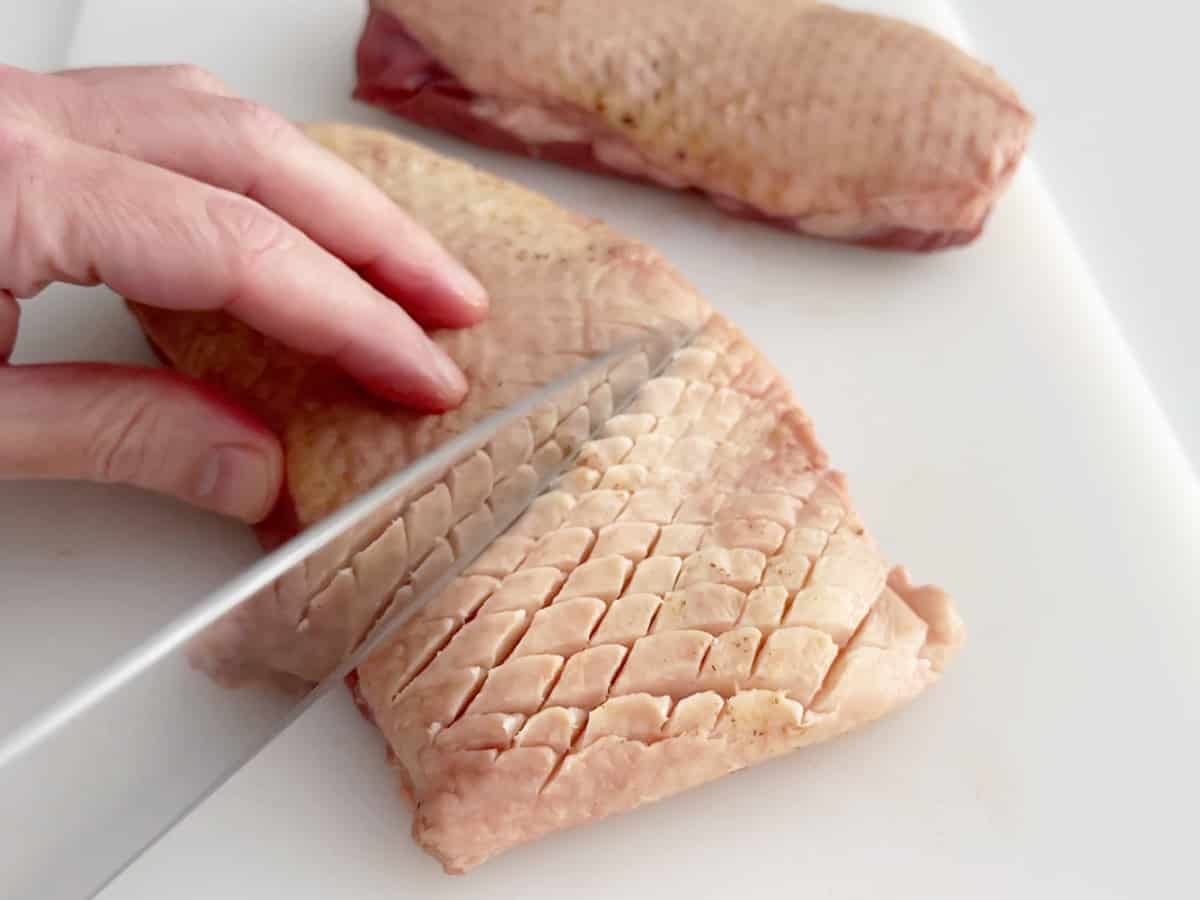
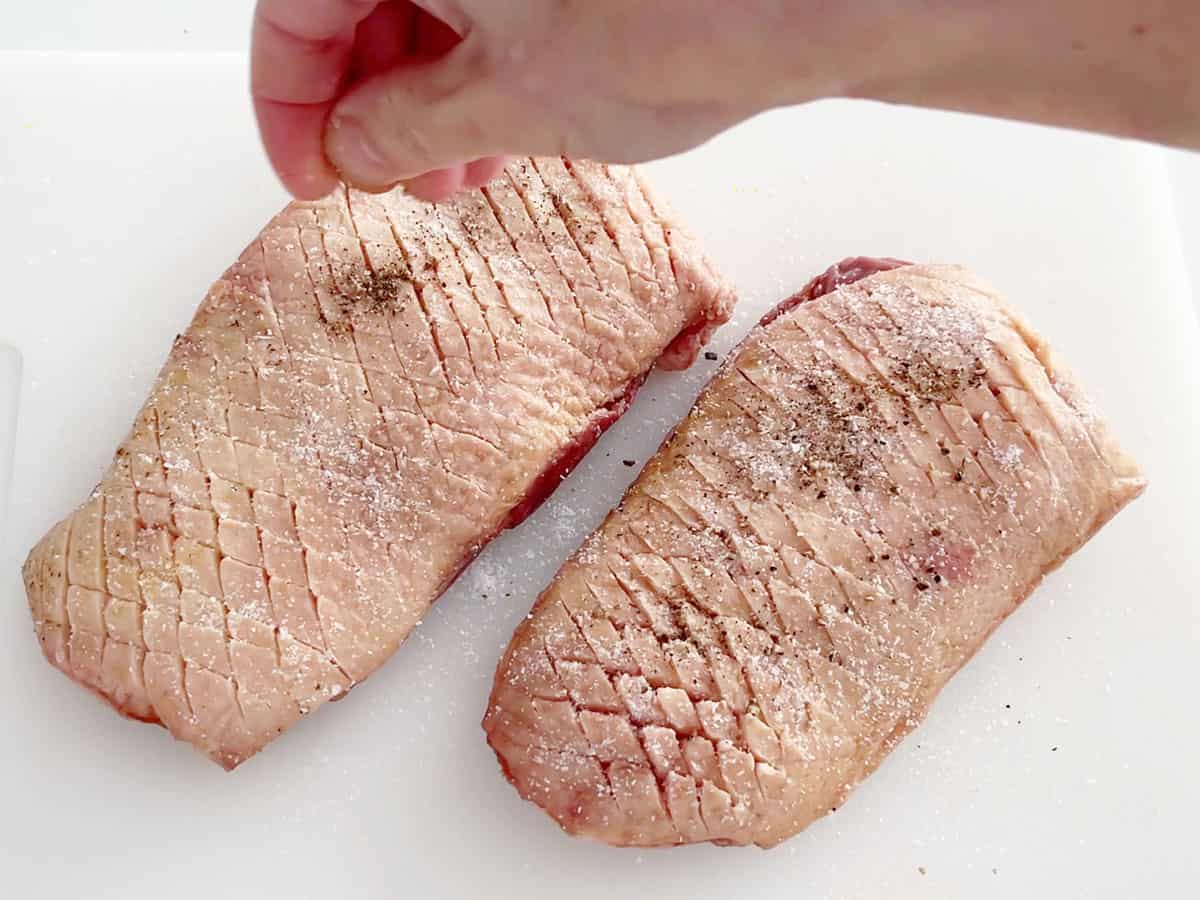
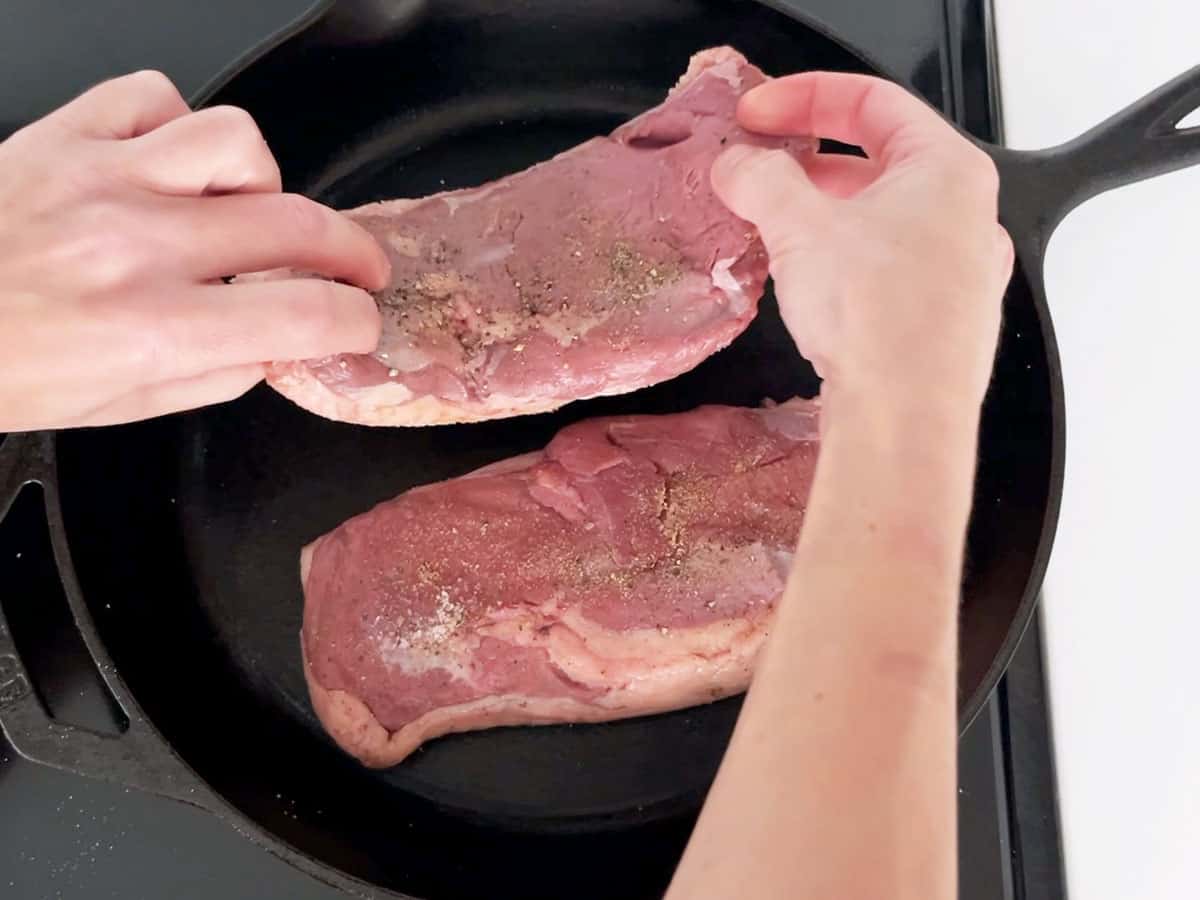
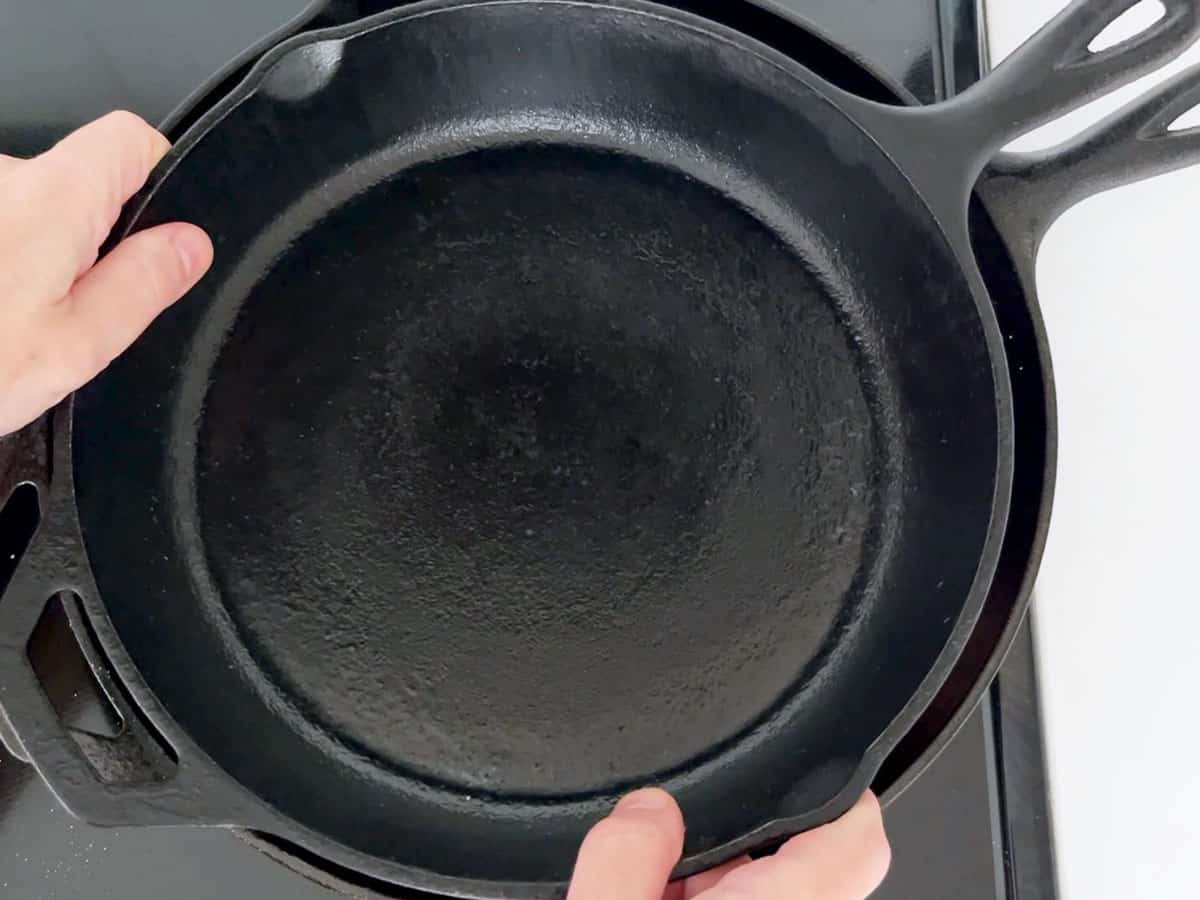
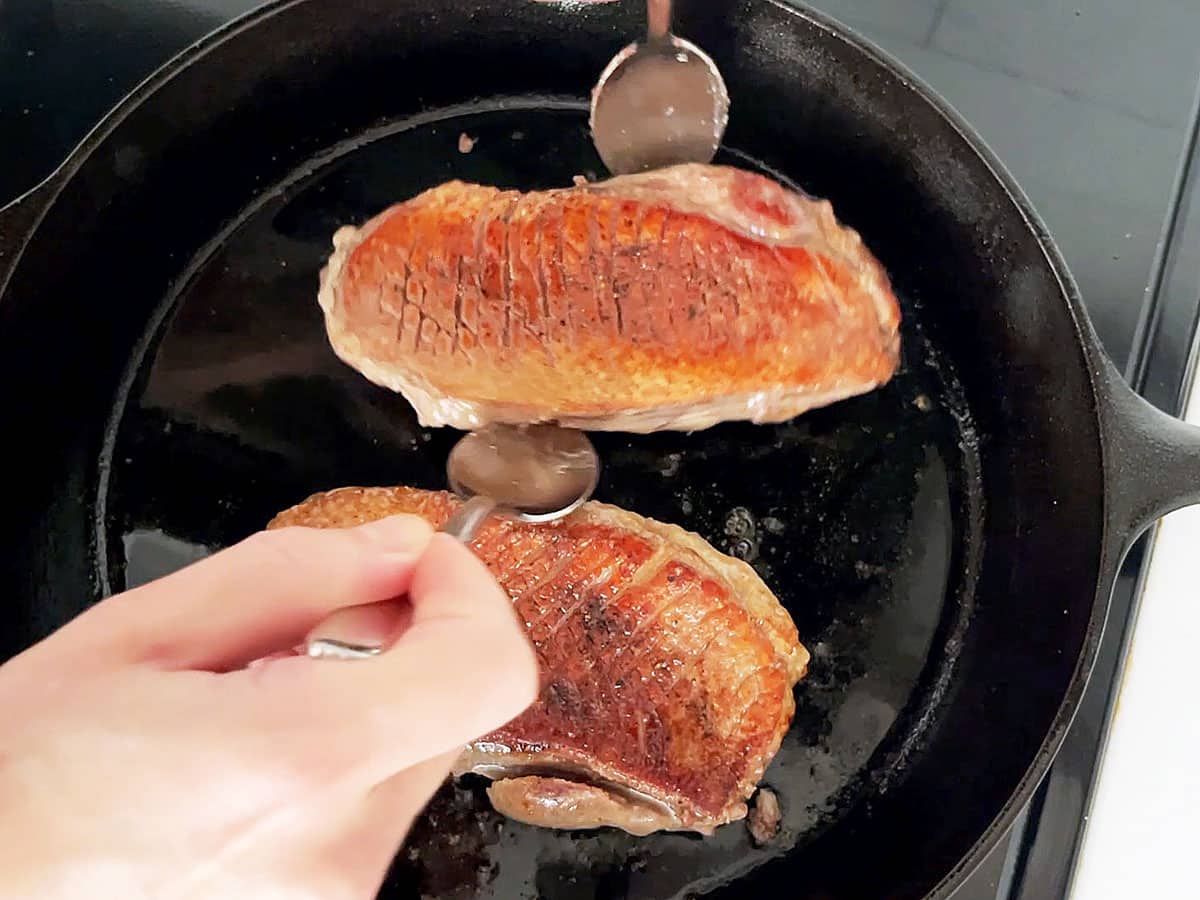
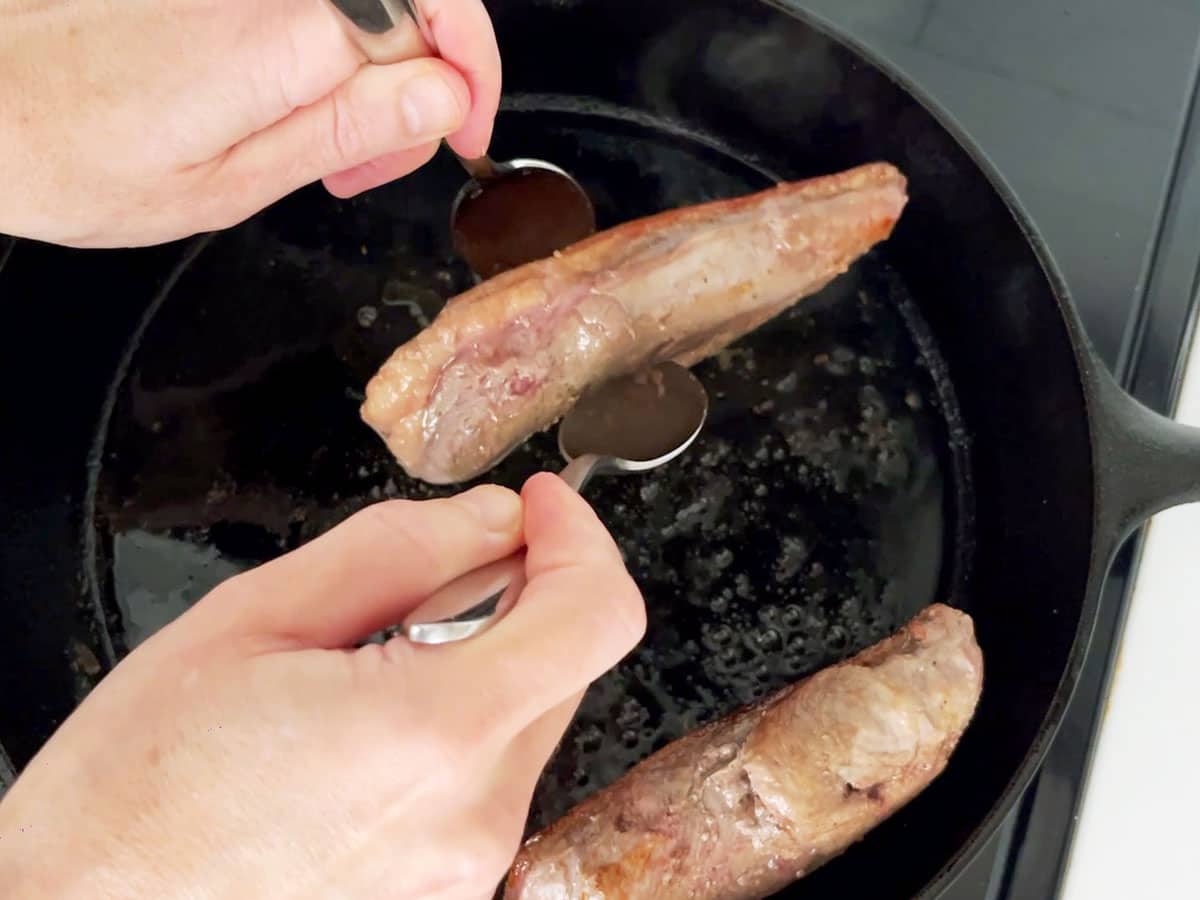
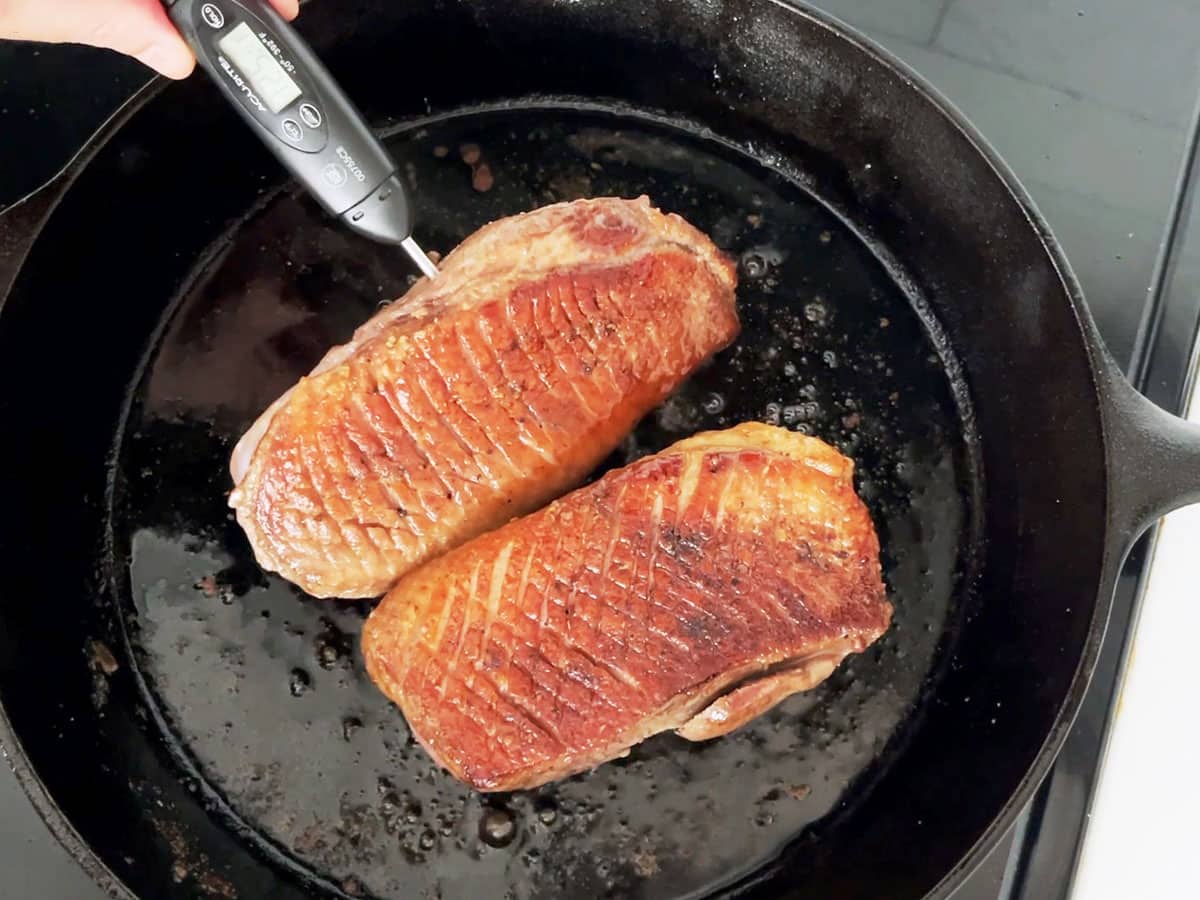
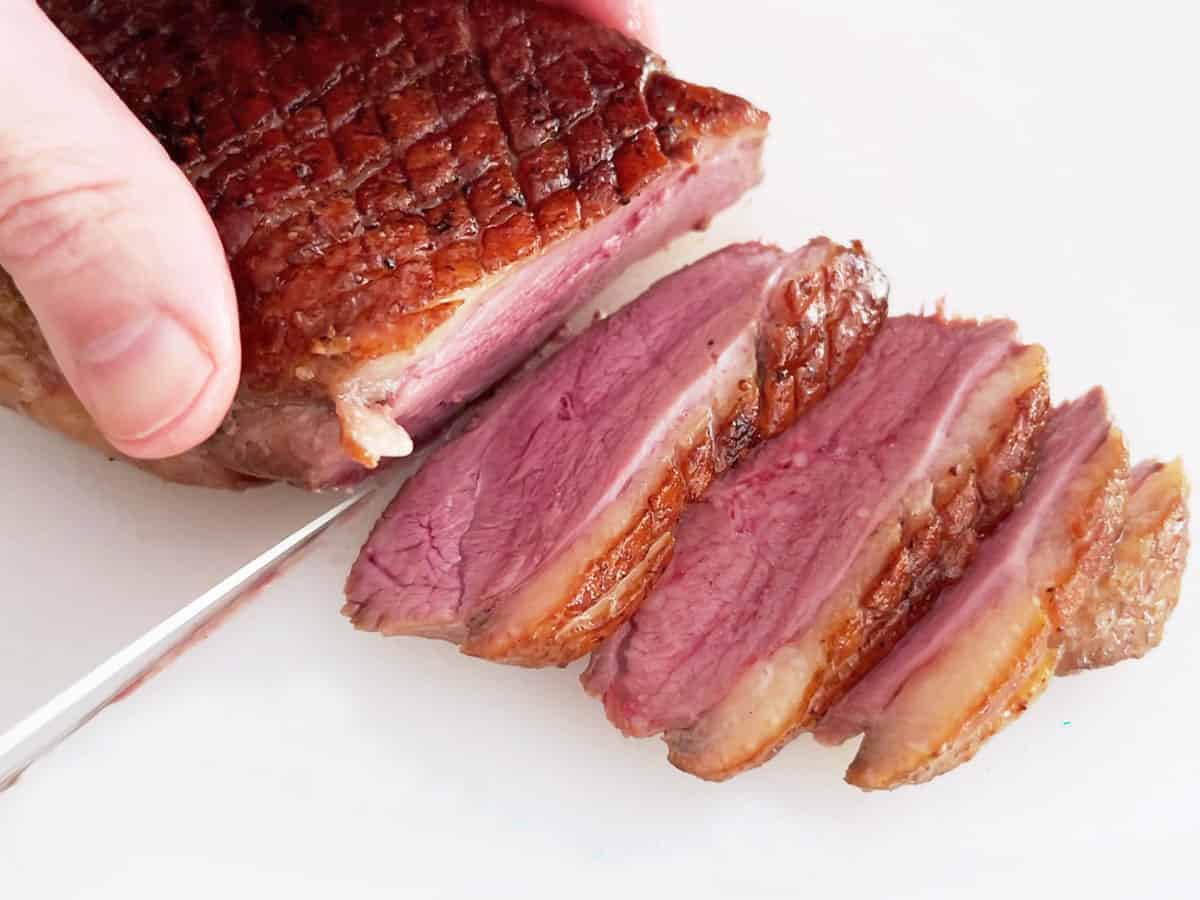
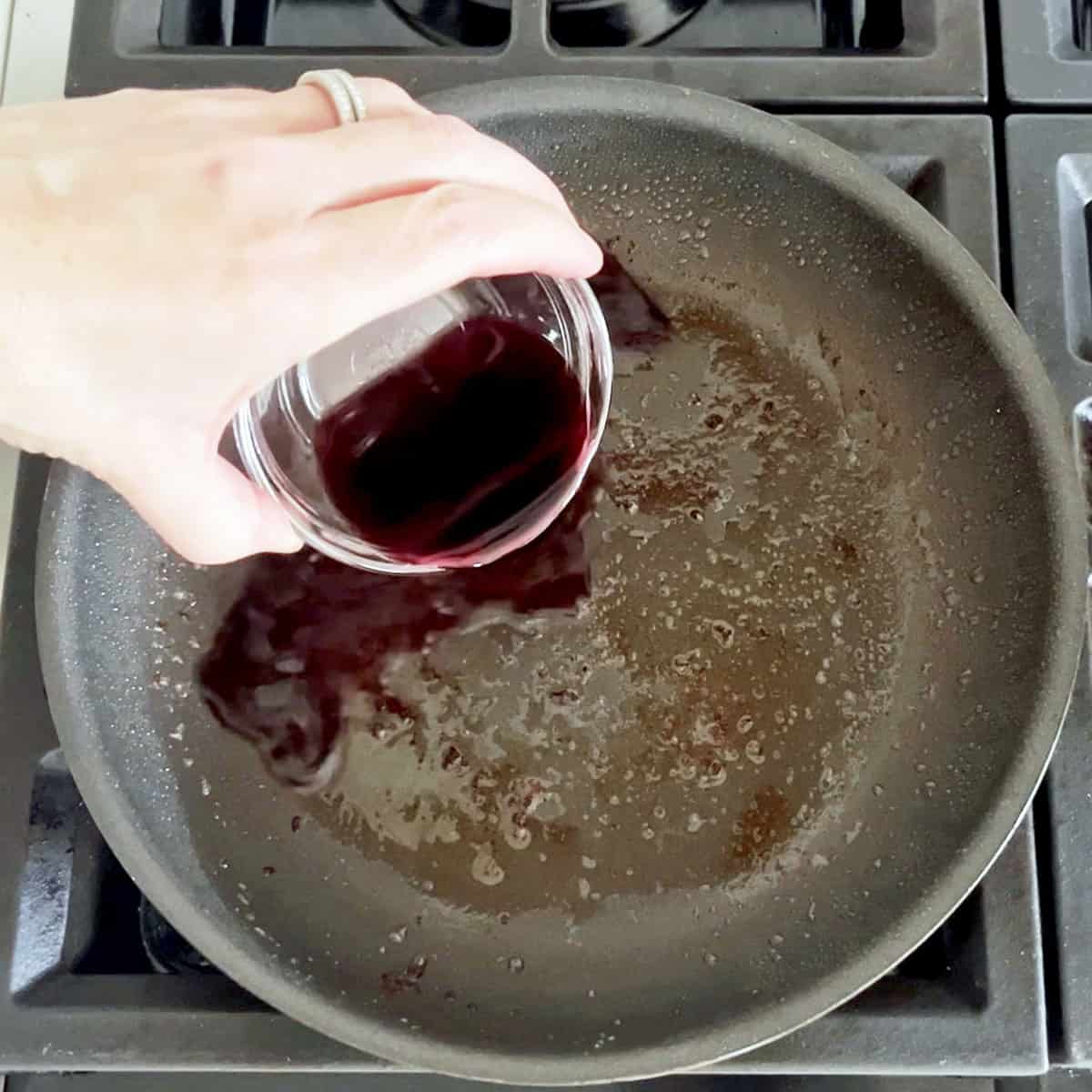
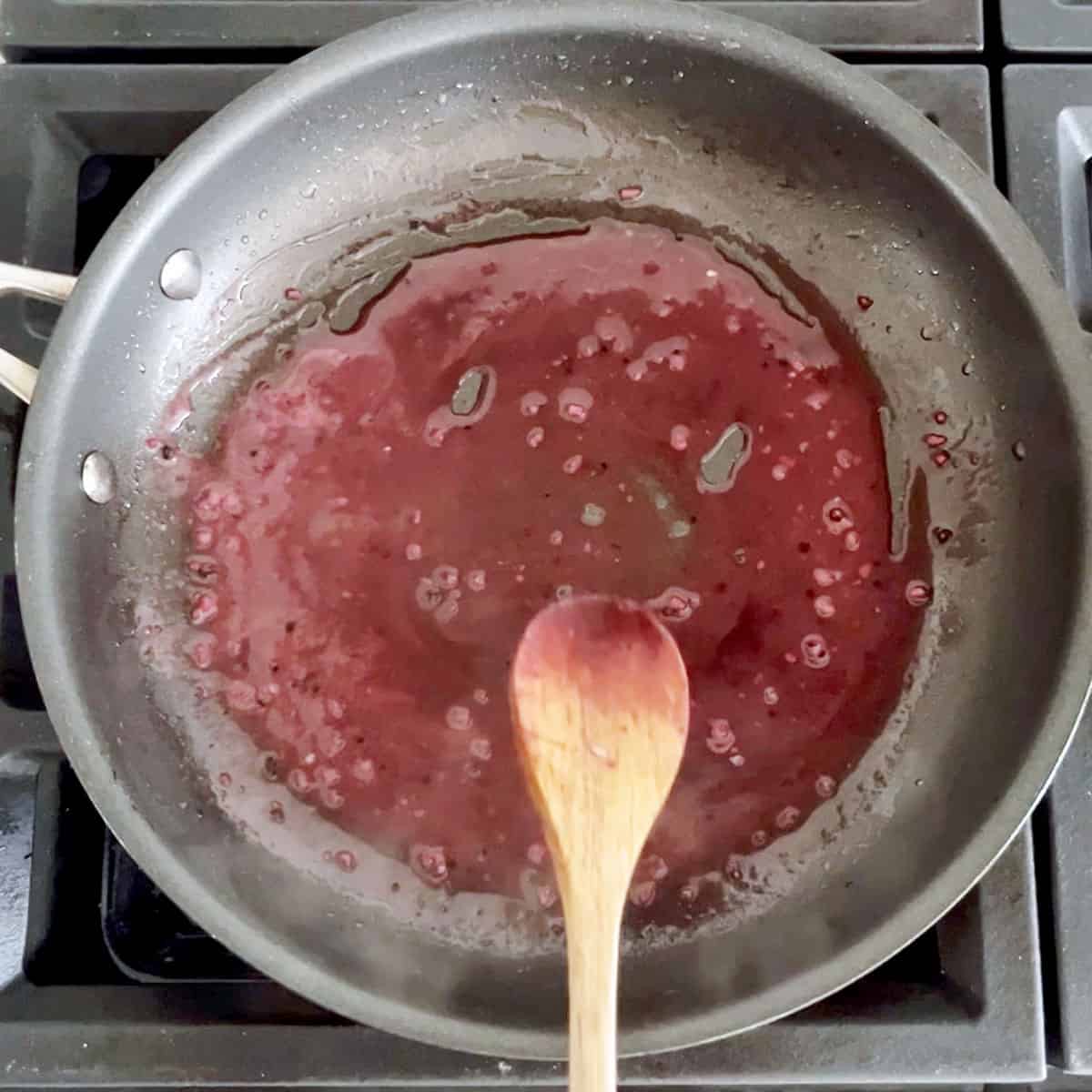
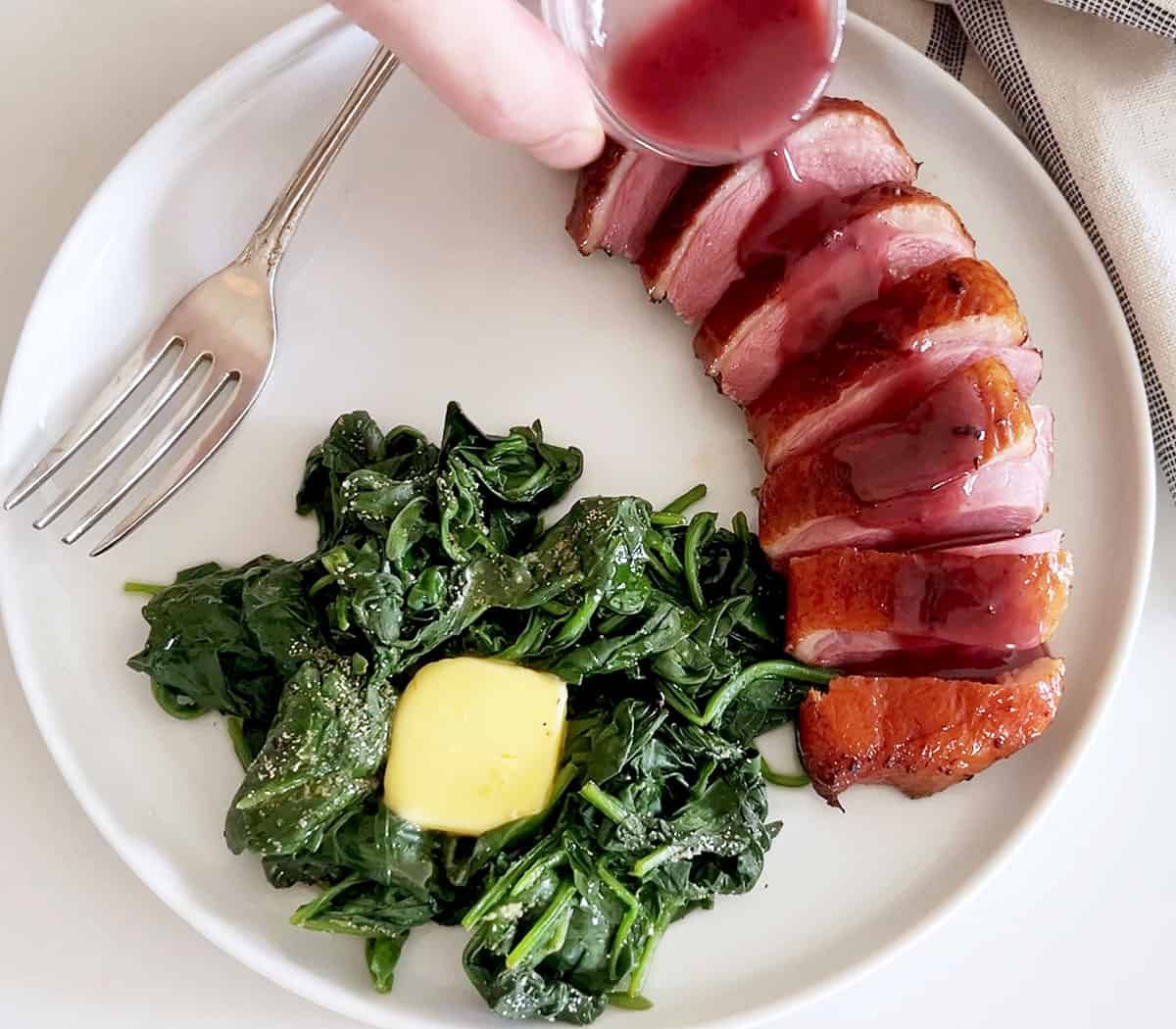
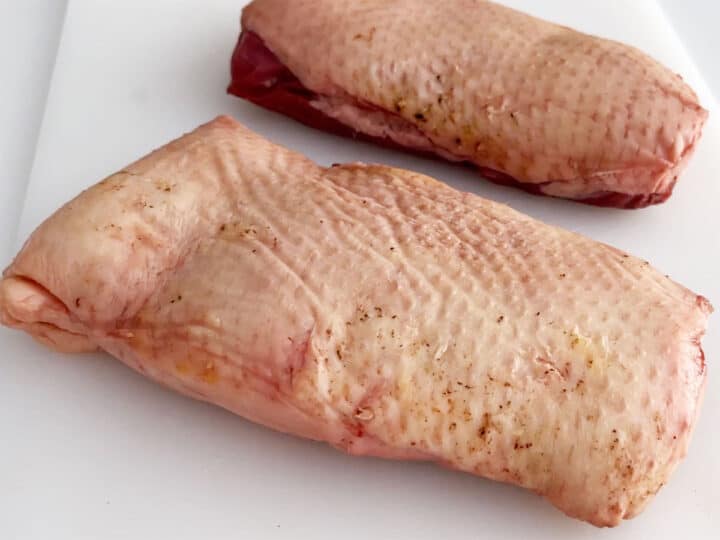
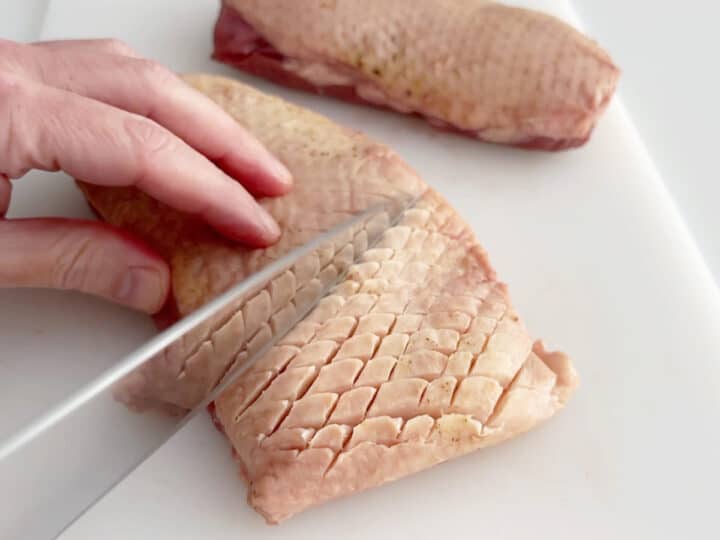
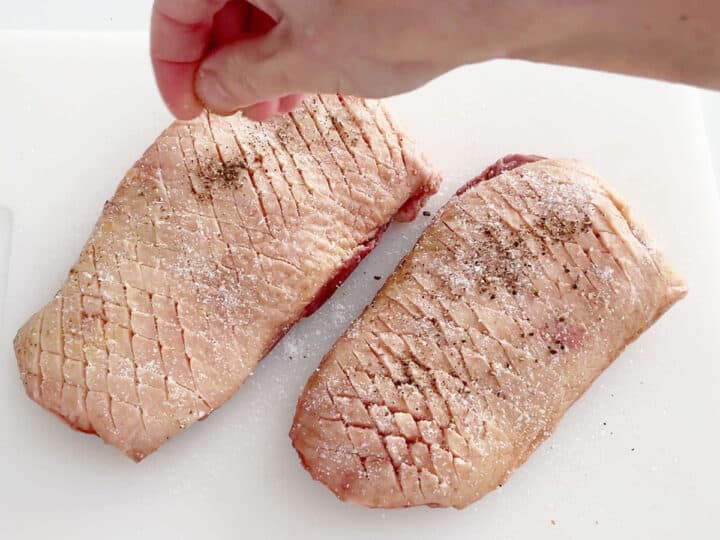
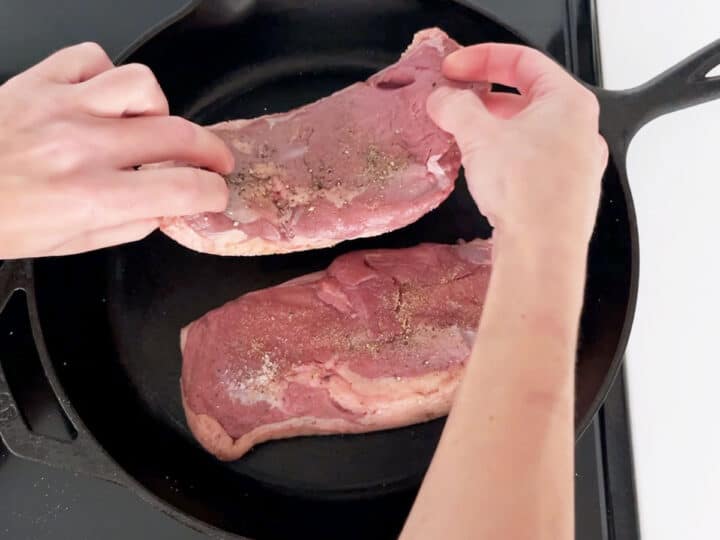
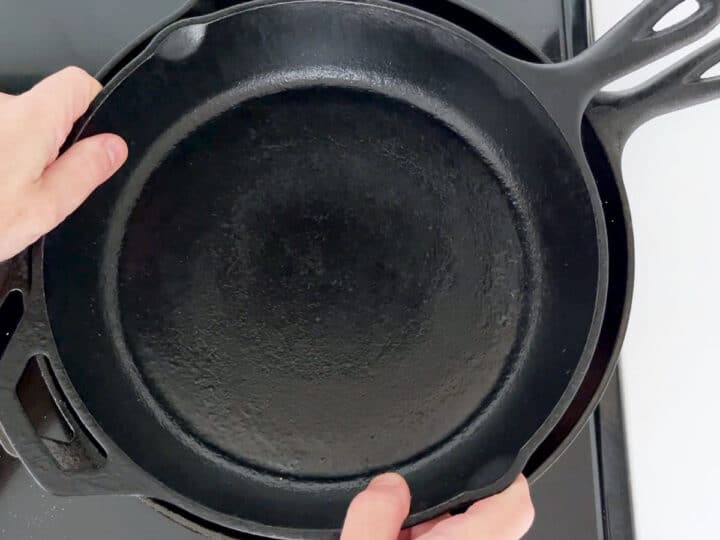
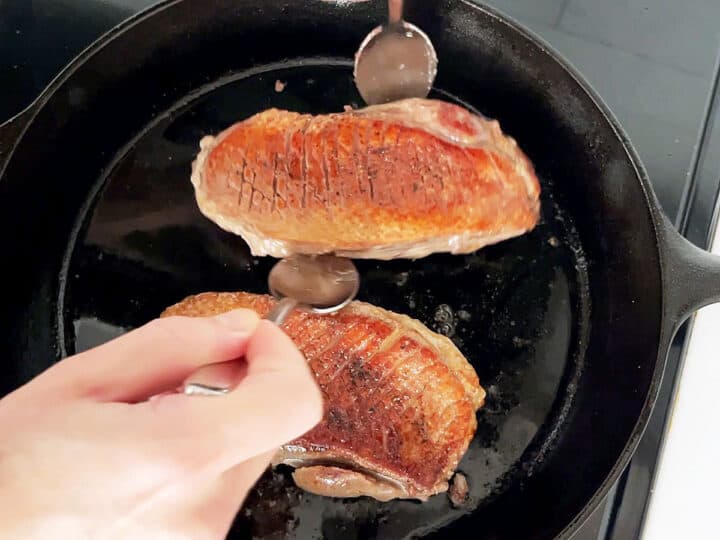
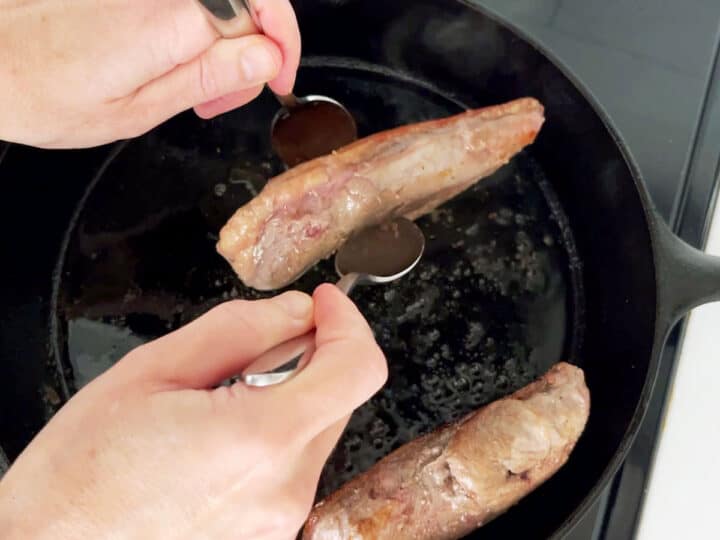
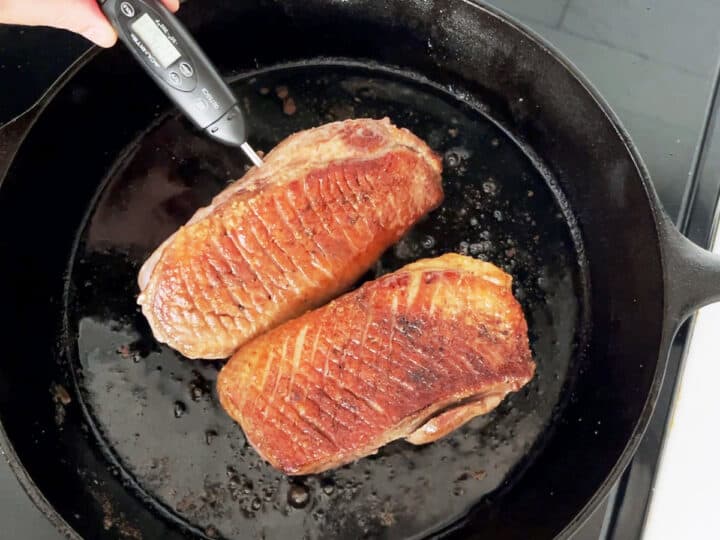
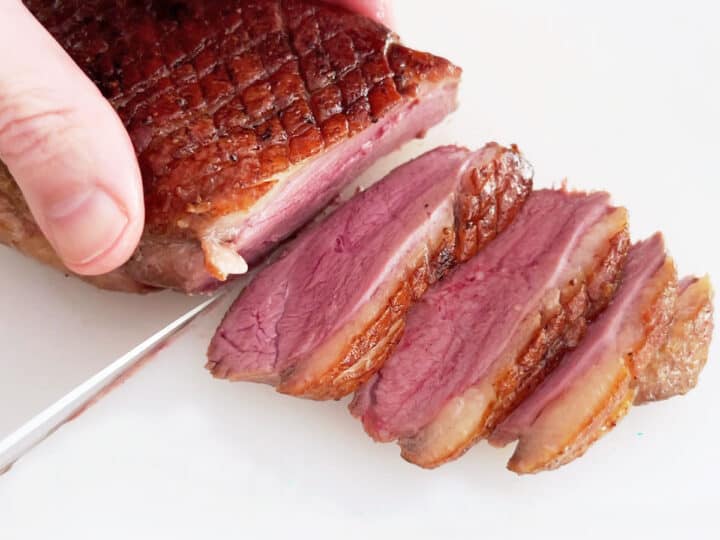
Duck breasts: I make this recipe for two, so I use two of them. You can order them online, or if you’re lucky like me and your supermarket carries them, you should be able to find them at the butcher’s counter. This is the brand I use: To season: Kosher salt, black pepper, and garlic powder. The addition of garlic is nontraditional, but since I don’t typically add sauce, the garlic enhances the flavor of the meat. For the optional wine sauce: Dry red wine, salt and pepper, minced garlic, and unsalted butter. You start by scoring the skin. Use a very sharp knife to score it in a tight but shallow diamond pattern. Season the skin side with salt and pepper. Season the flesh side with salt, pepper, and garlic powder. Heat the pan over medium-low heat. It should take about five minutes to heat, and then you’ll see the fat being rendered. The fat will bubble in the pan - you want it to gently bubble throughout the cooking process. Listen to the short video clip below to get an idea of the gentle bubbling you’re aiming for: Check the temperature with an instant-read thermometer. It should read 130°F for medium-rare or 140°F for medium. My duck breasts reached a temperature of about 135°F when I removed them from the pan. (Please note that the USDA recommends cooking duck to an internal temperature of 165°F.) Once the duck is cooked and resting, pour the remaining fat out of the skillet. Add 3 tablespoons of dry red wine, increase the heat to medium, and use the wine to deglaze the bottom of the pan. Add one minced garlic clove, plus salt and pepper to taste (I add a pinch of each). Cook over medium heat, stirring, for about 2 minutes to slightly reduce the wine. Add 3 tablespoons of unsalted butter and continue cooking for about 2 more minutes until the butter melts and the sauce thickens. Don’t let the sauce boil to prevent it from separating - reduce the heat to medium-low if needed. Serve the sauce alongside the duck. If you prefer not to use wine, you can use chicken broth instead (omitting the salt) and add a teaspoon of red wine vinegar.
Tomato salad Asparagus salad Creamy cucumber salad Arugula salad Broccoli salad
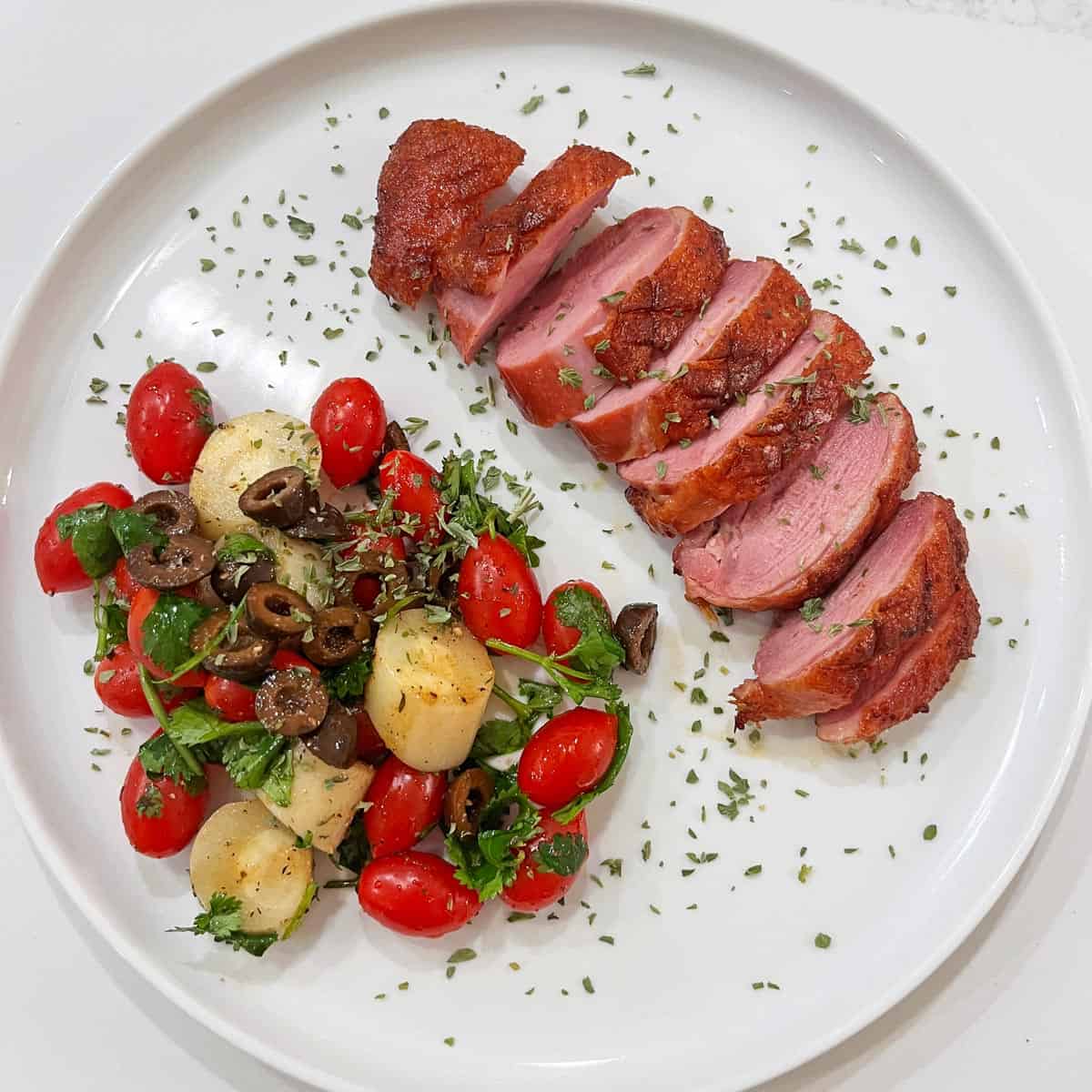
Last night, as shown in the photo below, I served it with a simple salad made with tomatoes, olives, sliced hearts of palm, and cilantro. The dressing consisted of olive oil, balsamic vinegar, salt, and pepper.