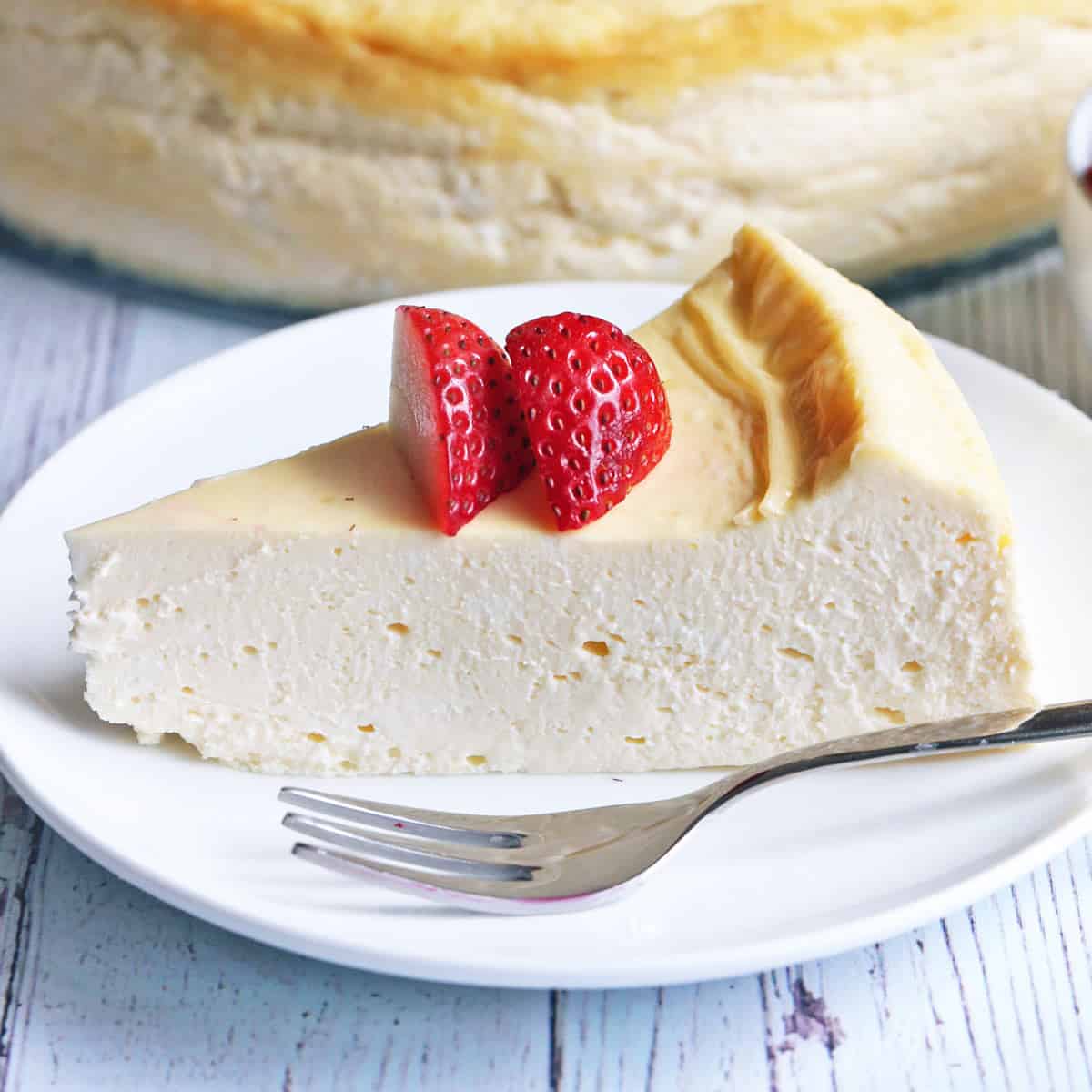
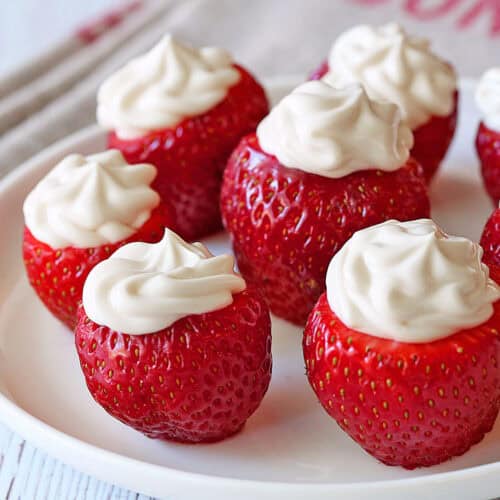
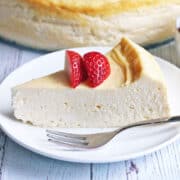
Follow the detailed instructions and tips outlined below, and you’ll be rewarded with the best cheesecake you’ve ever made - keto or otherwise. Cheesecake is a dessert where the keto version is almost identical to the traditional one. There’s no need to use specialty flour, for example. These flours tend to give keto baked goods a distinct texture and flavor. But cheesecake, at least the filling, doesn’t typically contain flour. So, adapting it to a keto diet is quite easy. Indeed, in addition to this cheesecake, I make crustless ricotta cheesecake, keto pumpkin cheesecake, and cheesecake-stuffed strawberries.
Ingredients
Instructions
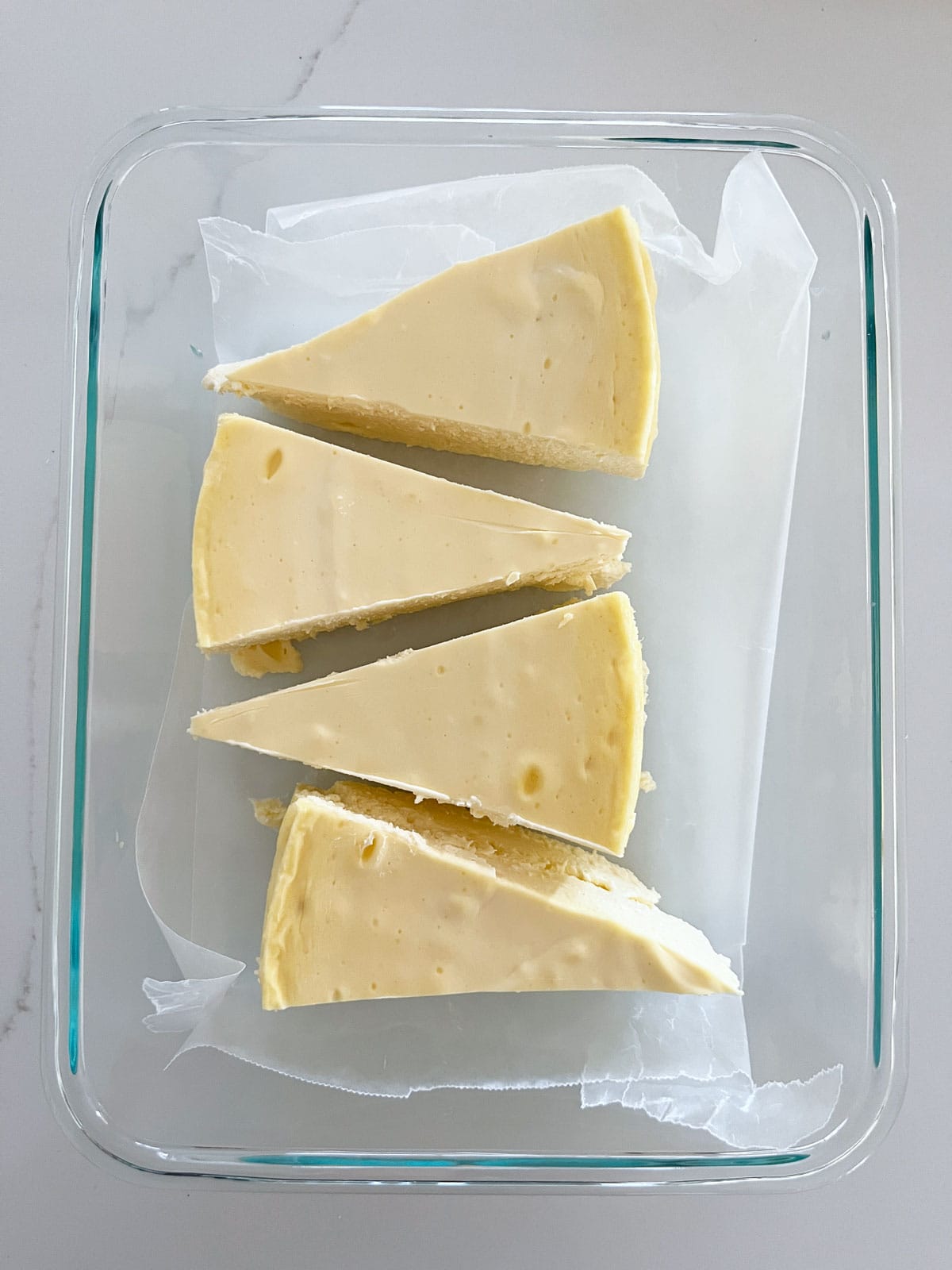
Storing Leftovers
Recipe Card
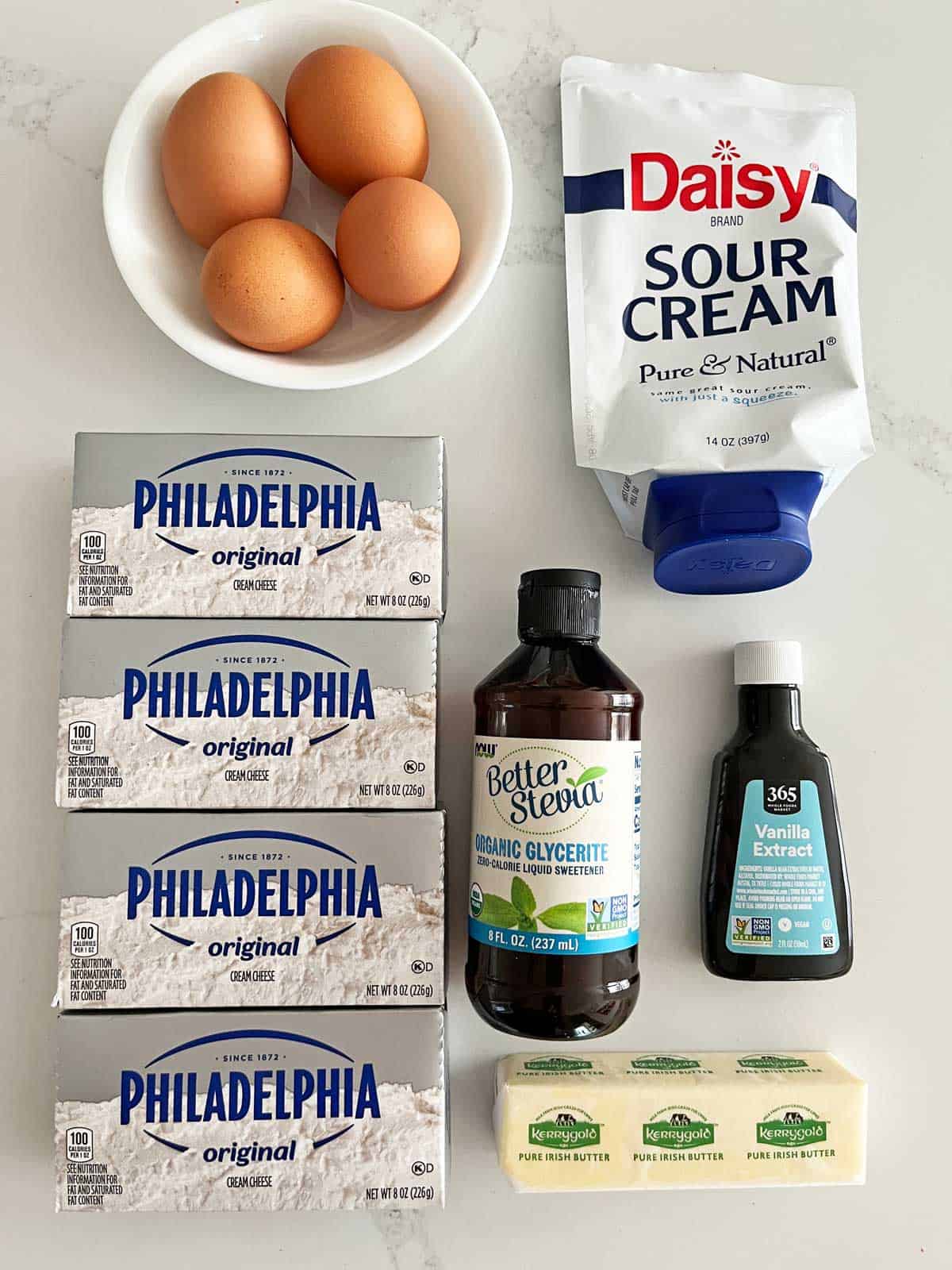
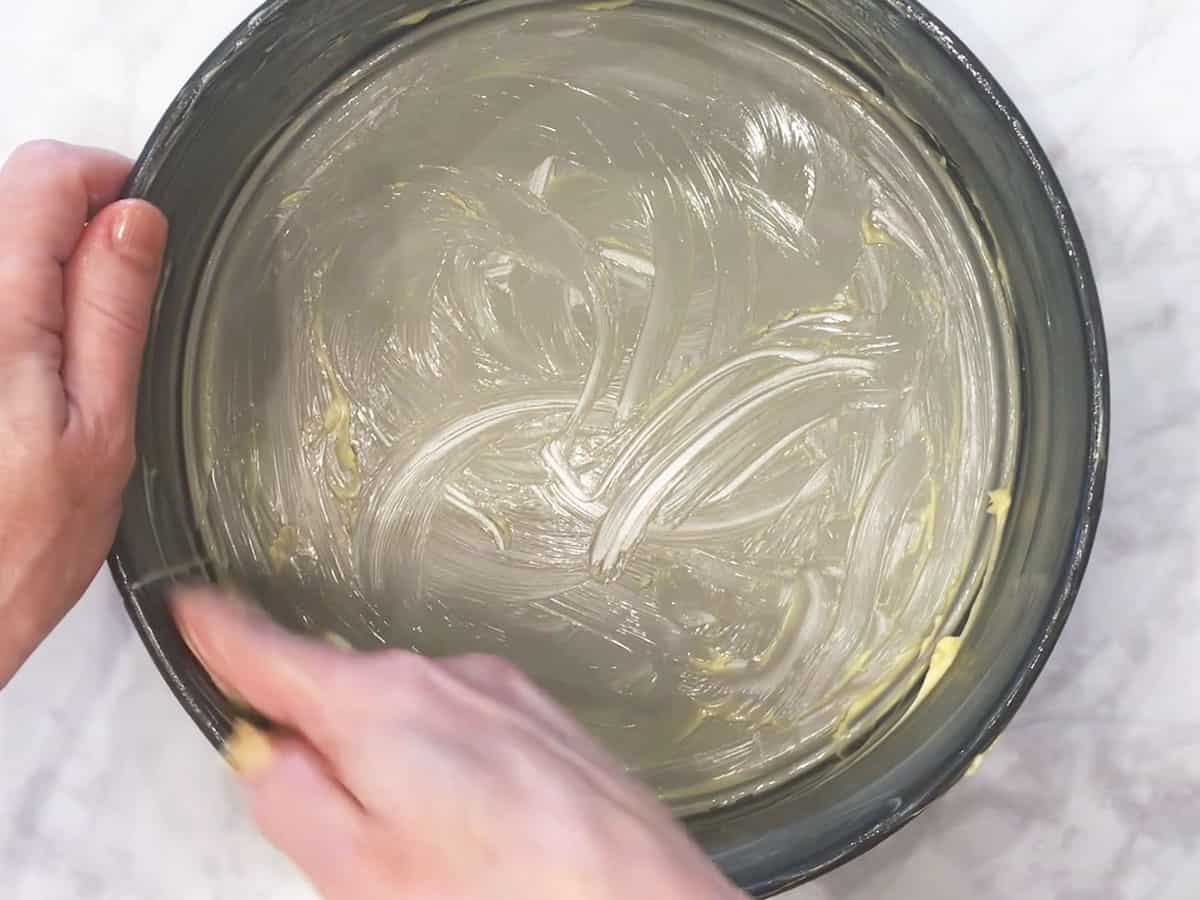
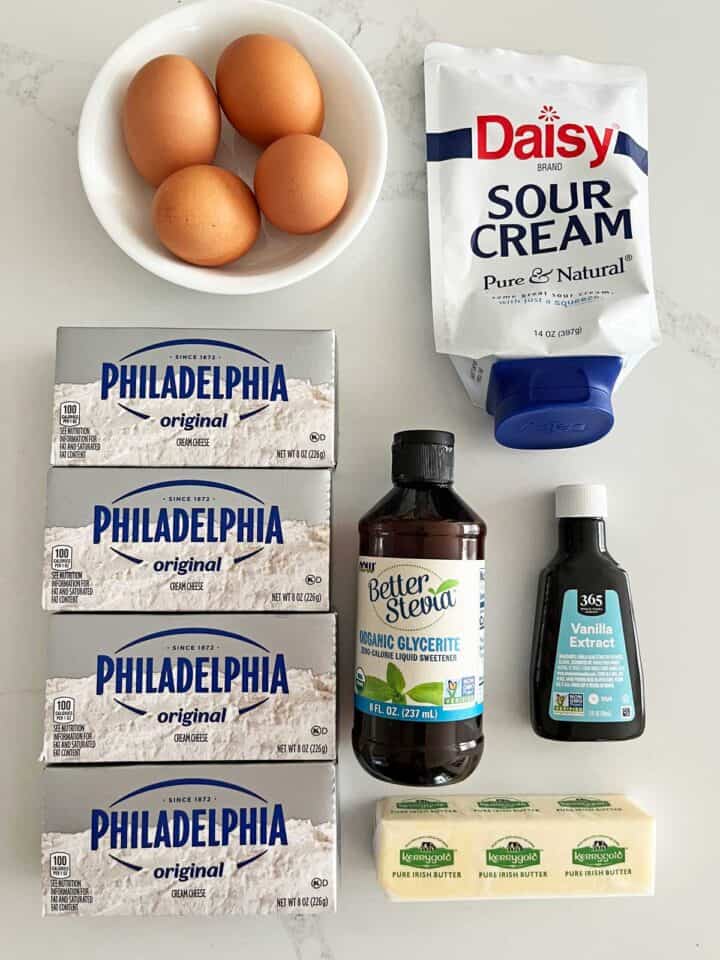
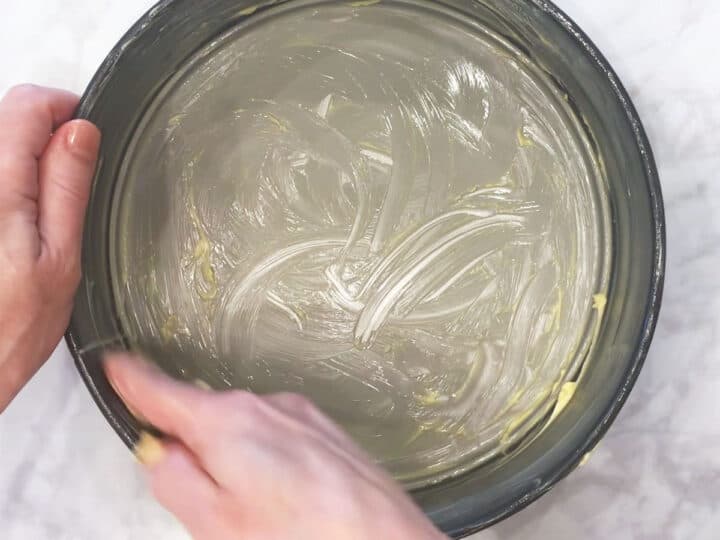
Unsalted butter: Use it to grease the pan. You want to grease it well to ensure the cake doesn’t stick. This is important not just for ease of releasing the cake from the pan but also to prevent cracks. You don’t want the cake to stick to the edges of the pan while it cools down. Cream cheese: Make sure you use blocks of cream cheese, not tubs of cream cheese spread. Bringing the cream cheese to room temperature before using it is important. Sour cream: Please bring it to room temperature before using it. Vanilla extract: I add quite a bit—a full tablespoon. So, it’s a good idea to use a high-quality pure vanilla extract. Sweetener: I use stevia glycerite. The amount I use equals 1 cup of sugar, which is the perfect level of sweetness. It’s important not to over-sweeten a cheesecake. You want the tanginess of the cream cheese and sour cream to shine through. Eggs: I use large eggs in almost all of my recipes, including this one. Make sure they are at room temperature.
Mix the batter
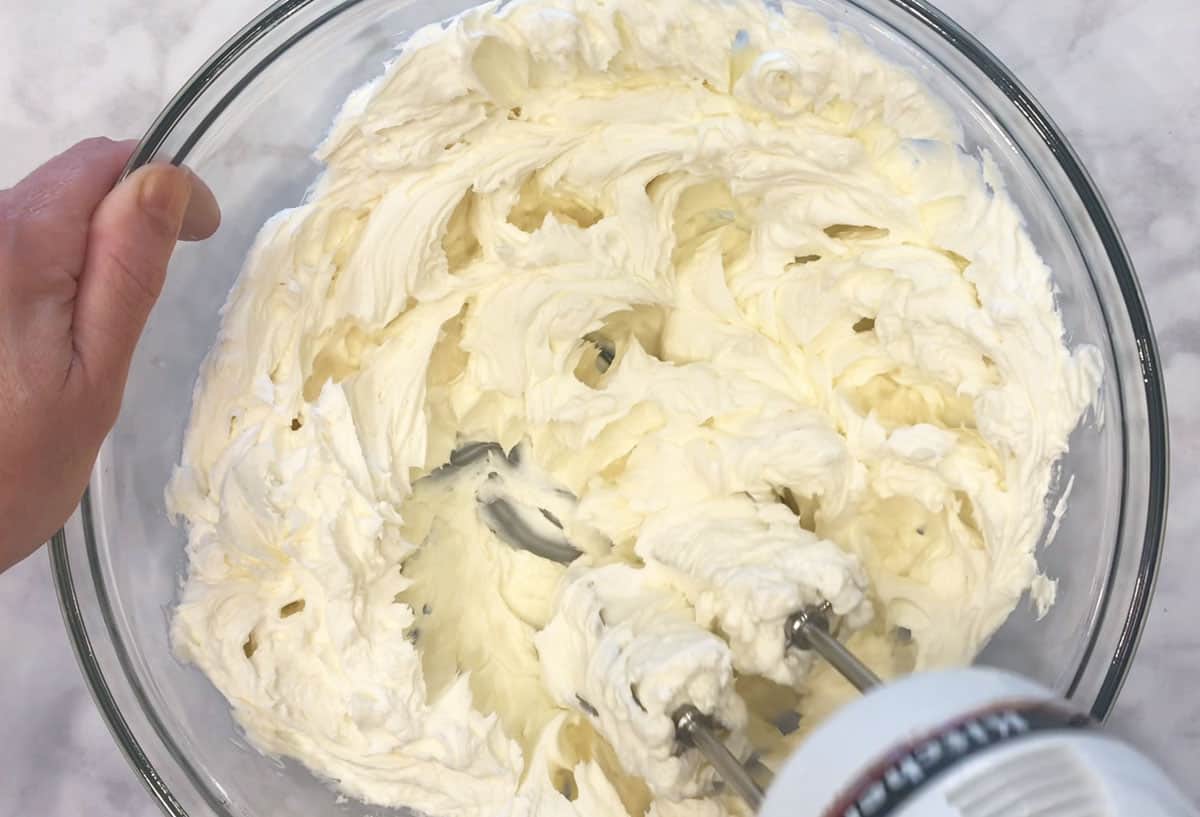
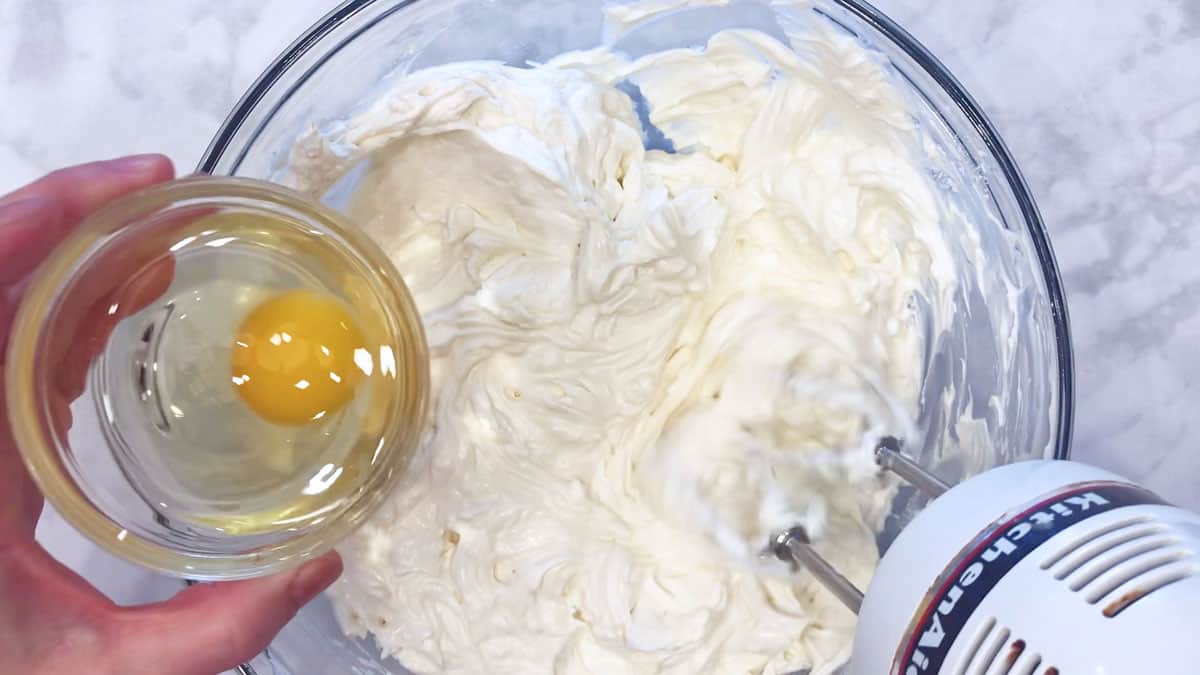
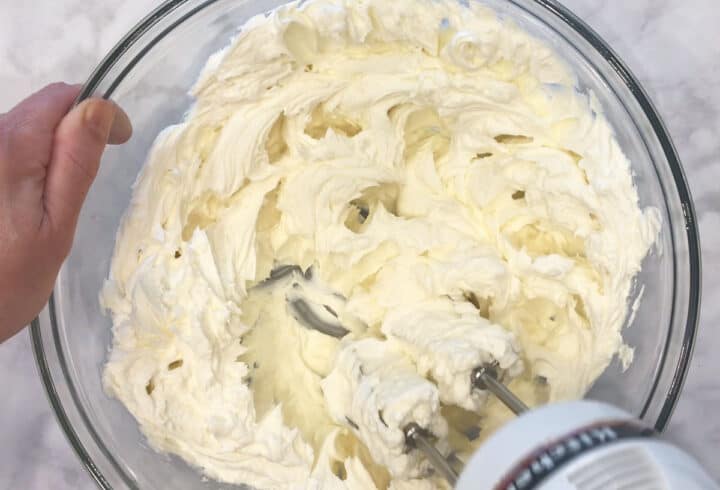
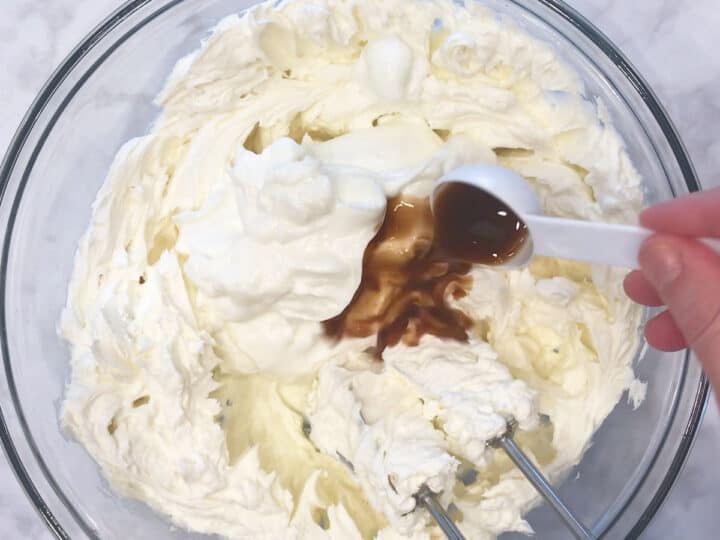
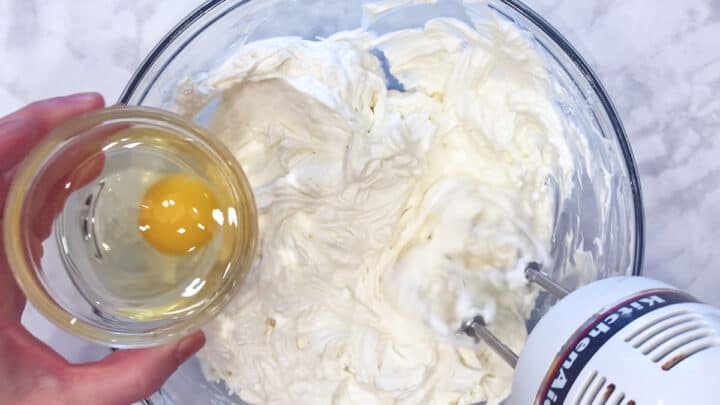
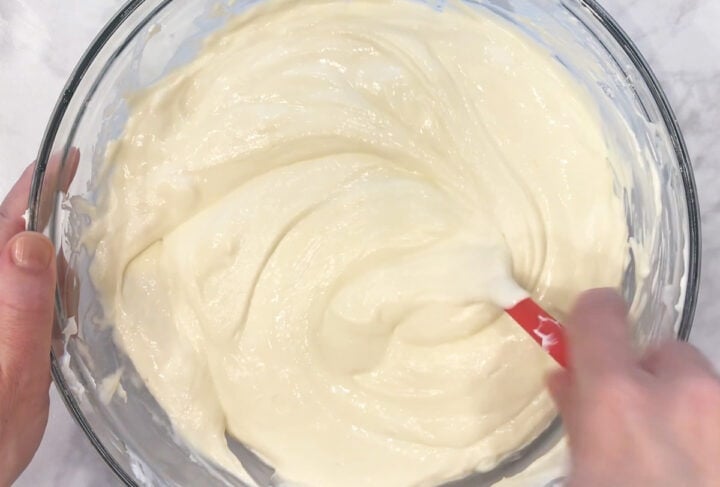
Place the cream cheese in a large bowl and use a handheld mixer set to the lowest speed to lightly beat it until smooth. Add the sour cream, vanilla, and sweetener. Mix just until incorporated. Don’t over-mix. Add the eggs one by one, mixing them in minimally. You don’t want to introduce too much air into the batter.
Bake the cake
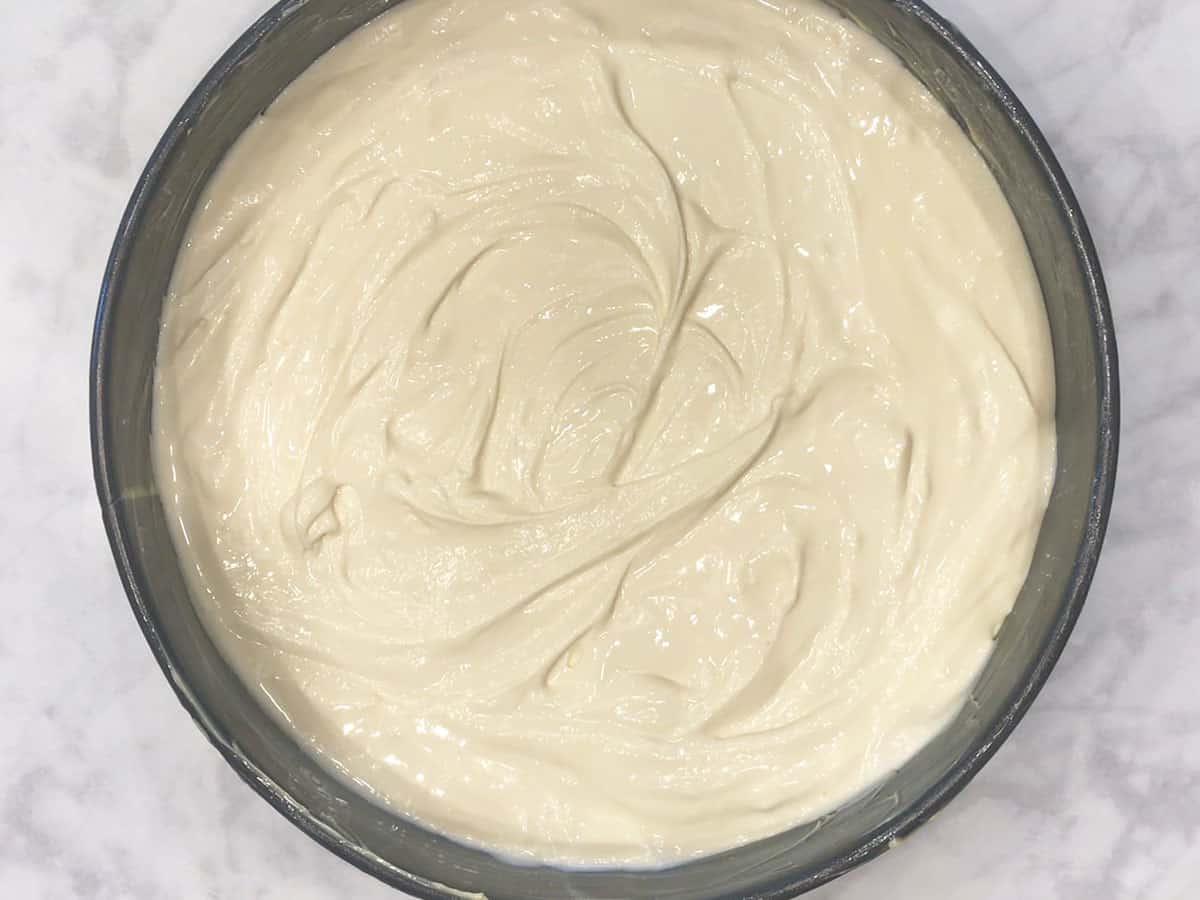
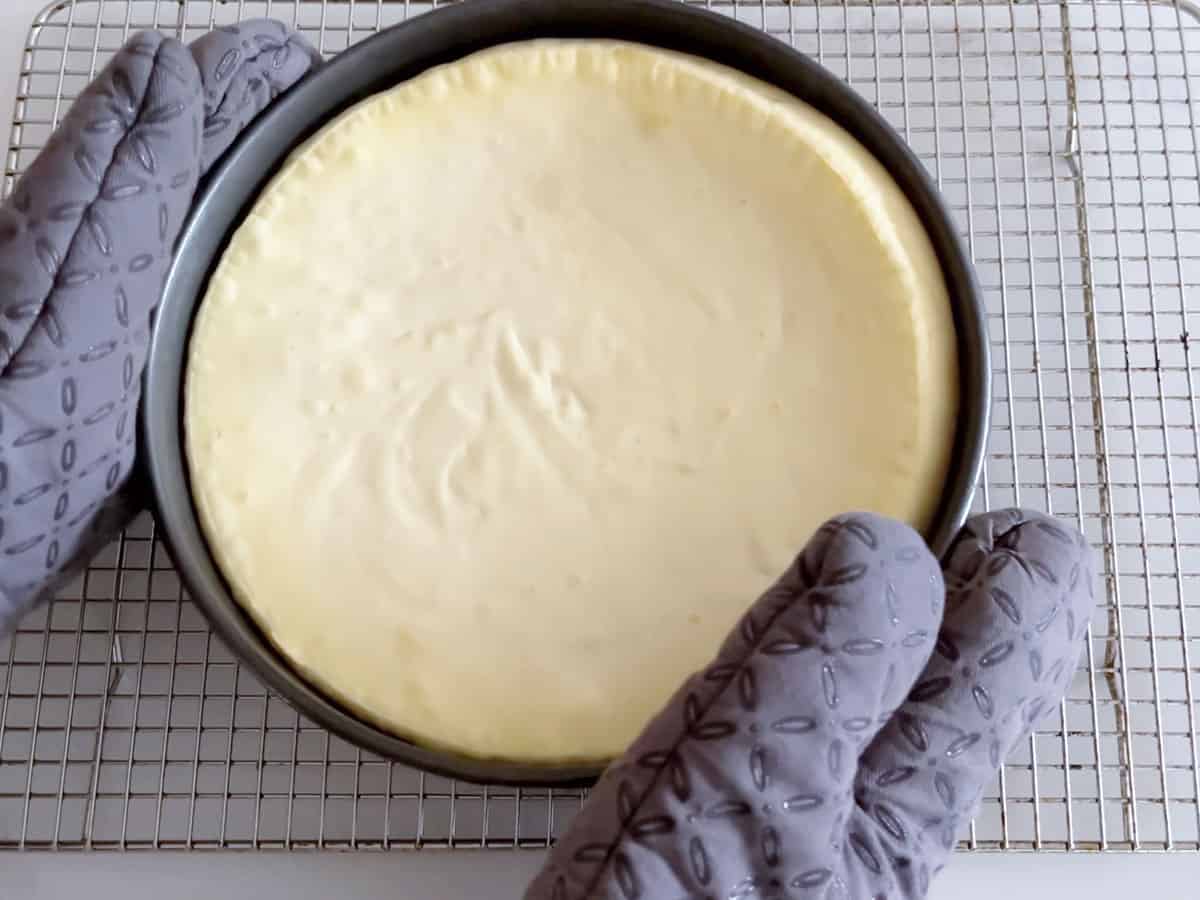
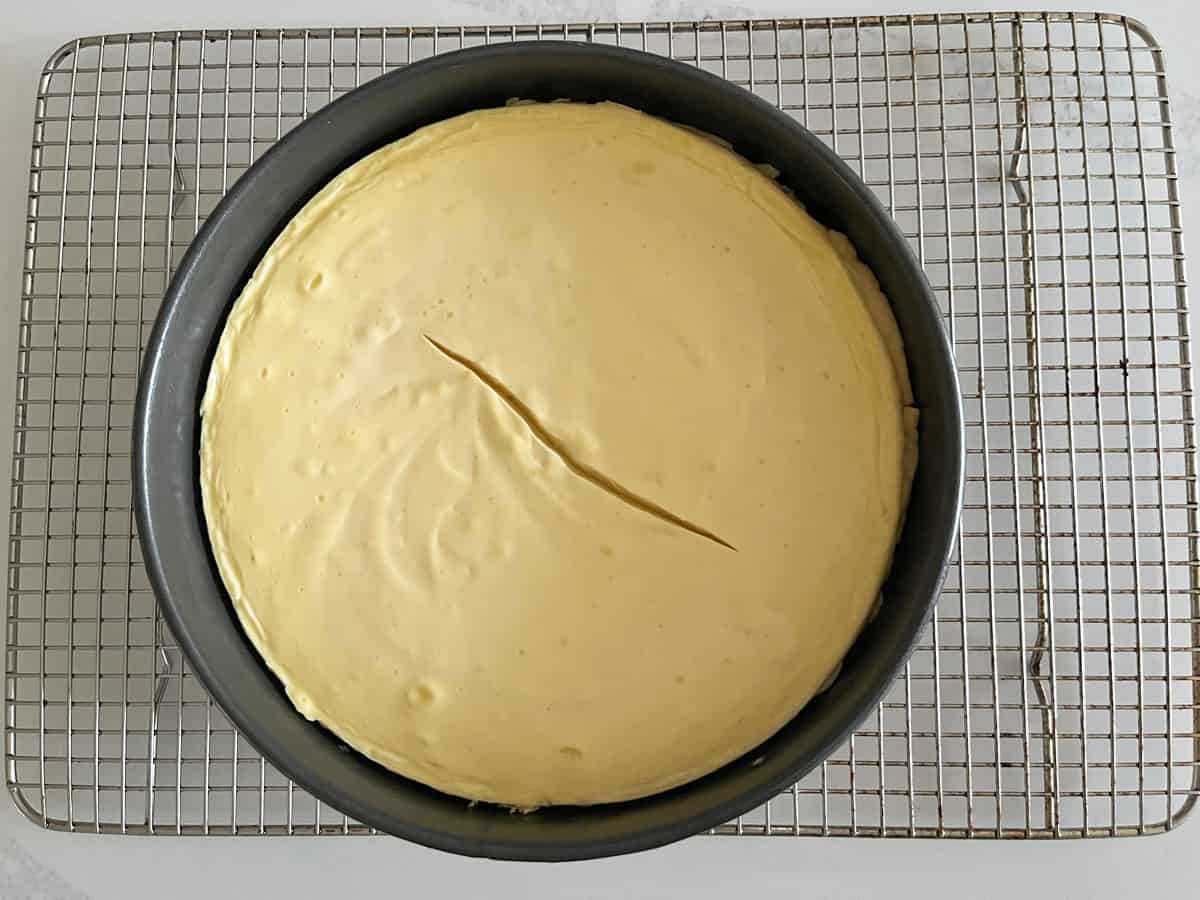
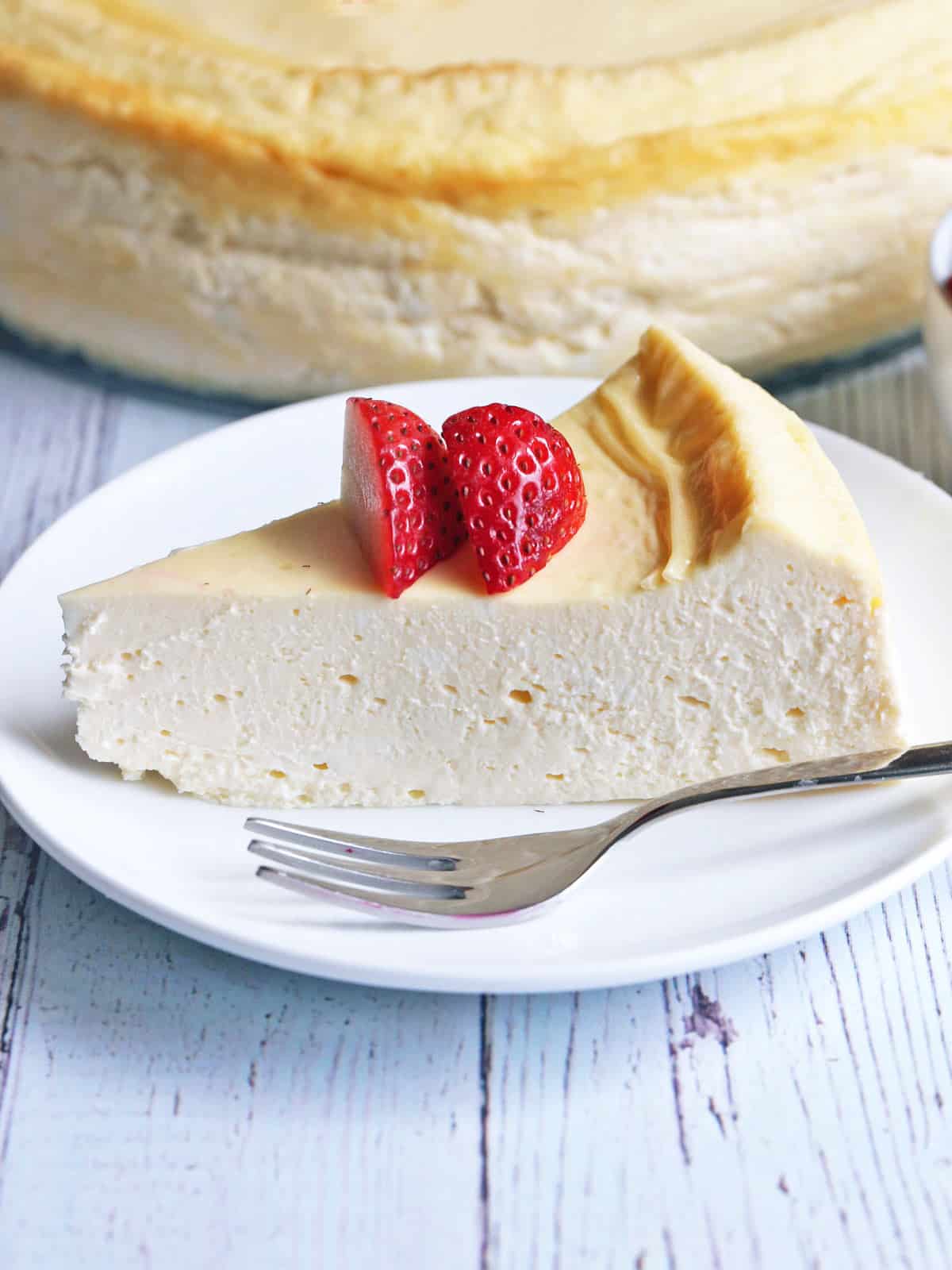
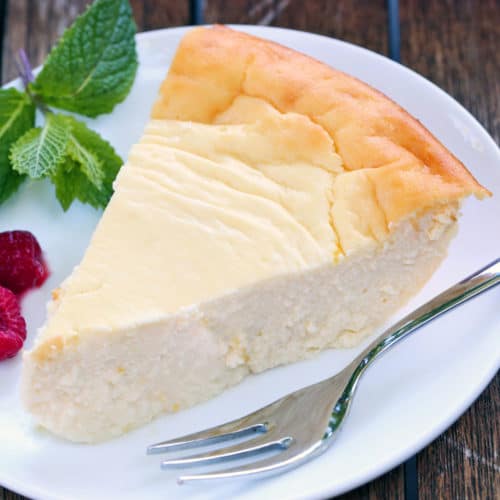
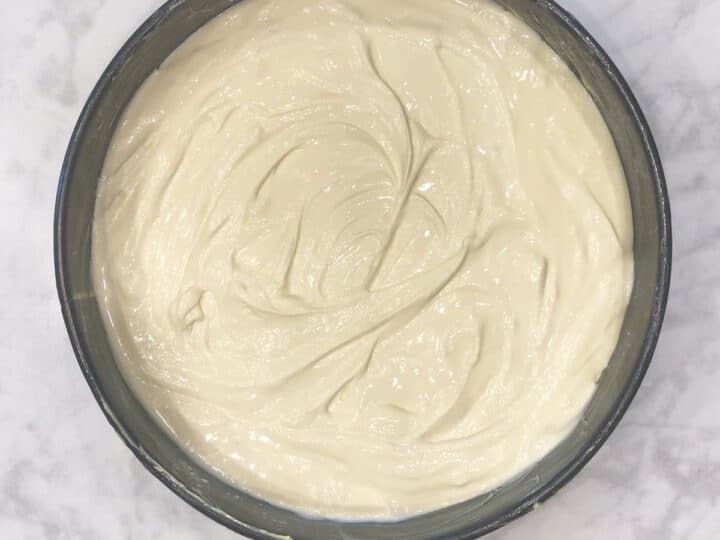
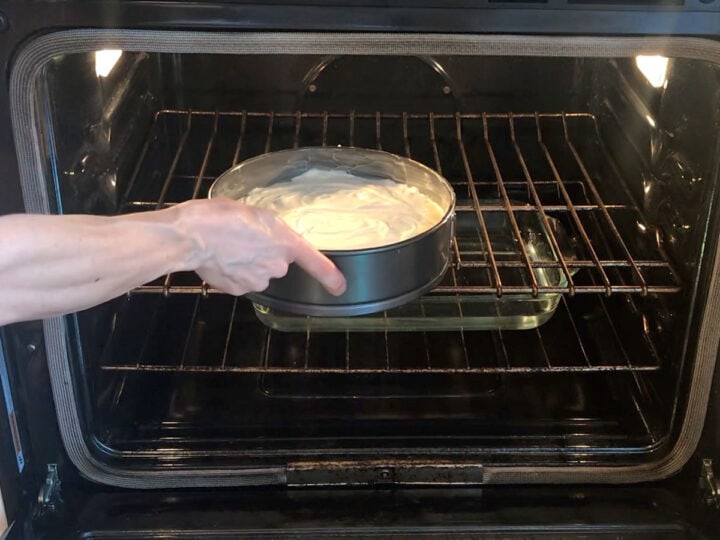
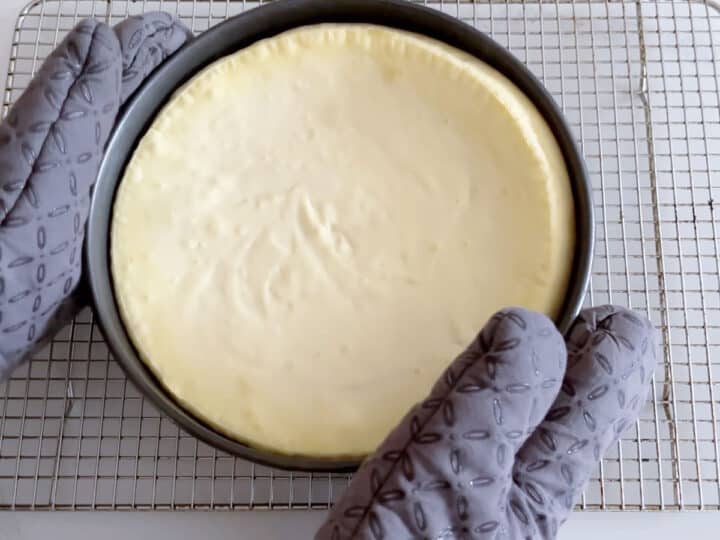
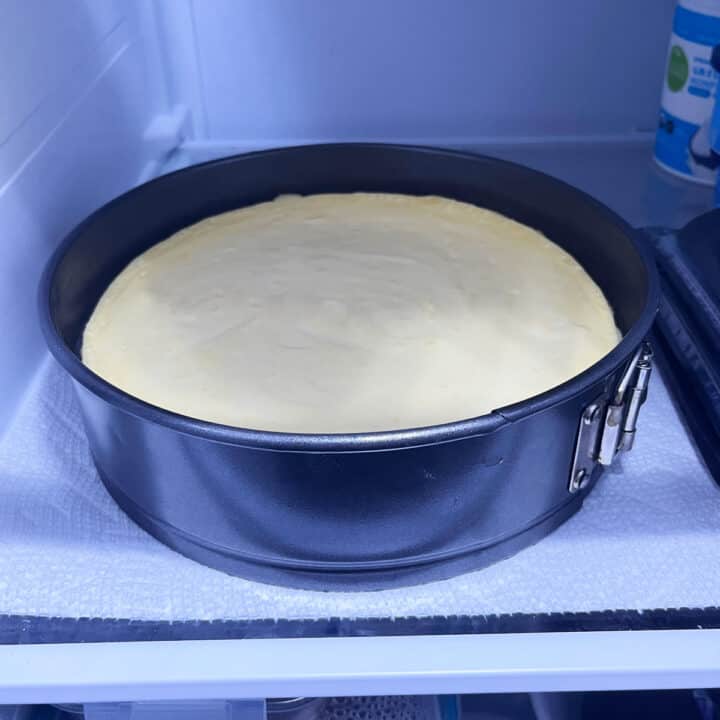
Pour the batter into the well-greased pan and smooth the top with a spatula. Bake the cake until the edges are slightly puffed and just beginning to brown and the middle is still sunken and jiggly but no longer liquid. This should take 50-60 minutes in a 300°F oven. It’s important not to over-bake to prevent cracks. After the cake has spent an hour in the cooling oven, take it out and place it on a cooling rack. If the edges of the cake haven’t pulled away from the sides of the pan, gently run a knife around the rim of the pan to loosen them. This helps prevent cracks from forming as the cake cools. Let the cake cool completely for about 2 more hours. When the cake is completely cool, transfer it to the fridge. Refrigerate the cake, uncovered (to prevent condensation), for at least 8 hours, preferably 24 hours, before slicing and serving.
Slice the cake
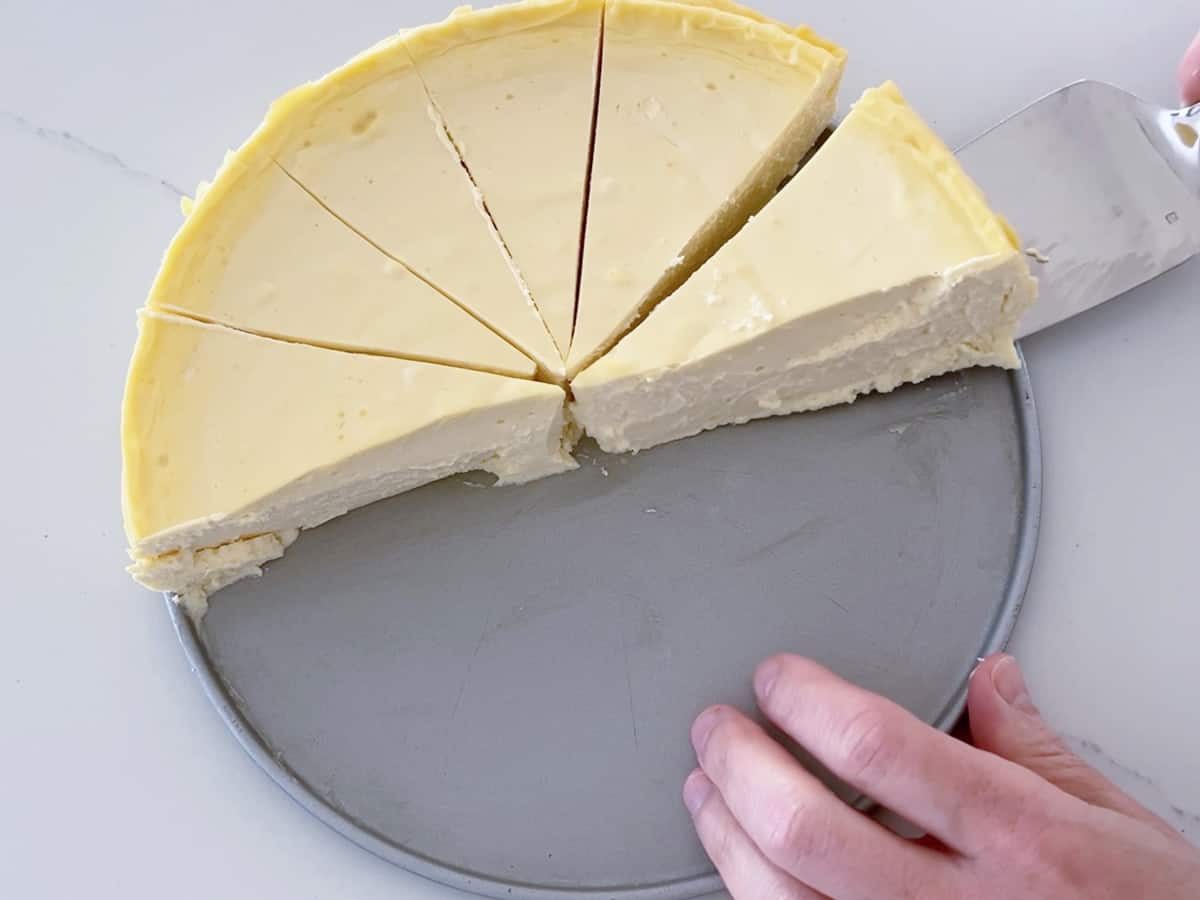
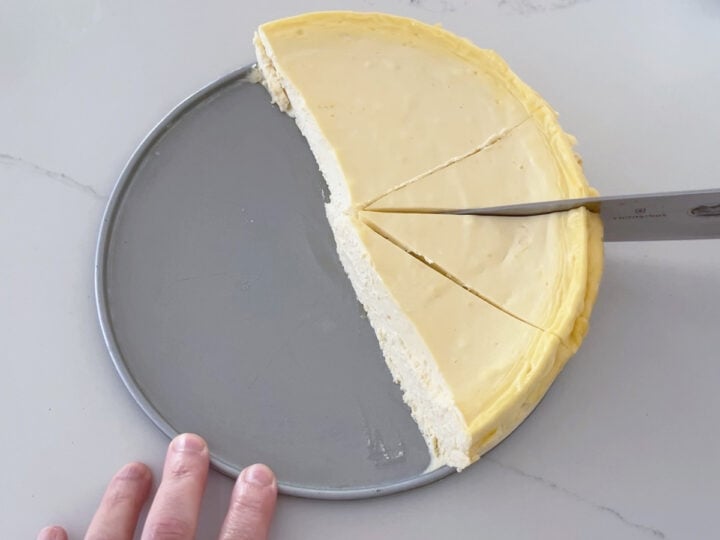
To slice the cake neatly, use a sharp, non-serrated knife. Dip the knife in hot water and wipe it before each slice. To lift each slice from the pan, slide a cake server underneath the slice and gently lift it up.
Take your time
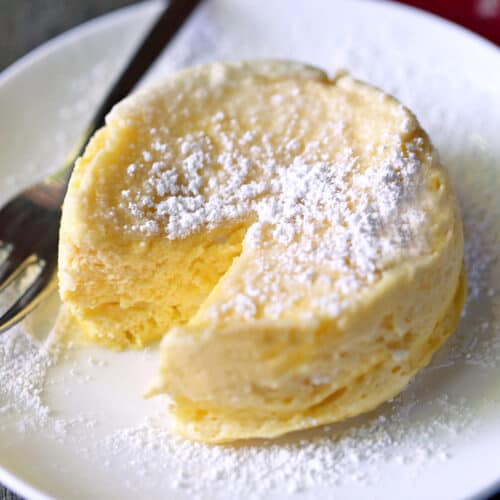
Bake the cheesecake the day before you plan on serving it, and consider it an all-day affair - two hours for bringing the ingredients to room temperature, an hour for baking, one more hour for cooling the cake in the oven, and two hours for cooling it outside the oven. So, six hours have passed before you can put the cake in the fridge! Then, you need to refrigerate it overnight, preferably for 24 hours. Cheesecakes are NOT quick recipes. Well, except for this microwave cheesecake, which is not an actual cheesecake but is very tasty and ready fast.
Bring the ingredients to room temperature
This is a must! Some people leave the cold ingredients (eggs, cream cheese, and sour cream) out of the fridge overnight in a cool kitchen. I usually take them out of the fridge in the morning, two hours before I start mixing the cake.
Don’t overmix
Overmixing will aerate the batter, which can cause cracks later on as the cake cools and shrinks. So beat the ingredients at the lowest speed, and add the eggs last, as they can add the most air to the batter.
Grease the pan well
This will allow the edges of the cake to easily pull away from the pan as the cake cools and shrinks.
Use a water pan
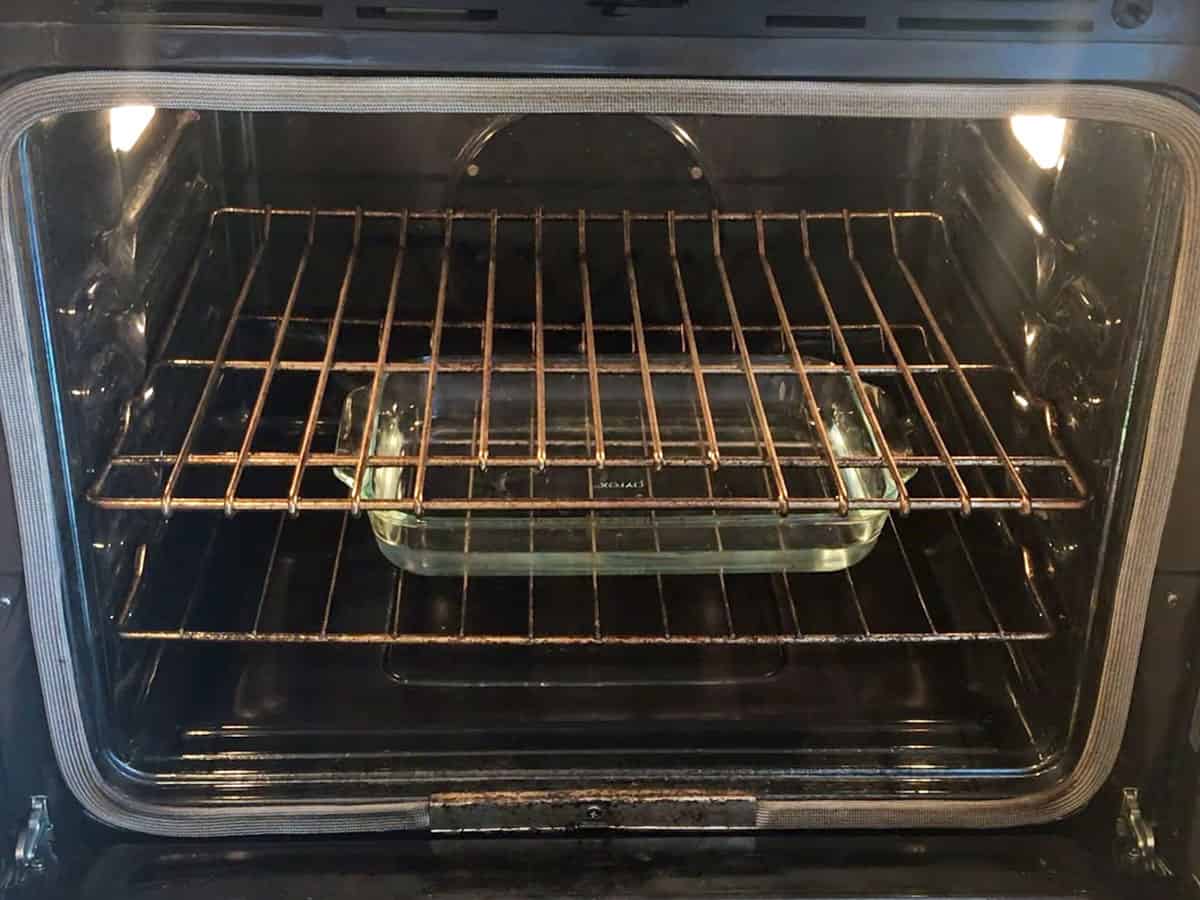
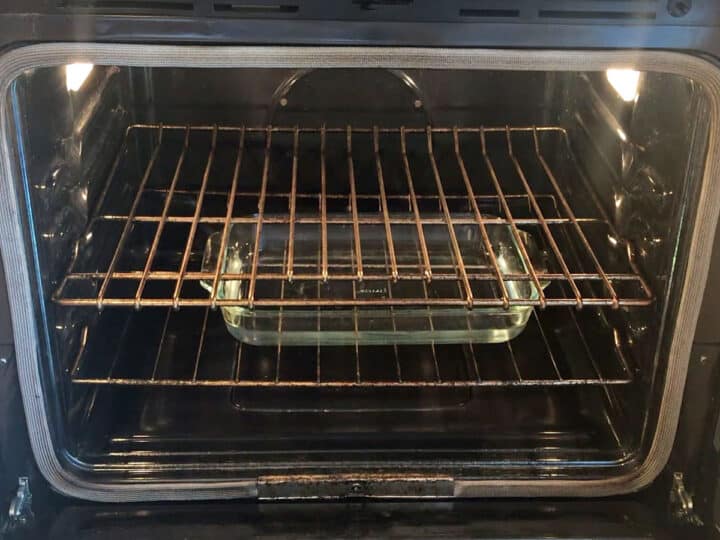
A water pan, placed on the bottom oven rack, is better than a water bath (placing the springform pan in a larger pan with hot water) because you eliminate the risk of water seeping into the cake while still keeping the oven moist to help prevent the cake from drying out and cracking.
Don’t open the oven door
Use the oven light to peek and judge as best as you can if the cake is ready. It’s better to slightly underbake than to overbake. An overbaked cheesecake will definitely crack and will be dry and mealy instead of creamy. If your oven is accurate, as a general guideline, you can turn the oven off after 50 minutes. However, if the center of the cake appears to be liquid, add 10 more minutes.
Bake at a low temperature
Bake the cake at 300°F. Turn the oven off as soon as the cake is done: the edges should be slightly puffed, but the center should still be sunken, though not liquid. If you wait until the center is fully baked, the cake will end up overbaked and will crack.
Let the cake cool slowly
Let it cool in the oven with its door ajar for a full hour. Then, on a cooling rack out of the oven for two more hours. After the cake has cooled to room temperature, refrigerate it overnight, ideally for 24 hours.
How to deal with cracks
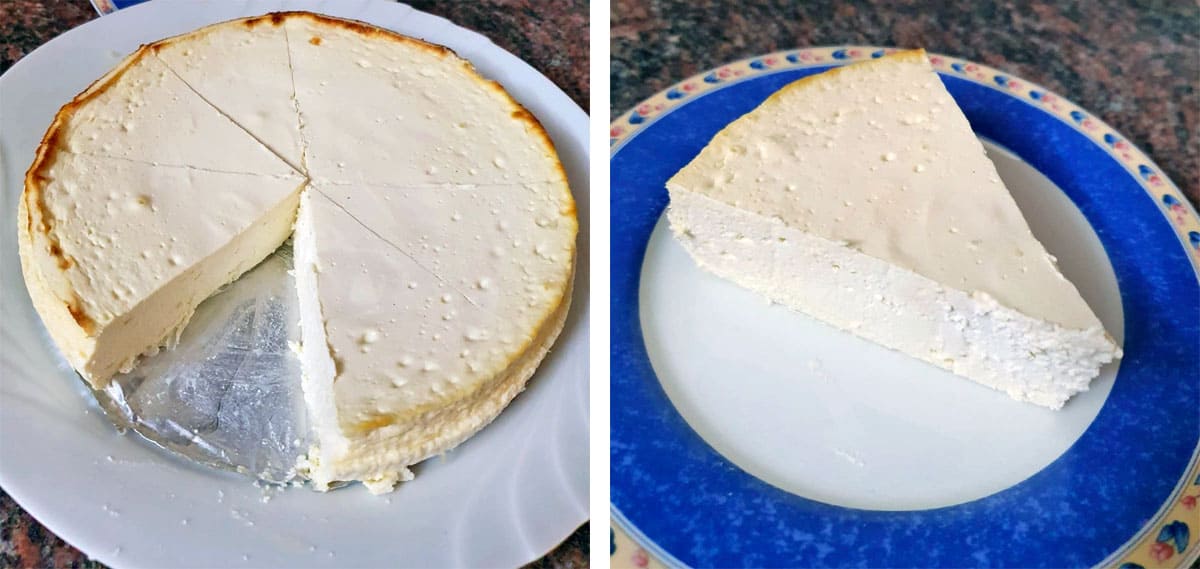
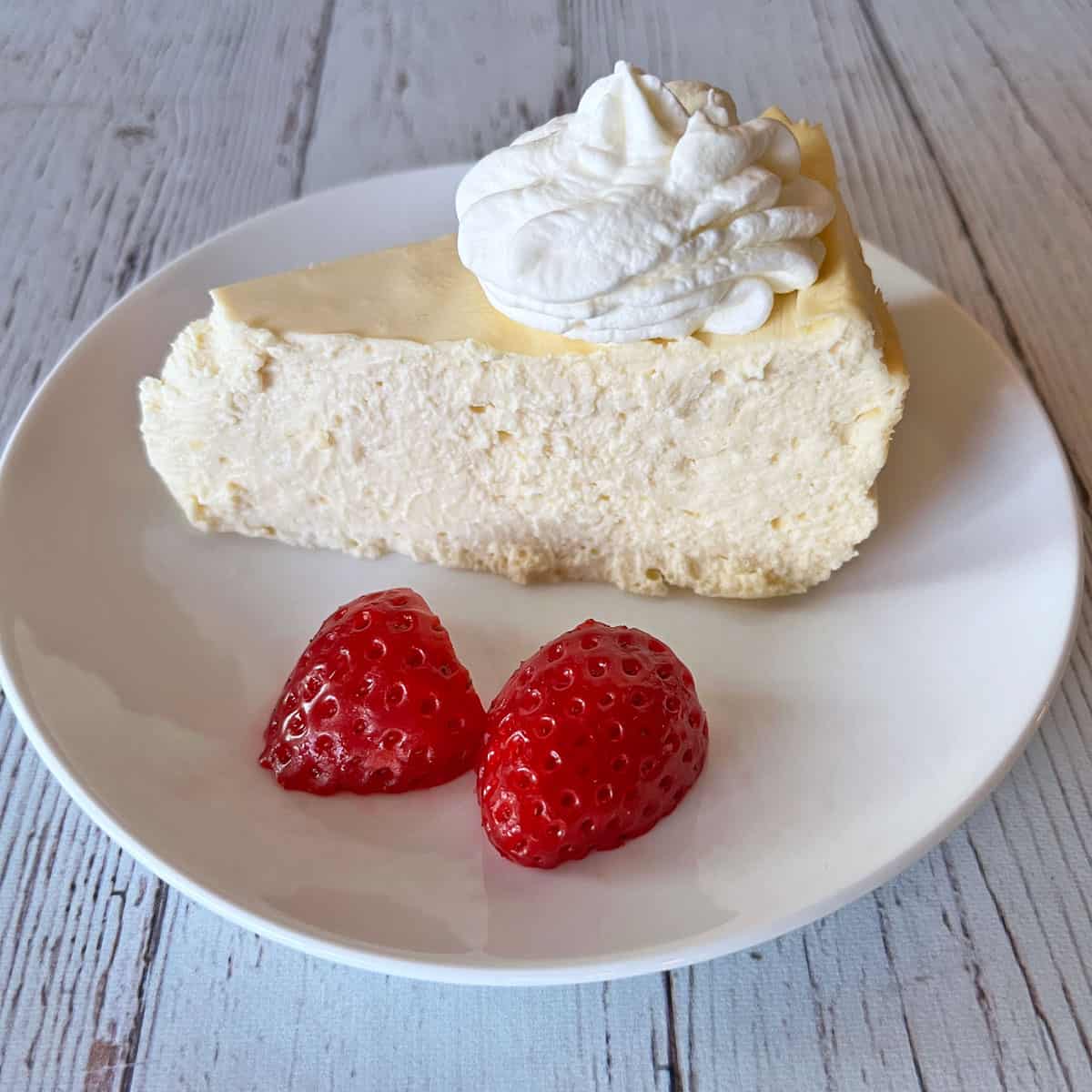
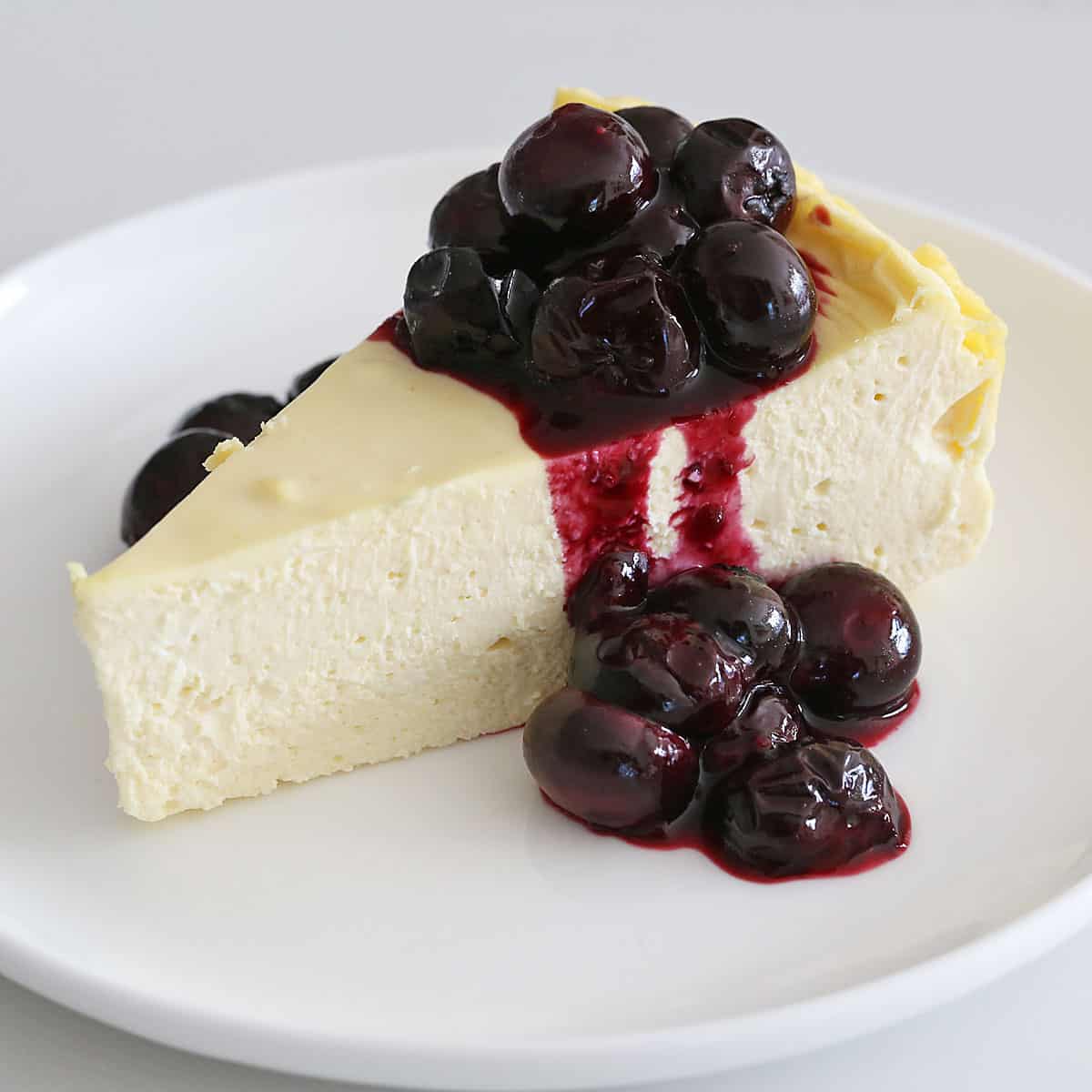
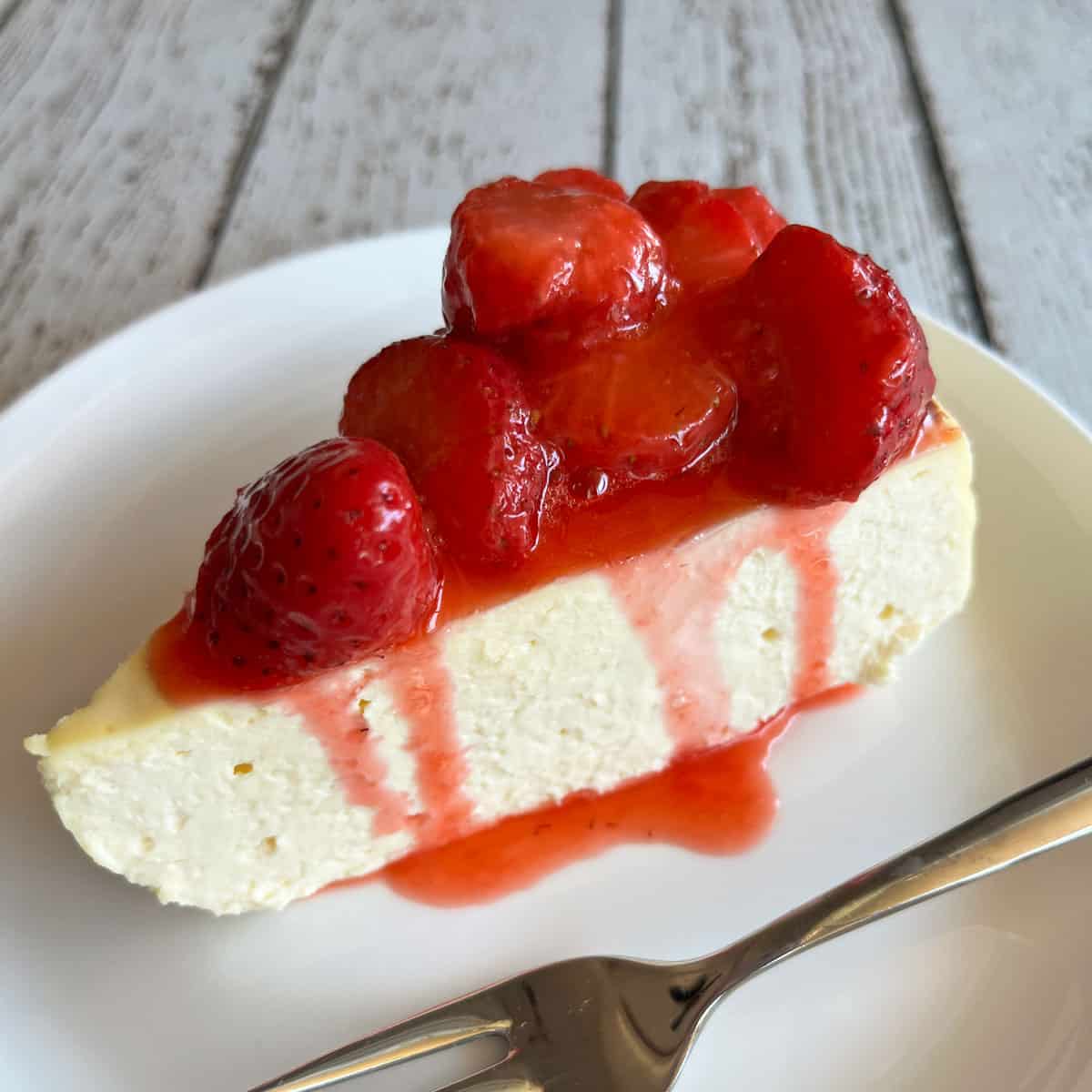
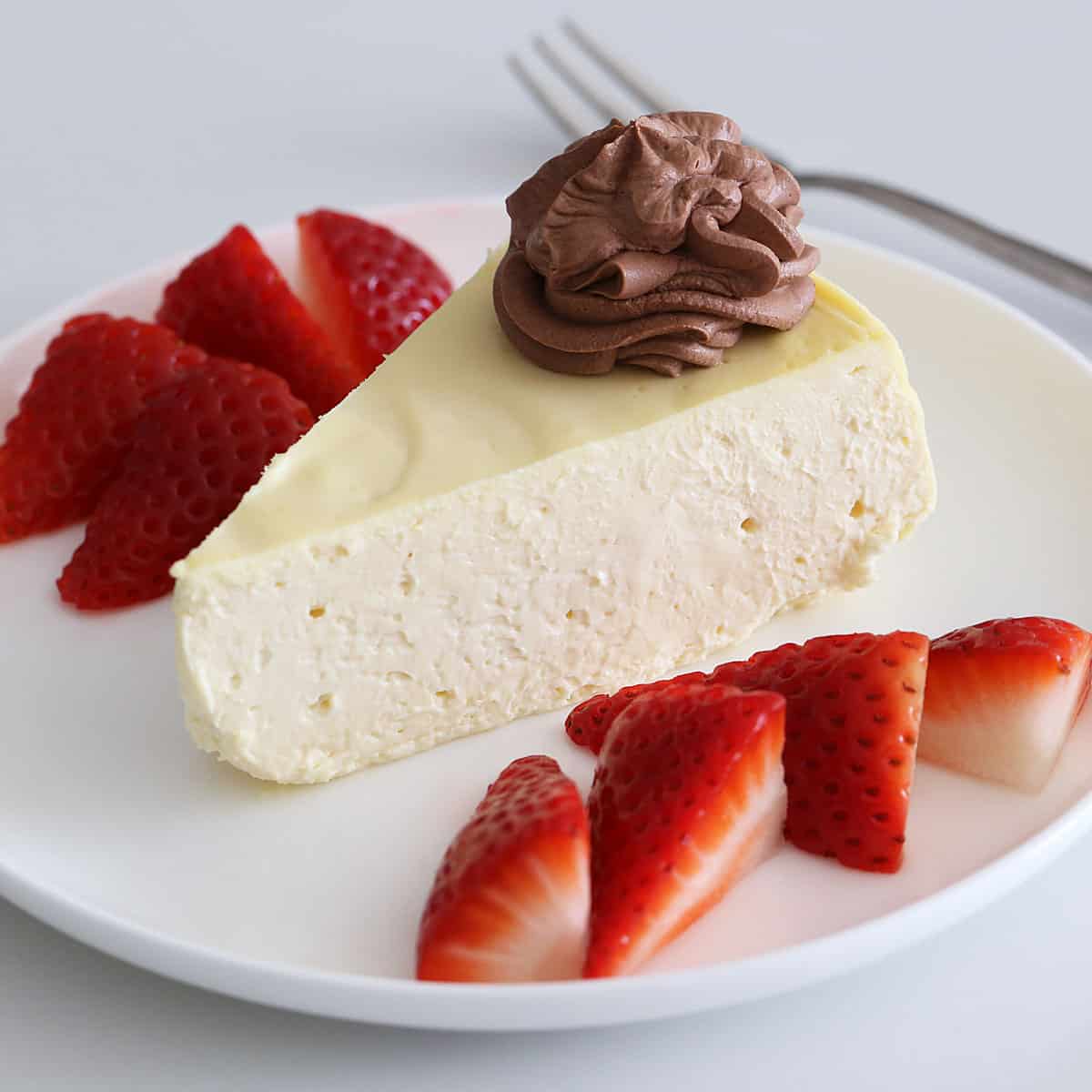
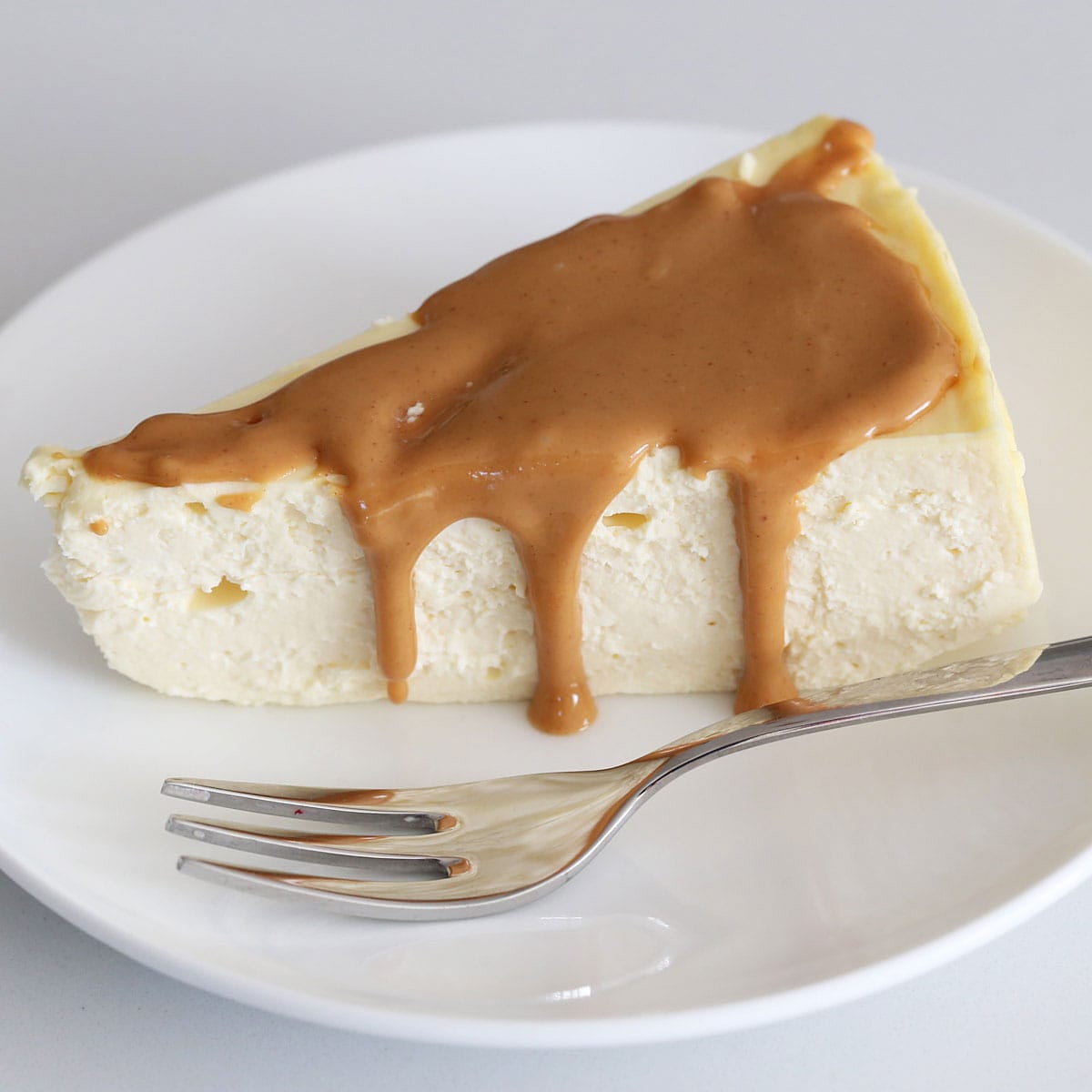
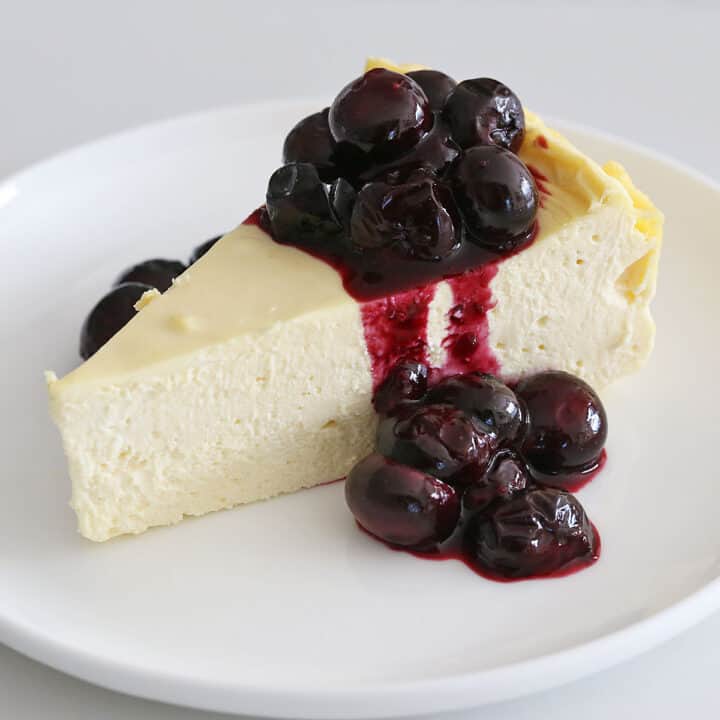
Cracks in cheesecakes are very common. Despite my best efforts, sometimes my cakes end up with cracks like this: The best way to deal with a cracked cheesecake is to disguise the cracks with a topping. You can use sliced berries or go for more elaborate toppings such as strawberry compote or blueberry compote. Keto whipped cream - this is a classic topping that adds a wonderful creaminess to the cake. Blueberry compote - my husband’s favorite topping! He enjoys the contrast between the creamy cake and juicy fruit. Strawberry compote - slightly more tart than blueberries but still sweet and juicy. Keto chocolate mousse - for chocolate lovers, this is the ultimate topping, although I feel that it slightly overpowers the cake. Melted peanut butter (or keto hazelnut spread) - a rich and flavorful topping. My husband loves it, but I feel that much like chocolate mousse, it slightly overpowers the cake. We’re a family of four, and this cake is incredible, so we go through the slices quickly. But it should last in the fridge for up to 5 days.