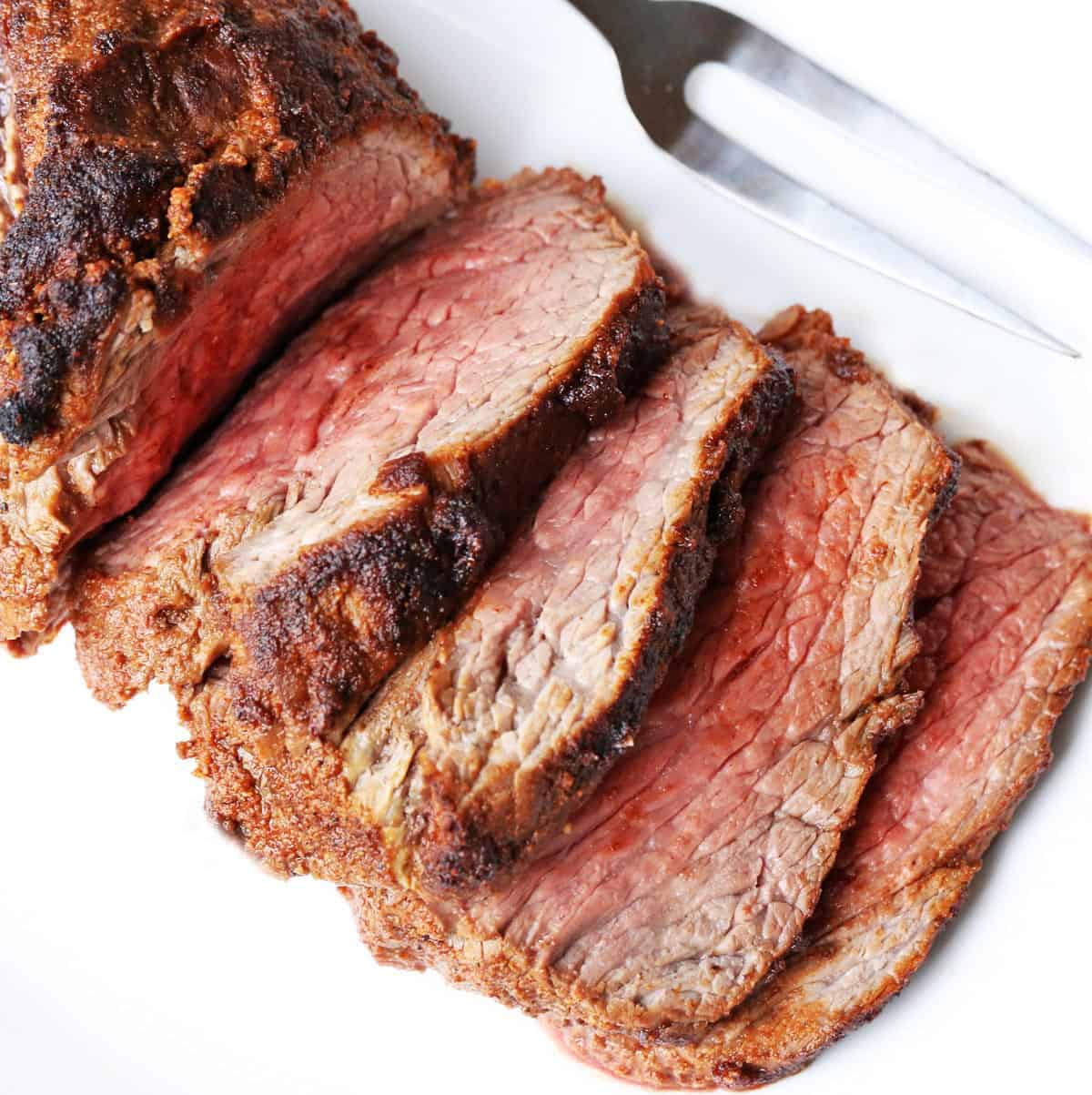
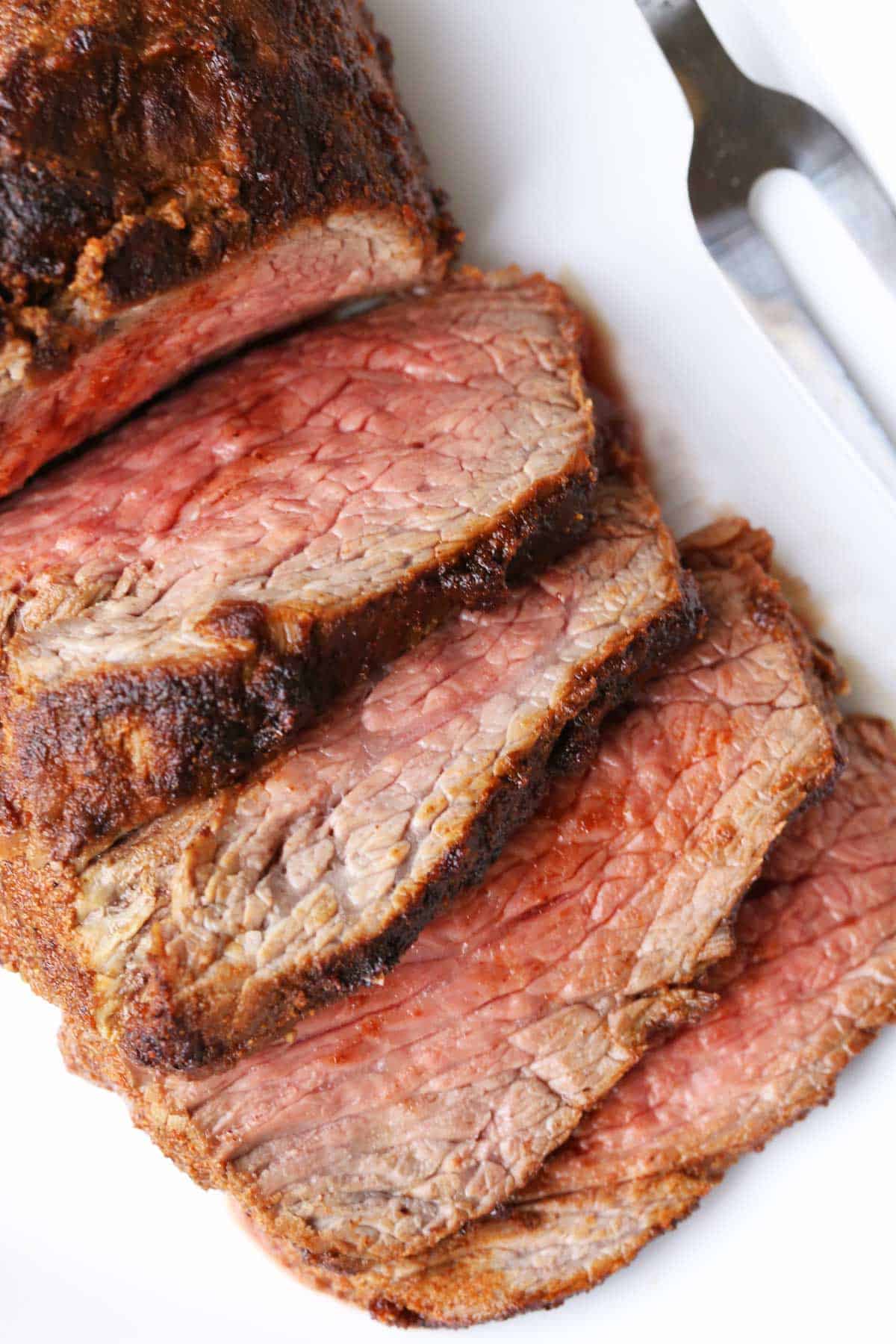
It’s an inexpensive cut that produces impressive results. The leftovers keep well for several days and can be enjoyed cold or reheated.
There’s something about roasting a large piece of meat and carving it at the table. It makes for festive holiday dinners. Pork roast, ribeye roast, and tenderloin roast are big favorites. However, they are expensive.
I opt for cheaper cuts such as London broil and tri-tip roast for everyday meals. These cuts are not as tender but have a great beefy taste. When properly sliced against the grain, they are wonderfully flavorful!
Ingredients
Recipe Card
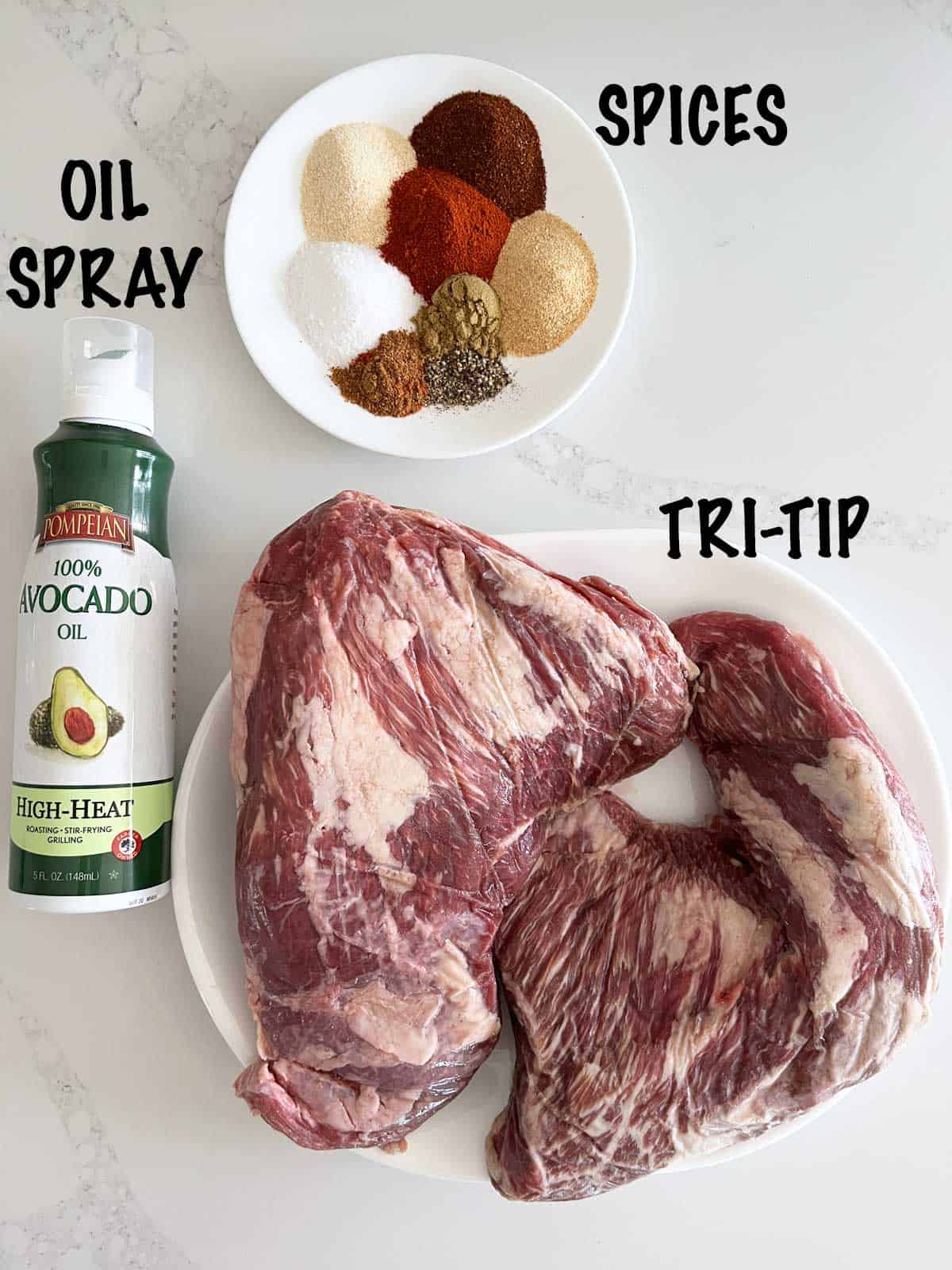
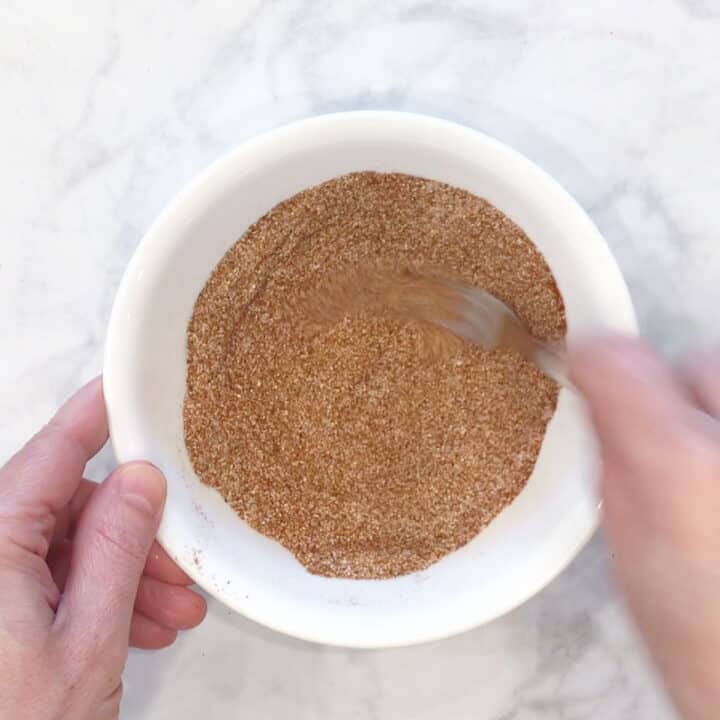
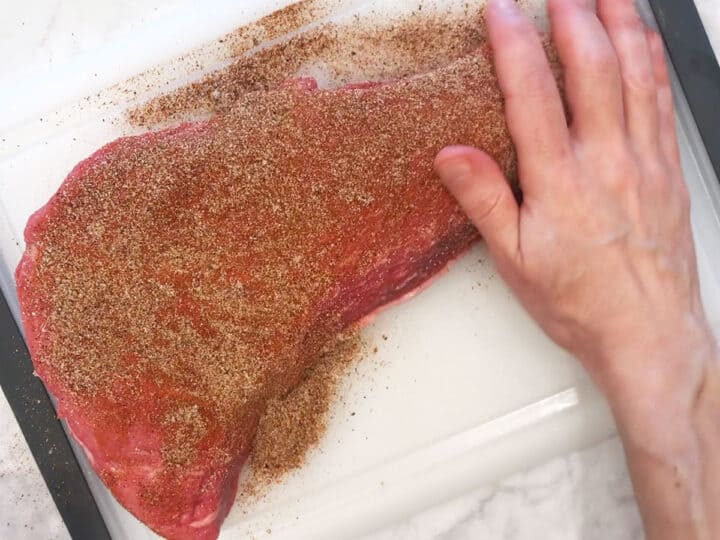
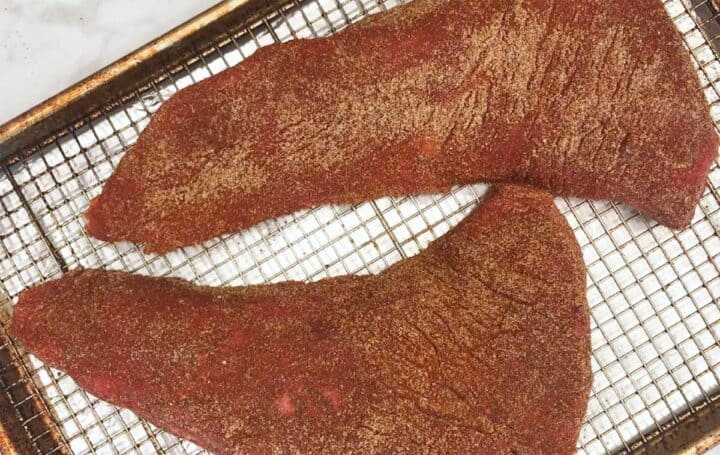
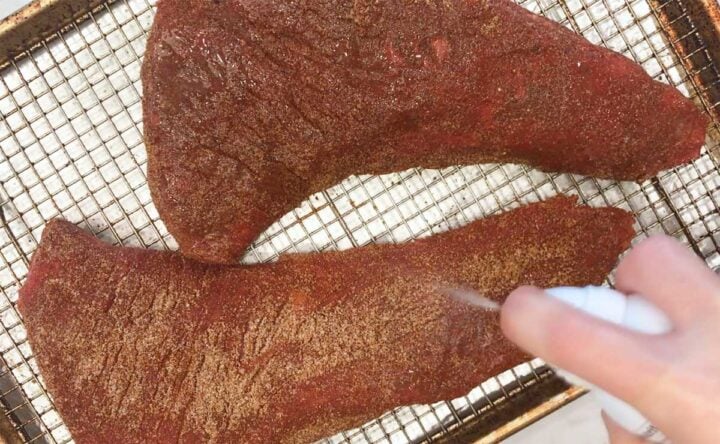
Dry rub: You’ll mix kosher salt, black pepper, and several spices to create a tasty dry rub that significantly enhances the flavor of the roast. I like to use garlic powder, onion powder, chili powder, smoked paprika, cumin, and cayenne pepper. Tri-tip roast: I get it at Costco or order it online at Wild Fork Foods. You can get two 2-pound roasts, cook them in the same pan, and get lots of tasty leftovers to last several days. Oil spray: This is only needed if the meat has been completely trimmed by the butcher and has no fat layer to keep it moist and juicy as it cooks.
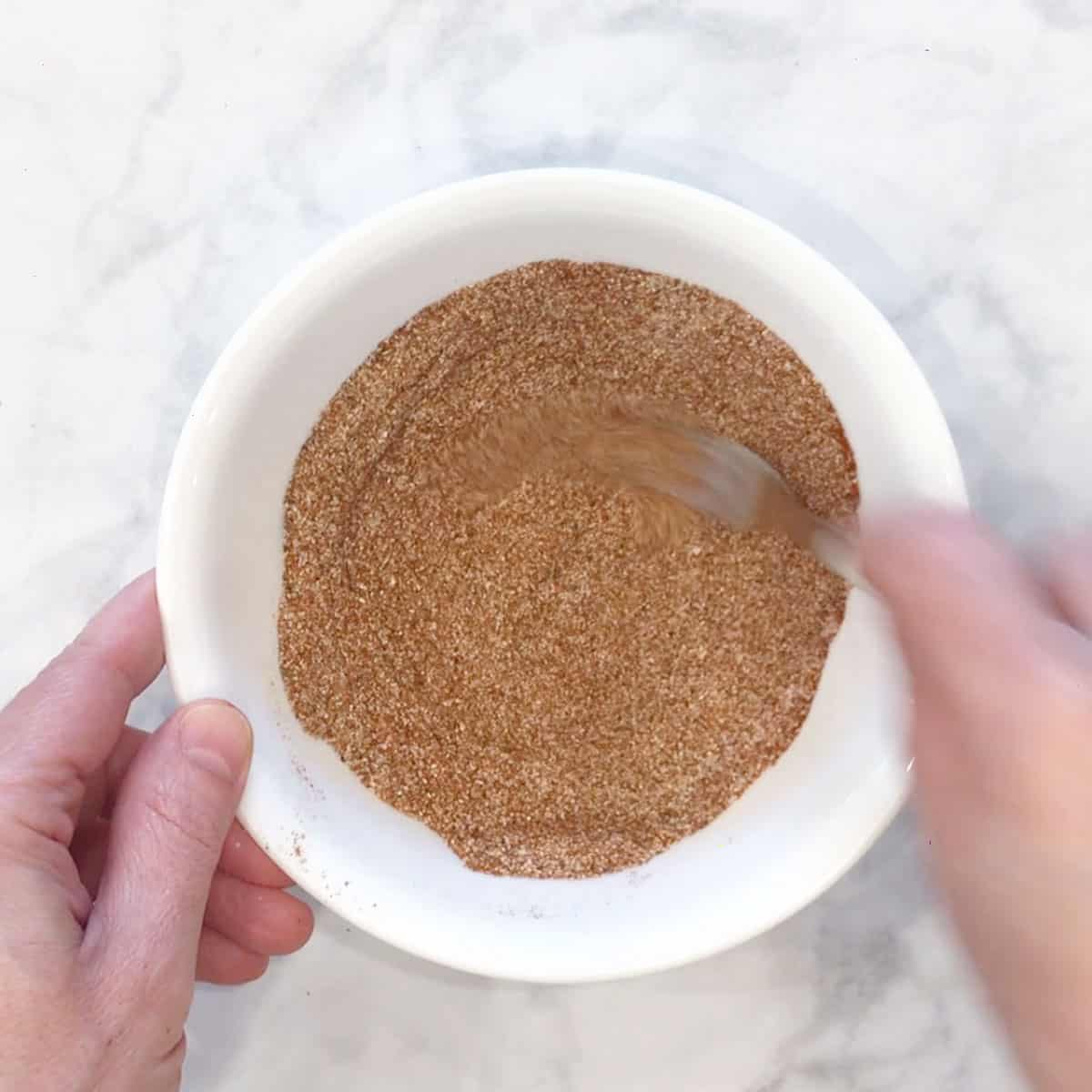
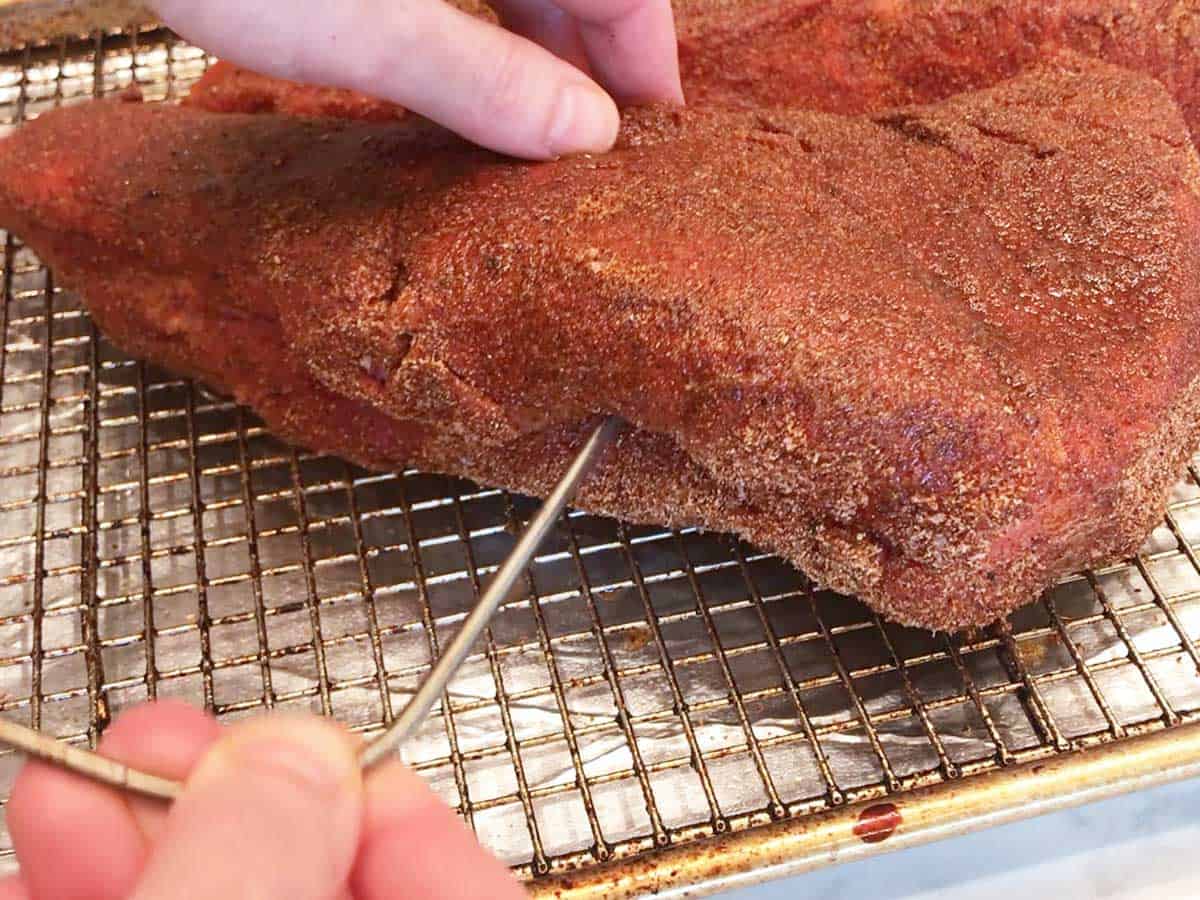
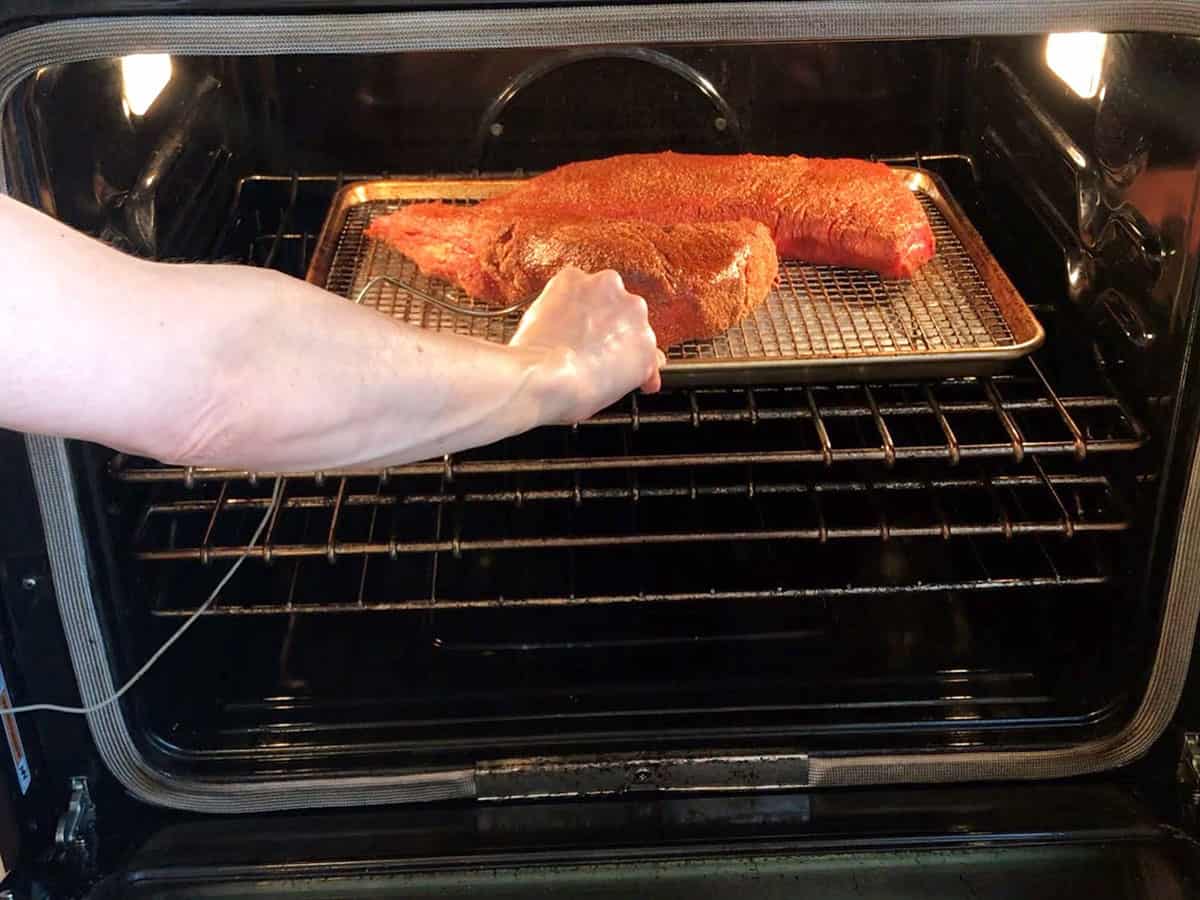
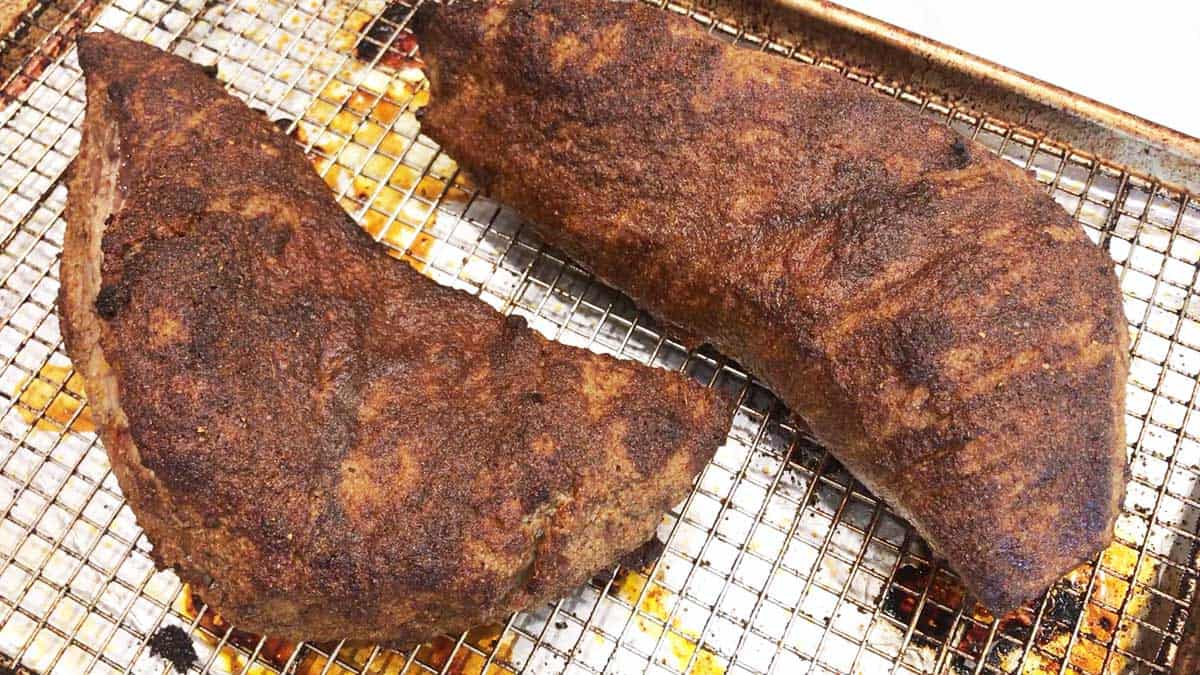
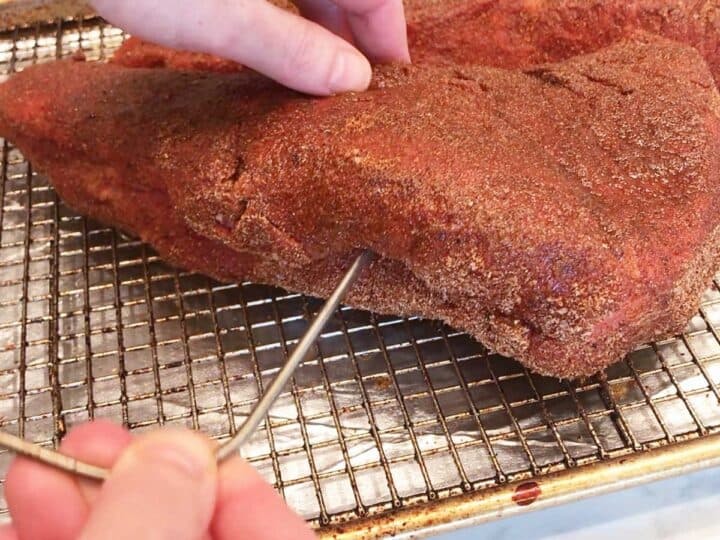
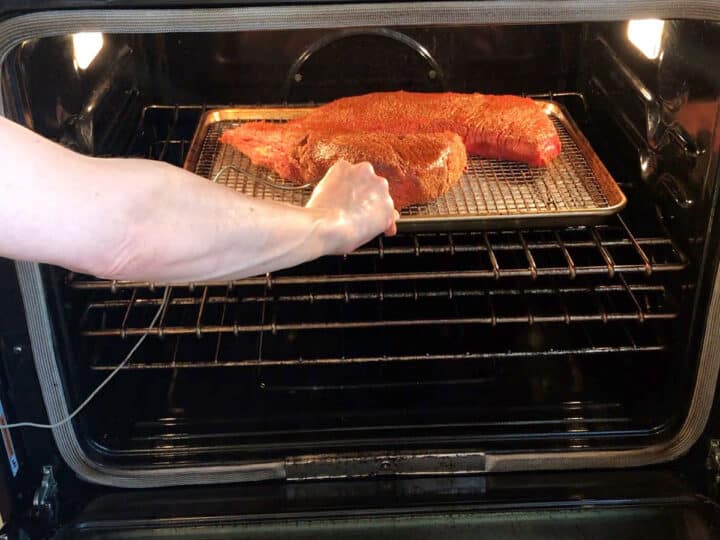
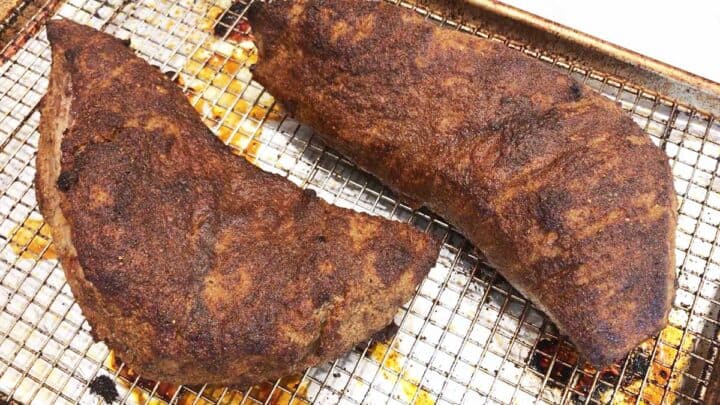
Your first step is to mix salt, black pepper, and spices. Rub the spice mixture all over the roast, massaging it in. Place the roast on a greased wire rack fitted into a rimmed roasting pan and insert an oven-safe meat thermometer into its thickest part. Turn the oven down to 350°F. Keep cooking the roast until the thermometer indicates it reaches 135°F for medium-rare or 145°F for medium. Let the meat rest for 20 minutes before slicing. The USDA says we should cook whole roasts to 145ºF with a three-minute rest time. This is medium doneness.
Carving instructions
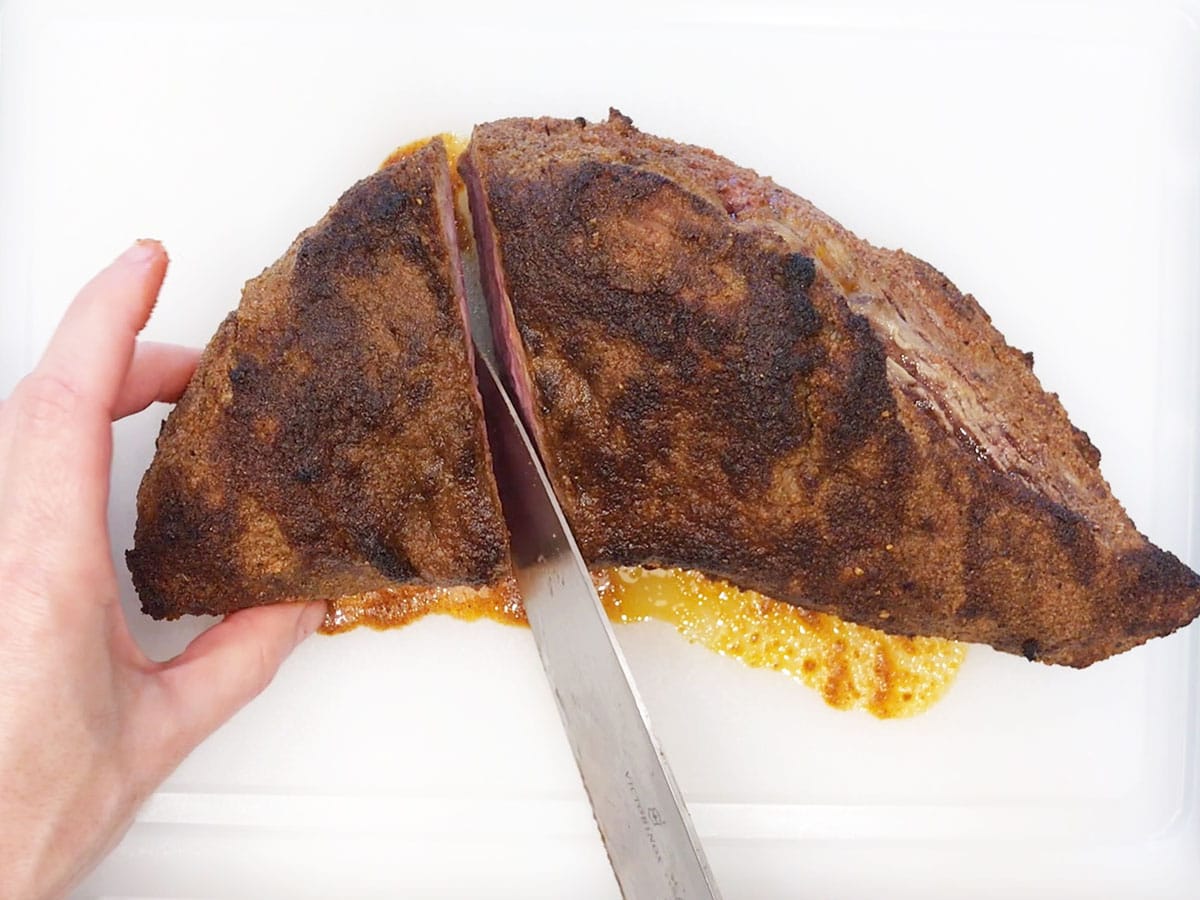
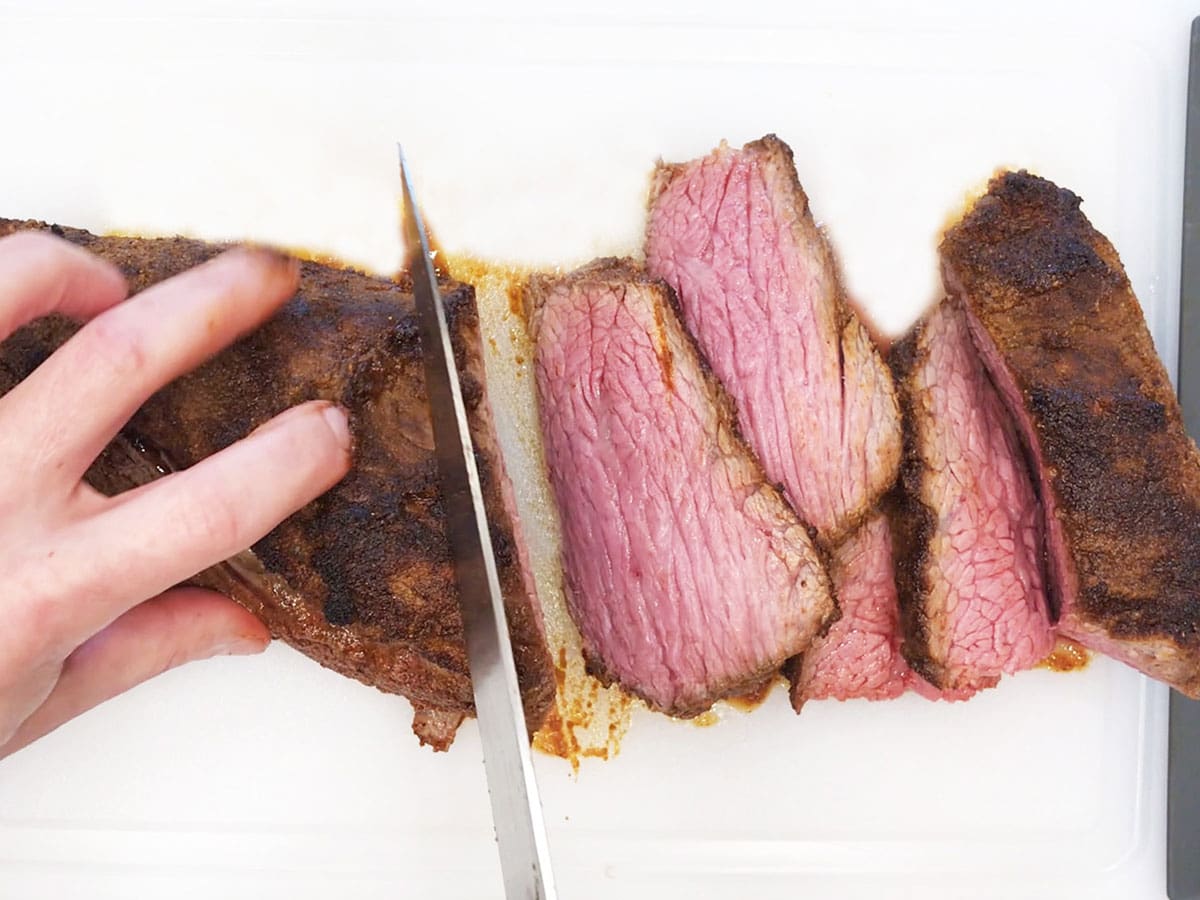
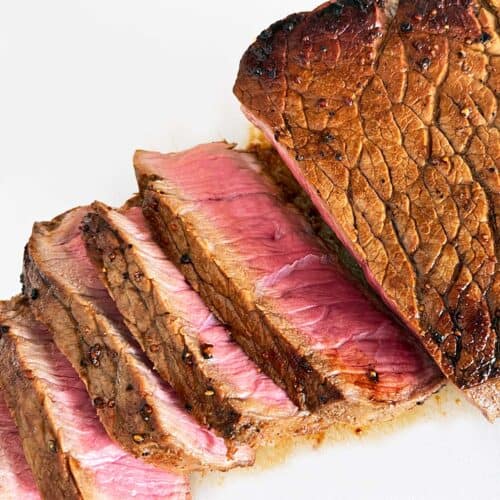
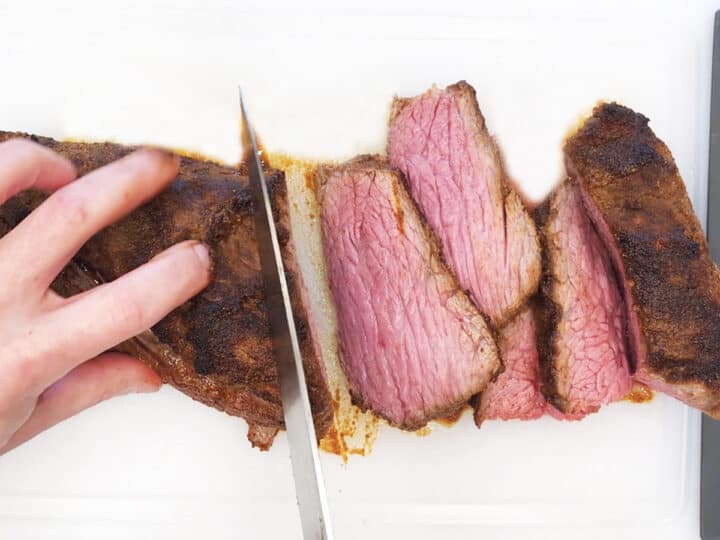
Since this is a fairly tough cut of meat, you should cut it against the grain. Cutting against the grain means slicing it in a way that breaks the meat fibers, making chewing easier. The challenge is that the tri-tip has two parts, and the muscle fibers run in a different direction in each of these parts. So you’ll want to identify that direction before cooking, cut the roast into two parts, and slice each of them against the grain of that part.
Sauteed mushrooms Steamed asparagus Microwave broccoli Sauteed sugar snap peas Roasted frozen broccoli Zucchini fritters Brussels sprouts casserole
Sometimes, I slice the leftovers into strips and add them cold to a salad like this arugula salad. If you want to use the leftovers in sandwiches or lettuce wraps, slice them thinly against the grain. Otherwise, they will be too chewy.